As Senate approves 2026 budget, analysts say the real question is not just whether Customs can raise ₦11 trillion, but who will ultimately pay the price.
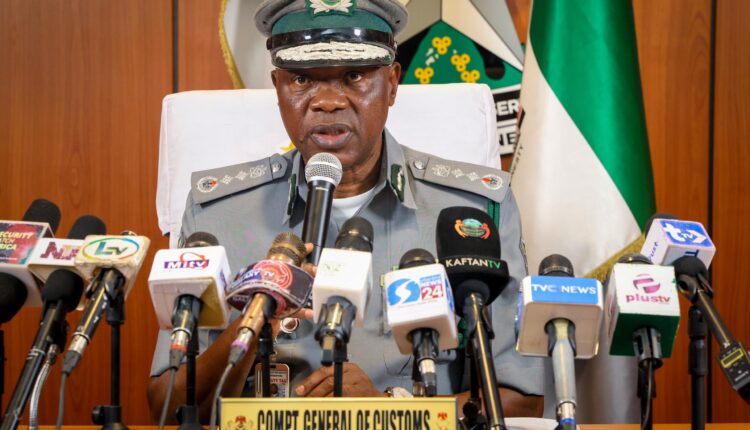 The Nigeria Customs Service (NCS) has set itself an ambitious ₦11.074 trillion revenue target for the 2026 fiscal year, a projection that has ignited widespread debate among economists, maritime stakeholders, manufacturers and trade experts over its implications for Nigeria’s ports, inflation, import costs and the country’s competitiveness as West Africa’s leading maritime gateway.
The revenue target, unanimously approved by the Senate Committee on Customs, Excise and Tariff alongside the Service’s ₦1.235 trillion expenditure proposal, represents the highest annual revenue projection in the history of the Nigeria Customs Service and underscores the Federal Government’s increasing reliance on Customs as a major source of non-oil revenue.
While lawmakers commended the Comptroller-General of Customs, Bashir Adewale Adeniyi, for the agency’s exceptional revenue performance and ongoing reforms, stakeholders have warned that excessive pressure to meet the ambitious target could unintentionally increase the cost of doing business, weaken Nigeria’s port competitiveness and encourage cargo diversion to neighbouring countries.
Customs’ Revenue Growth Under Adeniyi
Since assuming office in June 2023, Adeniyi has overseen one of the strongest revenue growth trajectories in the history of the Nigeria Customs Service.
The Service generated approximately ₦3.21 trillion in 2023, almost doubled its collections to ₦6.10 trillion in 2024, and recorded ₦7.277 trillion in 2025, surpassing the National Assembly-approved target of ₦6.584 trillion by ₦674.1 billion, representing an over-performance of 10.24 per cent.
The impressive performance has been attributed to customs modernisation, digital transformation, improved compliance, intelligence-led anti-smuggling operations, automation of customs procedures and stronger trade facilitation initiatives.
Presenting the Service’s 2026 budget proposal before the Senate Committee on Customs, Excise and Tariff, Adeniyi explained that the proposed ₦11.074 trillion revenue projection would be derived from Federation Account revenue, non-Federation revenue, import Value Added Tax (VAT) and the four per cent Free-on-Board (FOB) levy.
He also informed lawmakers that the Service had generated ₦4.043 trillion between January and June 2026, leaving approximately ₦7 trillion to be collected during the second half of the year to remain on course toward achieving the annual target.
According to the Comptroller-General, the revenue outlook is being challenged by several domestic and international factors, including disruptions to global shipping caused by tensions around the Strait of Hormuz, reductions in import duties on vehicles, tax incentives on electric vehicles, compressed natural gas (CNG) vehicles, healthcare equipment and other government fiscal policies aimed at reducing business costs.
Despite these headwinds, Adeniyi expressed confidence that ongoing reforms and improved compliance would enable the Service to achieve its revenue expectations.
Growing Concerns Over Port Competitiveness
While the Senate applauded Customs’ performance, maritime industry stakeholders expressed concern that the ambitious revenue target could unintentionally create a high-cost operating environment at Nigerian ports.
Freight forwarders, importers and logistics operators argue that if Customs comes under excessive pressure to increase collections, businesses could experience stricter cargo valuation, more aggressive enforcement, higher duty assessments and additional compliance costs.
Industry experts warn that these developments may encourage importers to divert cargo to competing ports in Cotonou (Benin Republic), Lomé (Togo) and Tema (Ghana), where port charges and cargo clearance procedures are often considered more competitive.
Cargo diversion has remained one of Nigeria’s biggest maritime challenges, depriving the country of billions of naira annually in customs revenue, terminal charges, shipping activities, warehousing income and thousands of jobs across the logistics value chain.
Who Will Ultimately Pay the ₦11.074 Trillion Revenue Bill?
Beyond the revenue target itself, economists say the more critical question is where the money will come from and who will ultimately bear the financial burden.
Although Customs collects revenue on behalf of the Federal Government, the funds are generated primarily through import duties, import VAT, excise duties, levies and other statutory border charges paid by importers.
However, analysts point out that importers rarely absorb these costs alone.
Manufacturers that depend on imported machinery, industrial equipment and raw materials often pass increased import costs to distributors, wholesalers and retailers, who eventually transfer the additional expenses to consumers through higher prices.
Consequently, economists warn that unless Customs achieves its ambitious target through increased trade volumes, stronger compliance, improved technology and elimination of revenue leakages, the burden could ultimately be borne by millions of Nigerian households in the form of higher inflation and rising consumer prices.
CGC Bashir Adewale Adeniyi has earned recognition as one of Nigeria’s leading revenue collection reformers, having driven record Customs revenue through digital transformation, improved compliance and operational reforms. Nevertheless, analysts stress that the Nigeria Customs Service’s statutory mandate goes beyond revenue collection to encompass trade facilitation, border security, anti-smuggling operations, enforcement of customs laws and the promotion of legitimate international trade.
Reacting to the development in separate interviews with The Ameh News, economist Celestine Ukpong said Customs deserves commendation for its remarkable revenue performance but cautioned against turning the Service into a revenue-maximisation institution at the expense of trade facilitation.
“The issue is not simply whether Customs can generate ₦11 trillion. The bigger question is where that money will come from and who will ultimately pay for it. Every additional cost imposed at the ports eventually filters through the economy. Importers pay first, manufacturers absorb some of the burden, businesses adjust their prices and consumers ultimately bear the greatest impact through higher inflation.
“Government should focus on expanding trade volumes, improving port efficiency, deploying technology and strengthening compliance rather than making imports more expensive. Sustainable Customs revenue comes from increased economic activity and higher cargo throughput—not necessarily from imposing higher costs on existing businesses.”
Ukpong further noted that efficient ports, modern customs procedures and predictable trade policies would generate more sustainable revenue than aggressive revenue collection.
Also speaking with The Ameh News, chartered accountant and financial analyst Peter Adebayo, FCA, described the ₦11.074 trillion projection as ambitious but achievable, provided Customs continues to deepen reforms and prioritise trade facilitation.
According to him, revenue generation should be viewed as the outcome of a growing economy rather than the primary objective of Customs operations.
“Customs has demonstrated impressive performance over the past three years, but government must avoid creating an environment where Nigerian ports become too expensive compared to neighbouring countries. If businesses perceive that clearing cargo in Nigeria is significantly more costly, they will naturally redirect shipments to Cotonou, Lomé or Tema.
“Nigeria would not only lose Customs revenue but also lose shipping activities, terminal business, warehousing, transport services and thousands of jobs. Long-term revenue growth will come from attracting more cargo into Nigerian ports through efficiency, transparency and competitive pricing.”
Revenue Versus Trade Facilitation
The Customs revenue debate reflects a broader concern within Nigeria’s maritime industry that agencies such as the Nigeria Customs Service, the Nigerian Ports Authority (NPA), the Nigerian Maritime Administration and Safety Agency (NIMASA) and the Nigerian Shippers’ Council are increasingly evaluated by government primarily on revenue generation rather than their statutory responsibilities.
Industry observers argue that while stronger non-oil revenue is critical to national development, agencies must also promote trade facilitation, port efficiency, maritime safety and economic competitiveness.
According to stakeholders, expanding cargo volumes, modernising customs operations, eliminating bureaucratic bottlenecks, improving border management and deploying digital technology would ultimately generate more sustainable revenue than increasing financial pressure on importers.
Balancing Revenue With Economic Growth
The unanimous approval of the ₦11.074 trillion revenue target by the Senate Committee demonstrates confidence in Customs’ reform agenda and revenue-generating capacity.
Nevertheless, analysts insist that the Federal Government must carefully balance its fiscal ambitions with policies that encourage investment, lower logistics costs and strengthen Nigeria’s position as the preferred maritime hub in West and Central Africa.
As Nigeria intensifies efforts to diversify government income away from oil, experts say Customs’ success should ultimately be measured not only by the volume of revenue collected but also by its ability to facilitate legitimate trade, reduce the cost of doing business, support industrial growth and enhance the country’s competitiveness in regional and global commerce.
Nigeria Customs Service’s ₦11.074 trillion revenue target for 2026 has sparked concerns over higher port costs, inflation and cargo diversion. Experts Celestine Ukpong and Peter Adebayo, FCA, tell The Ameh News why trade facilitation—not just revenue generation—should drive Customs reforms.
Nigeria Customs Service, NCS revenue target 2026, Bashir Adewale Adeniyi, Customs revenue, Senate Committee on Customs, Nigerian ports, cargo diversion, port competitiveness, import duties, import VAT, trade facilitation, maritime industry Nigeria, inflation, logistics, non-oil revenue, port costs, West African ports, Cotonou Port, Lomé Port, Tema Port, The Ameh News.
Discover more from Ameh News
Subscribe to get the latest posts sent to your email.