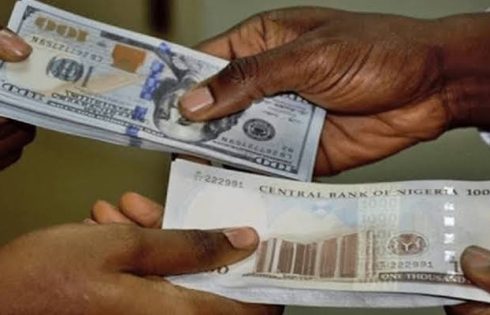
 Nigeria’s naira held relatively firm in the first half of the year as stronger dollar liquidity, rising external reserves and improved crude oil production helped stabilize the foreign exchange market, even as inflation risks and geopolitical uncertainty continue to cloud the outlook.
Data from Nigeria’s official foreign exchange market showed the naira trading at around ₦1,380 per U.S. dollar, while the International Monetary Fund has said the currency remains undervalued by 25.6% despite its recent recovery. Speaking in a television interview, Bankole Oduanya, treasury chief dealer at Polaris Bank, said recent market dynamics suggest the local currency is benefiting from a more liquid and tightly managed FX environment.
According to Oduanya, the naira’s recent stability is broadly in line with earlier market expectations, although the outlook remains highly sensitive to developments in global oil markets, especially tensions in the Middle East. He said persistent hostilities involving Iran could keep crude prices elevated, potentially pushing Brent back toward $80 a barrel in the near term and even creating the possibility of a move toward $100 within weeks.
For Nigeria, a higher oil price environment presents a mixed picture. On one hand, it strengthens dollar inflows, boosts government revenues and supports reserve accumulation. On the other, it raises domestic energy costs and could reignite inflationary pressures in an economy still adjusting to market-based fuel pricing.
Oduanya said Nigeria’s external reserves remain robust and could continue to rise through the third quarter. He noted that reserves have already moved beyond $51.7 billion and said another $2 billion increase by the end of September is possible if current trends persist. That view is also supported by signs of stronger crude production, with Nigeria increasingly meeting its OPEC quota after a prolonged period of underperformance.
He pointed to recent OPEC data showing June crude output of 1.56 million barrels per day, describing it as a positive signal for the country’s balance of payments and investor confidence. He also cited renewed investment in Nigeria’s oil sector, including offshore activity and fresh capital commitments from major players such as ExxonMobil, as evidence that confidence is gradually returning.
Still, Oduanya cautioned that improvements in oil output and pricing do not come without domestic costs. While the Ministry of Finance stands to benefit from stronger revenue and liquidity, consumers are likely to face higher prices for unsubsidized petroleum products. That in turn could feed into transport and food prices, pushing inflation higher after a recent moderation.
He warned that inflation, which he cited at 16.9%, could climb back toward 20% as energy costs ripple through the broader economy. Food remains the largest component of Nigeria’s inflation basket, and higher fuel prices could quickly worsen supply chain and distribution costs. Markets, he said, are already beginning to price in those risks.
That inflation concern is also showing up in fixed-income markets. Oduanya noted that recent Nigerian Treasury Bill auctions cleared at 17.3% and 17.7%, and said rates could rise to 18% in the coming weeks. Bond yields, he added, may move toward 18.5% to 19% as investors demand stronger returns to compensate for elevated inflation and higher operating costs.
On the currency market, however, he painted a more constructive picture. Oduanya described the FX market as “very liquid” and said daily turnover remains substantial. He characterized the current regime as a managed float, with the naira largely trading within a ₦1,350 to ₦1,390 range. According to him, the Central Bank of Nigeria has remained active on both sides of the market, buying dollars when the naira strengthens too much and selling when pressure builds.
That approach, he said, has helped reduce volatility and eliminate the extreme market dislocations seen previously, when the spread between official and parallel market rates widened sharply. He said the gap has narrowed significantly, with the alternative market now trading only around ₦15 away from the interbank rate, suggesting improved price discovery and better access to foreign exchange.
Oduanya also argued that speculative pressure against the naira has eased materially. He said many customers now buy foreign exchange only when needed, rather than front-loading demand on expectations of further devaluation. In his view, the market has become more functional, with FX generally available in the ₦1,350 to ₦1,380 range.
Looking ahead, he said the naira could strengthen further once political and geopolitical risk premiums begin to fade, potentially by early next year. He suggested the currency could appreciate by another ₦200 from current levels, broadly aligning with the IMF’s assessment that the naira is still undervalued.
Foreign direct investment could also become a more important support over the medium term. Oduanya cited expected inflows tied to multinational oil companies and corporate expansion plans, including investment activity linked to major industrial transactions. Over the next 24 to 36 months, he said, those flows could help the naira find a more appropriate valuation.
Even so, he acknowledged that Nigeria still has significant work to do in diversifying FX inflows away from crude. Non-oil exports remain underdeveloped, while sectors such as gas, fertilizer and agriculture have yet to reach their full export potential. Domestic demand for food remains strong, limiting the extent to which agricultural output can meaningfully contribute to foreign exchange earnings in the near term.
On policy, Oduanya said the Central Bank and the broader reform agenda deserve credit for helping stabilize both exchange rates and interest rates. He described the current administration and monetary authorities as reform-minded and pointed to steps aimed at improving market infrastructure and investor participation, including efforts to accommodate foreign institutional investors in Nigeria’s capital markets.
He also noted that FX inflows tend to be cyclical, with notable jumps and dips across different quarters. While monthly and annual inflow data have shown declines, he said such movements are not unusual and could reverse later in the year, especially if Nigeria returns to international debt markets or benefits from seasonal funding flows.
For now, the naira’s H1 performance appears to rest on a combination of stronger dollar liquidity, active central bank management and improving oil-sector fundamentals. The bigger question for investors is whether those gains can be sustained if inflation accelerates and global oil markets become more volatile.
As Nigeria navigates that balance, the naira may remain supported in the near term — but the path ahead will likely depend on whether reserve growth, investor inflows and reforms can outweigh the inflationary pressure building beneath the surface.
Discover more from Ameh News
Subscribe to get the latest posts sent to your email.