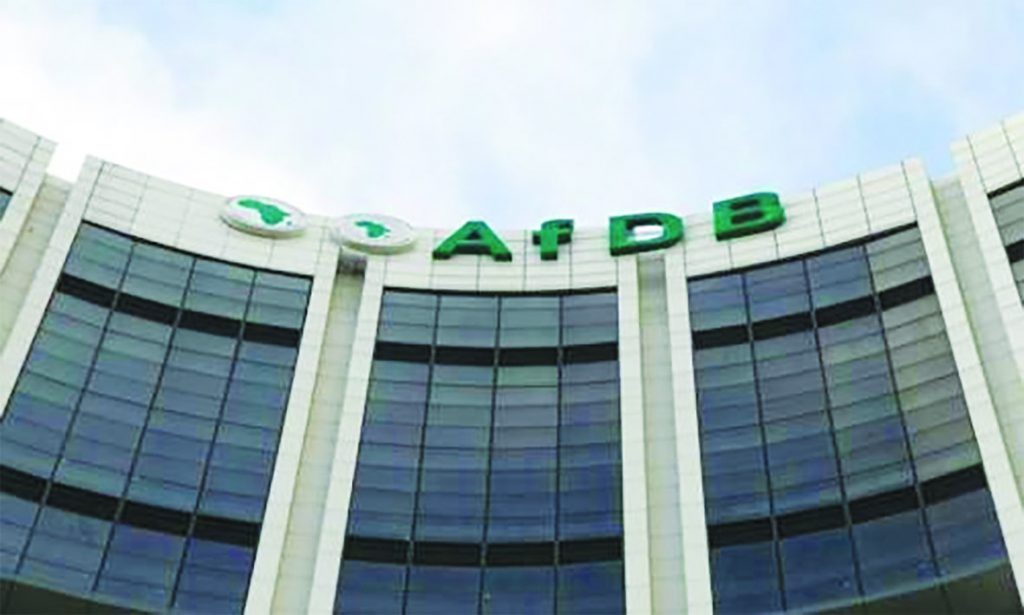
Experts say stronger political risk insurance is becoming critical to unlocking Africa’s trade, infrastructure financing and private sector investment under the AfCFTA.
By The Ameh News Business Desk
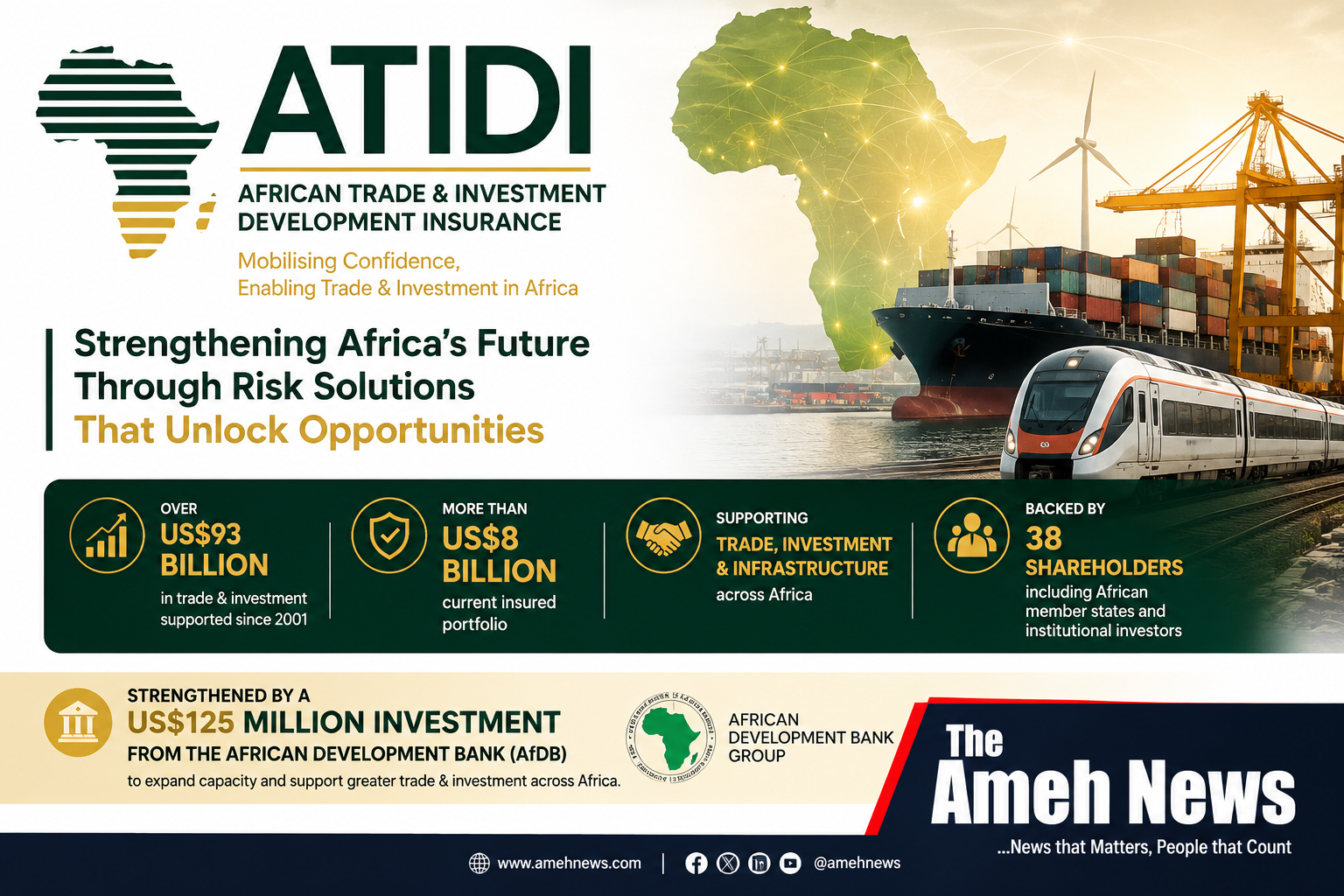 The African Trade & Investment Development Insurance (ATIDI), formerly known as the African Trade Insurance Agency (ATI), has crossed a major milestone by facilitating more than US$93 billion in trade and investment across Africa since its establishment in 2001, reinforcing its position as one of the continent’s most influential multilateral risk insurers.
The achievement comes as the African Development Bank (AfDB) approved a US$125 million equity investment in ATIDI to expand the institution’s underwriting capacity and support a new wave of investments in infrastructure, manufacturing, renewable energy, financial services and intra-African trade.
Industry analysts say the development could significantly reduce investment risks across African economies, particularly as countries intensify implementation of the African Continental Free Trade Area (AfCFTA).
ATIDI currently supports an insured portfolio exceeding US$8 billion, providing political risk insurance, credit insurance and investment guarantees that help governments, lenders and private investors undertake projects that might otherwise struggle to attract financing.
The institution’s guarantees have become increasingly important amid global economic uncertainties, higher borrowing costs, geopolitical tensions and foreign exchange risks affecting many African economies.
Catalyst for Africa’s Economic Transformation
Economic experts believe the agency has evolved beyond a traditional insurer into a strategic development finance institution capable of mobilising billions of dollars in private capital.
Economist Celestine Ukpong said the US$93 billion milestone demonstrates growing investor confidence in Africa’s long-term economic prospects despite prevailing challenges.
According to him, political risk insurance has become indispensable in attracting foreign direct investment into sectors such as energy, agriculture, infrastructure, manufacturing and digital technology.
“Investors are increasingly looking for credible institutions that can mitigate political and sovereign risks. ATIDI provides that confidence, enabling projects that create jobs, improve infrastructure and stimulate economic growth across the continent,” Ukpong said.
He noted that as African countries pursue industrialisation and regional integration, institutions capable of de-risking investments will play a central role in closing the continent’s infrastructure financing gap.
Boost for AfCFTA
Veteran journalist, Lagos Business School lecturer and leadership coach, Dr. Akin Olaniyan, described ATIDI’s performance as a significant boost for Africa’s ambition to deepen regional trade.
He observed that although the AfCFTA presents enormous opportunities, investors still face challenges ranging from political instability to payment risks and regulatory uncertainty.
“Trade cannot flourish without confidence. Institutions like ATIDI provide the confidence businesses require to expand beyond national borders. Their guarantees help banks finance cross-border transactions while reducing investment uncertainties,” Olaniyan explained.
He added that stronger risk mitigation mechanisms would accelerate industrial production, improve export competitiveness and strengthen Africa’s position in global value chains.
Nigeria Stands to Benefit
Financial analyst and Fellow of the Institute of Chartered Accountants of Nigeria (ICAN), Peter Adebayo, FCA, said Nigeria could leverage ATIDI’s expanded capacity to attract more private investments into critical sectors.
According to him, infrastructure development, renewable energy, transportation, agriculture and manufacturing remain areas where political risk guarantees can unlock substantial private capital.
“Access to long-term investment financing remains one of Africa’s biggest development constraints. Institutions like ATIDI reduce investment risks, making lenders and investors more willing to commit capital,” Adebayo stated.
He urged policymakers to deepen collaboration with regional financial institutions to accelerate sustainable economic growth.
Fresh AfDB Investment Signals Confidence
Analysts also described the African Development Bank’s US$125 million equity investment as a strong vote of confidence in ATIDI’s governance framework and developmental impact.
The fresh capital is expected to increase the agency’s underwriting capacity, enabling it to support larger transactions and expand operations into more African countries.
Experts say this additional financial strength comes at a crucial period when African governments are seeking innovative financing mechanisms to bridge infrastructure deficits estimated at tens of billions of dollars annually.
Supporting Sustainable Development
Beyond facilitating trade, ATIDI has increasingly focused on supporting projects aligned with climate resilience, renewable energy, food security and sustainable infrastructure.
Development finance observers believe this strategic direction positions the institution as a key partner in achieving Africa’s Sustainable Development Goals while supporting the continent’s transition towards greener and more resilient economies.
Outlook
With more than US$93 billion already supported and additional capital now available, analysts expect ATIDI to play an even greater role in mobilising investments under the African Continental Free Trade Area.
For Nigeria and other African economies seeking accelerated industrialisation, stronger export competitiveness and increased foreign direct investment, ATIDI’s expanding capacity could become one of the continent’s most important financial safety nets, helping transform promising investment opportunities into bankable projects and sustainable economic growth.
African Trade & Investment Development Insurance (ATIDI) has facilitated over US$93 billion in trade and investment across Africa. Experts say the AfDB’s US$125 million investment will boost regional trade, infrastructure financing and AfCFTA implementation.
Discover more from Ameh News
Subscribe to get the latest posts sent to your email.