Landmark private equity deal strengthens capital base, deepens investor confidence and positions Lekki complex as a major African refining and petrochemical hub
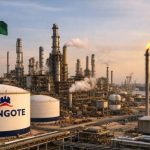
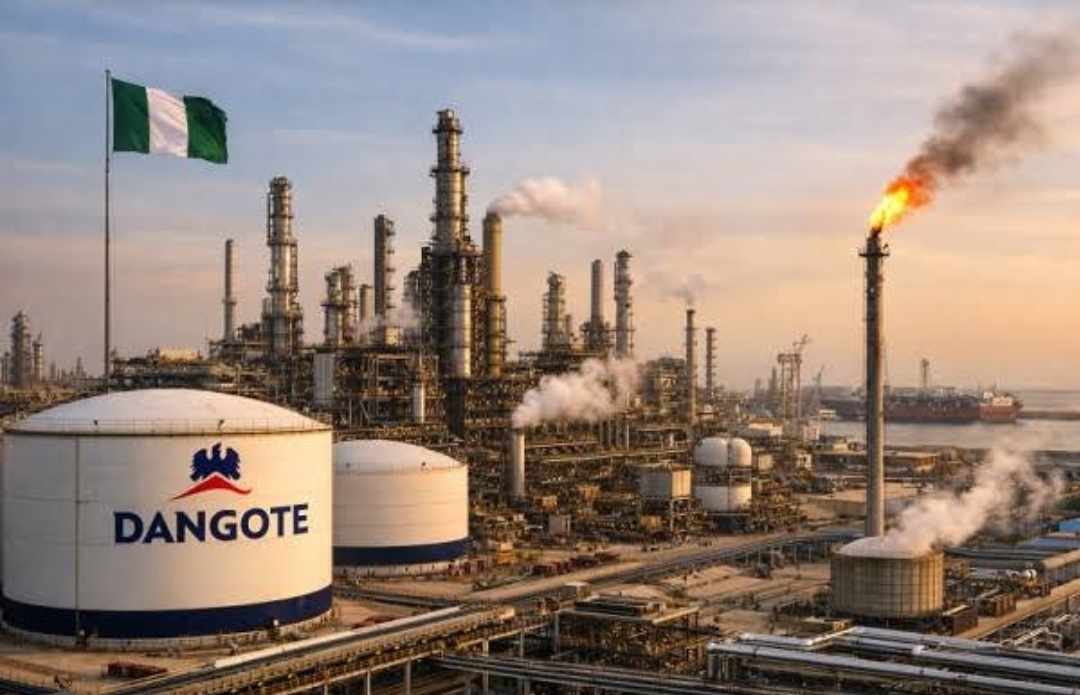 Dangote Petroleum Refinery and Petrochemicals FZE (DPRP) has secured $2.5 billion in fresh private equity funding to accelerate the expansion of its Lekki integrated refining and petrochemical complex, marking another major step in the company’s ambition to strengthen Nigeria’s energy security and establish a globally competitive African industrial platform.
The funding will support plans to increase the refinery’s existing 650,000 barrels-per-day (b/d) capacity to 1.4 million b/d, adding approximately 750,000 b/d to the complex’s crude-processing capability.
The transaction, completed through a private equity placement, is particularly significant because DPRP said it represents Africa’s largest publicly disclosed primary equity private placement by value.
The offer was reportedly 3.7 times oversubscribed, reflecting substantial investor appetite for Dangote’s long-term growth strategy.
Global investors deepen confidence in Dangote strategy
The capital raise attracted participation from international and African institutional investors, sovereign-related investment vehicles, development finance institutions and strategic partners.
Among the investors identified are the Africa Finance Corporation (AFC) and India Infra Buildco, an investment vehicle facilitated by the African Export-Import Bank (Afreximbank).
The diversity of investors is important because it provides DPRP with a broader institutional shareholder base while reinforcing market confidence in the company’s expansion strategy.
The proceeds will not only finance the proposed expansion of the Lekki complex but will also strengthen DPRP’s capital structure and provide additional financial flexibility for future growth initiatives.
From 650,000 b/d to 1.4 million b/d
The proposed expansion will transform the scale of the Lekki complex.
DPRP plans to increase refining capacity by 750,000 b/d, taking total capacity from 650,000 b/d to 1.4 million b/d.
But the strategic ambition goes beyond refining crude oil.
The company plans to increase polypropylene production by approximately 900,000 tonnes per year, taking capacity to about 2.4 million tonnes annually.
The expansion will also facilitate the production of base oils and linear alkylbenzene feedstocks, critical inputs for industries such as lubricants, detergents and other consumer and manufacturing products.
The development therefore represents an integrated industrial strategy rather than simply an increase in refinery throughput.
Cleaner fuels, stronger self-sufficiency
DPRP also intends to upgrade the complex’s fuel production to meet Euro 6-quality standards, positioning the refinery to produce cleaner fuels that comply with stringent international specifications.
Another important element of the expansion is increased on-site power generation capacity.
The objective is to support greater operational self-reliance for the refinery and its associated petrochemical facilities, reducing exposure to external power constraints as production expands.
Together, the planned investments could improve efficiency, reliability and competitiveness across the complex.
Dangote: Capital raise is strategic milestone
Aliko Dangote, Chairman and Chief Executive Officer of Dangote Industries Limited, described the transaction as a strategic step in deepening and institutionalising DPRP’s shareholder base while raising capital to complement internal cash flows and external funding.
The Dangote Group chairman also linked the investment to a broader objective of developing domestic refining and petrochemical capacity, reducing Africa’s dependence on imported refined products and strengthening the continent’s energy security.
The strong investor response, he noted, demonstrates continued confidence in DPRP’s strategy and its long-term growth prospects.
The bigger Nigerian energy-security story
The expansion has implications well beyond Dangote Industries.
For decades, Nigeria’s paradox has been its position as one of Africa’s largest crude oil producers while remaining heavily dependent on imported refined petroleum products.
The expansion of domestic refining capacity is changing that equation.
An eventual 1.4-million-b/d Dangote complex could significantly increase Nigeria’s refining capability while creating additional capacity to serve regional African markets.
Its integrated petrochemical operations could also reduce the import dependence of Nigerian manufacturers on foreign industrial feedstocks.
That makes the project simultaneously an energy-security initiative, an import-substitution strategy and an industrialisation programme.
Capital markets as a growth engine
The successful $2.5 billion placement also provides an important lesson about the role of capital markets in financing large-scale African industrial projects.
The reported 3.7-times subscription means investor demand substantially exceeded the initial offer size.
That level of participation gives DPRP additional credibility as it pursues a capital-intensive expansion programme requiring long-term financing.
It also demonstrates that African and international institutional investors are prepared to commit substantial capital to projects capable of transforming the continent’s productive capacity.
Dangote’s Vision 2030: Growth beyond oil refining
The refinery expansion is only one component of Dangote Group’s broader Vision 2030 growth strategy.
Afreximbank has previously highlighted its support for the group’s wider expansion programme, which targets annual group revenue of $100 billion by 2030.
The strategy includes a substantial expansion of fertiliser production, with plans to increase capacity from approximately 3 million tonnes per year to 12 million tonnes per year.
If achieved, the expansion could position Dangote among the world’s largest urea producers.
The wider investment programme also identifies opportunities across ports, pipelines, gas, power, mining and data centres, reflecting an ambition to build interconnected industrial infrastructure around the group’s core businesses.
From refinery to industrial ecosystem
The most important feature of the Lekki expansion may therefore be its integrated nature.
More crude-processing capacity creates more refined products.
More petrochemical capacity creates industrial feedstocks.
Greater power generation improves operational independence.
Additional production of base oils and detergent feedstocks creates opportunities for downstream manufacturing.
Together, these investments can create an industrial ecosystem in which value is increasingly captured within Nigeria and Africa rather than exported through the importation of finished products.
Regional implications
If the expansion is successfully delivered, the Lekki complex could become an increasingly important supplier of refined petroleum products and petrochemicals across West Africa and the wider African market.
The potential benefits include greater regional product availability, reduced exposure to international supply disruptions and stronger domestic and regional manufacturing value chains.
For Nigeria, the strategic objective is even bigger: moving progressively from an economy that exports crude oil and imports significant quantities of refined products towards one capable of refining crude, producing petrochemicals and exporting higher-value energy products.
The Ameh News anatomy of a corporate growth strategy
The Dangote expansion offers a compelling case study in how capital mobilisation, strategic diversification, industrial integration and long-term vision can be combined to pursue corporate growth at scale.
The $2.5 billion private equity placement provides the capital.
The 650,000-b/d-to-1.4-million-b/d expansion provides scale.
The petrochemical investments provide diversification.
The Euro 6 upgrade provides a cleaner and more competitive product platform.
The increased power-generation capacity provides greater operational resilience.
And the wider Vision 2030 programme provides the long-term strategic framework.
Taken together, these elements demonstrate that sustainable corporate growth is rarely driven by one investment alone. It is built around a connected strategy in which capital, capacity, technology, markets and long-term ambition reinforce one another.
The Ameh News Verdict
That is The Ameh News anatomy of a corporate growth strategy worth watching, studying and emulating: bold capital mobilisation, strategic expansion, industrial integration and long-term ambition working together to build not just a bigger company, but a stronger industrial ecosystem.
For Nigeria and Africa, the real test will now be execution—turning the billions mobilised and the ambitious production targets announced into sustained capacity, competitive products, jobs, exports and measurable energy-security gains.
If successfully delivered, Dangote’s next phase could become more than a refinery expansion. It could emerge as a defining African case study of how private capital, industrial ambition and strategic scale can reshape an entire sector.
Discover more from Ameh News
Subscribe to get the latest posts sent to your email.