By The Ameh News
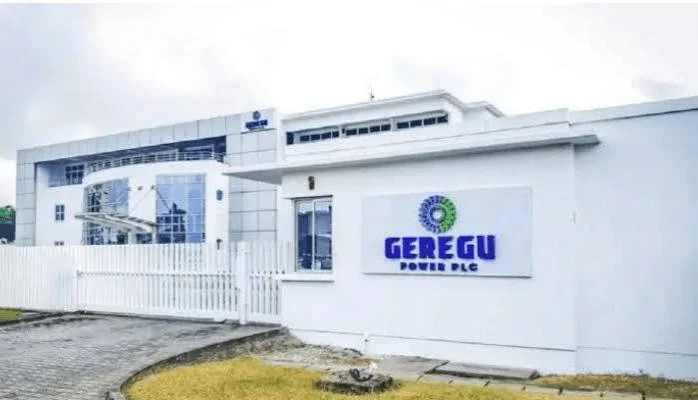 Otedola-Yari Monaco meeting comes amid unresolved questions over ₦6bn bond repayment, funds allegedly unaccounted for, regulatory oversight and the wider implications for Nigeria’s capital market.
The meeting between former Geregu Power Plc Chairman, Femi Otedola, and the company’s current Chairman, Senator Abdulaziz Yari, in Monaco may have presented a picture of cordiality.
But for Nigeria’s capital market, the more important story is not the photograph.
It is the unresolved chain of corporate, financial and regulatory questions surrounding Geregu Power’s ₦40.09 billion Series 1 Senior Unsecured Bond, the reported ₦6 billion repayment default, the subsequent intervention by Yari and questions over the availability and utilisation of funds expected to have been used to service the obligation.
This is where the story becomes bigger than Geregu.
It becomes a question of investor confidence, corporate disclosure, board accountability, financial controls, regulatory supervision and the credibility of Nigeria’s capital-market architecture.
The Securities and Exchange Commission is legally charged with maintaining fair, efficient and transparent markets, protecting investors and safeguarding market integrity. The Investments and Securities Act 2025 also gives the Commission significant intervention powers where public companies or regulated entities act in ways detrimental to investors or commit serious corporate-governance violations.
That statutory responsibility makes the Geregu controversy a matter that deserves answers beyond private meetings and emergency financial interventions.
The Anatomy of the Exposure
The Ameh News identifies seven critical layers in the unfolding Geregu controversy:
1. The Bond Default
Geregu reportedly failed to meet approximately ₦6 billion due on July 28, 2026 under its ₦40.09 billion bond.
For investors, the first question is simple:
Why did a company with an established financing structure fail to meet a scheduled obligation?
A bond default is not merely an accounting event.
It can affect the issuer’s creditworthiness, investor confidence, future borrowing costs and the willingness of investors to provide capital to other Nigerian companies.
2. The Missing-Funds Question
The most sensitive issue is the reported concern over funds that were expected to be available for servicing the obligation.
This requires a documented financial trail.
Where were the funds?
Who controlled the relevant accounts?
When were the funds moved?
Who authorised the transactions?
Were the transactions approved by the board?
Were they disclosed?
Were there related-party considerations?
Were the funds still assets of Geregu when ownership changed?
These are not questions that should be answered through speculation.
They require bank records, audited accounts, board minutes, transaction documentation and independent investigation.
3. The Ownership-Transition Risk
Geregu changed control in December 2025 after Otedola sold his controlling interest for approximately $750 million.
That transition creates another critical accountability point.
Whenever a major company changes ownership, there should be a clear reconciliation of:
Cash and bank balances;
Debt obligations;
Receivables;
Payables;
Fixed assets;
Contingent liabilities;
Contracts;
Related-party transactions;
Regulatory obligations; and
Outstanding capital-market securities.
The central question is whether the financial position presented during the transition accurately reflected the company’s ability to meet its obligations.
4. The FBN Holdings Question
The dramatic rise in FBN Holdings’ share price has added another layer to the controversy.
Market observers have questioned whether proceeds associated with the Geregu transaction may have contributed to buying pressure in FBN Holdings.
The Ameh News must stress that this remains a market concern and allegation, not an established fact.
There is no basis to present a connection between Geregu funds and FBN Holdings purchases as proven unless supported by verifiable transaction evidence.
Nevertheless, the question deserves proper examination because Otedola has had prominent interests and influence in both companies.
The appropriate response is therefore not speculation but traceability.
If concerns exist over the source of funds used in significant market transactions, the relevant regulatory authorities should have the capacity to establish the facts.
5. The Corporate-Governance Exposure
This may ultimately become the most important part of the story.
A company can survive a liquidity problem.
It can refinance debt.
It can raise fresh capital.
But a sustained corporate-governance problem can permanently damage investor confidence.
The SEC itself has emphasised corporate transparency and disclosure, while its corporate-governance guidelines require companies to promote transparent dealings and increased disclosure.
The Geregu controversy therefore raises questions about the effectiveness of:
Board oversight → Internal controls → Financial reporting → Audit → Disclosure → Regulatory supervision.
If any one of those layers failed, the market needs to know why.
6. The Regulator’s Test
This is where the SEC becomes central.
The question should not simply be:
“Why is the SEC silent?”
A more professional question is:
“What exactly is the SEC investigating, what regulatory powers are being deployed, and what information can legitimately be disclosed to investors without compromising an ongoing investigation?”
That distinction matters.
Regulators should not compromise investigations by releasing premature conclusions.
But investors should also not be left indefinitely in an information vacuum.
Nigeria’s current capital-market law gives the SEC broad responsibilities around investor protection, market integrity and intervention in serious corporate-governance situations.
The regulator’s handling of Geregu will therefore be judged not only by the eventual outcome but by the quality, independence and transparency of the process.
7. The Bond-Market Contagion Risk
Perhaps the biggest economic danger is contagion.
If investors begin to believe that corporate bonds carry significant information, governance or repayment uncertainty, they will demand higher returns to compensate for perceived risk.
That means higher borrowing costs.
Higher borrowing costs can discourage companies from accessing the corporate bond market.
That, in turn, can reduce the availability of long-term private-sector financing for:
Power;
Infrastructure;
Manufacturing;
Real estate;
Telecommunications;
Transport; and
Other productive sectors.
The Geregu controversy therefore has the potential to become an economic issue rather than merely a corporate dispute.
Investor Confidence Is the Real Currency
Economist Celestine Ukpong provides an important perspective to this debate.
From an economic standpoint, the immediate repayment of the ₦6 billion obligation may calm the market temporarily, but it does not automatically eliminate the underlying risk.
The real currency of a capital market is confidence.
Investors need confidence that financial statements can be trusted, corporate boards are accountable, debt obligations will be honoured and regulators will intervene when material risks emerge.
Where that confidence weakens, investors price the uncertainty into their decisions.
That can translate into higher risk premiums, lower valuations and more expensive access to capital.
Ukpong’s economic perspective therefore points to the need to separate the settlement of a debt obligation from the resolution of the governance questions that produced the crisis.
From a professional accounting and internal-control perspective, Peter Adebayo FCA brings another critical dimension.
The fundamental question is the audit trail.
Where significant funds are alleged to have been unavailable when a debt obligation became due, the proper response is not conjecture but reconstruction.
The relevant questions include:
What was the opening balance?
What transactions occurred?
Who authorised them?
What were the beneficiaries?
What board approvals existed?
What did the auditors verify?
What was disclosed to investors?
This is where internal audit, external audit, board oversight and regulatory supervision intersect.
For Adebayo’s professional perspective, the Geregu case illustrates why strong internal controls cannot be treated as administrative formalities.
They are the infrastructure that protects corporate assets and gives investors confidence in financial information.
Agusto & Co Rating Withdrawal Is a Warning Signal
The withdrawal of Geregu’s previous A rating by Agusto & Co following the default adds another important dimension.
The rating action reportedly reflected concerns surrounding the company’s financial information and the need for independent verification.
For the market, that should be treated as a warning signal.
A bond rating is fundamentally about credit confidence.
Once doubts arise over the quality of financial information supporting an issuer’s credit profile, investors naturally demand greater transparency.
The ₦6bn Payment Solves One Problem — Not All Problems
Yari’s intervention is significant.
It protects bondholders from the immediate consequences of a prolonged default.
It demonstrates willingness by the new management to preserve the company’s financial obligations.
But payment alone cannot answer the historical questions.
Who should account for the circumstances that led to the default?
What happened to the funds?
Were financial records properly transferred?
Were investors adequately informed?
Did governance controls work?
Did regulators receive the necessary disclosures?
These questions remain separate from the repayment itself.
Monaco Cannot Replace Accountability
The Otedola-Yari meeting may be interpreted as a positive sign that relationships between the former and current leadership are not irreparably damaged.
It may even contribute to an amicable resolution of differences.
But Nigeria’s capital market cannot operate solely on personal relationships.
Capital markets operate on rules, disclosures, documentation and enforceable accountability.
A friendly meeting in Monaco cannot substitute for an audit trail.
Neither can a ₦6 billion payment substitute for a regulatory determination where material questions remain outstanding.
What The Ameh News Is Asking
The Ameh News believes the following questions deserve clear, evidence-based answers:
To Geregu Power
What caused the July 28 bond repayment failure?
What was the company’s cash position immediately before the default?
Where were the funds expected to service the bond?
What financial reconciliation took place after the ownership transition?
What steps have been taken to strengthen internal controls?
To the SEC
When was the Commission first notified of the default?
Has a formal investigation commenced?
What aspects of the transaction are under investigation?
Were disclosure obligations fully met?
Will the findings be communicated to investors?
Are additional regulatory measures being considered?
To the former management
How were Geregu’s financial resources managed before the ownership transfer?
Were all bond obligations properly provided for?
Were all material transactions disclosed?
Can the relevant financial records independently substantiate the company’s position at the time of the transition?
To the current management
What was discovered during the takeover?
What financial and governance weaknesses have been identified?
What reforms are being implemented?
How will future bond obligations be ring-fenced and protected?
The FBN Holdings Question Also Needs Evidence
The extraordinary rise in FBN Holdings shares deserves market scrutiny in its own right.
But scrutiny must not become accusation.
If there are genuine concerns regarding the source of funds behind significant transactions, the appropriate institutions should examine trading records and beneficial ownership information.
The market deserves facts.
If there is no connection, that should also be established clearly.
That is precisely why transparent capital-market surveillance matters.
The Bigger Nigerian Capital-Market Question
Nigeria wants a deeper capital market.
The country needs companies to raise long-term money from investors.
It needs pension funds, insurance companies, asset managers and individual investors to trust corporate securities.
It needs international investors to believe that Nigerian markets provide credible rules and effective enforcement.
That confidence can be damaged when investors encounter unexplained defaults, conflicting narratives, weak disclosure or prolonged regulatory uncertainty.
The SEC has itself stressed the importance of stronger disclosure and investor confidence as Nigeria seeks to attract global capital.
The Geregu controversy therefore arrives at a sensitive moment.
The Ameh News Verdict
The Geregu story should not be reduced to Otedola versus Yari.
That would make the story personal when the real issue is institutional.
It should not be reduced to a ₦6 billion bond payment.
That would overlook the governance questions.
And it should not be reduced to FBN Holdings’ share-price rally.
That would turn an important market question into speculation without evidence.
The deeper story is about whether Nigeria’s corporate and capital-market institutions can provide investors with something more valuable than temporary reassurance:
credible information, transparent investigation and enforceable accountability.
Celestine Ukpong’s economic perspective points to the cost of weakened confidence.
Peter Adebayo FCA’s professional perspective points to the importance of the audit trail and internal controls.
The regulatory perspective points directly to the SEC’s statutory responsibility for market integrity and investor protection.
Put together, the anatomy is clear:
A corporate financial problem can become a capital-market confidence problem when investors cannot quickly establish what happened, who was responsible, what the regulator knows and what safeguards will prevent a recurrence.
That is the real Geregu story.
And that is the question Nigeria’s capital market must now answer.
The Ameh News Anatomy: How the Geregu Bond Crisis Could Damage Nigeria’s Capital Market
Discover more from Ameh News
Subscribe to get the latest posts sent to your email.