
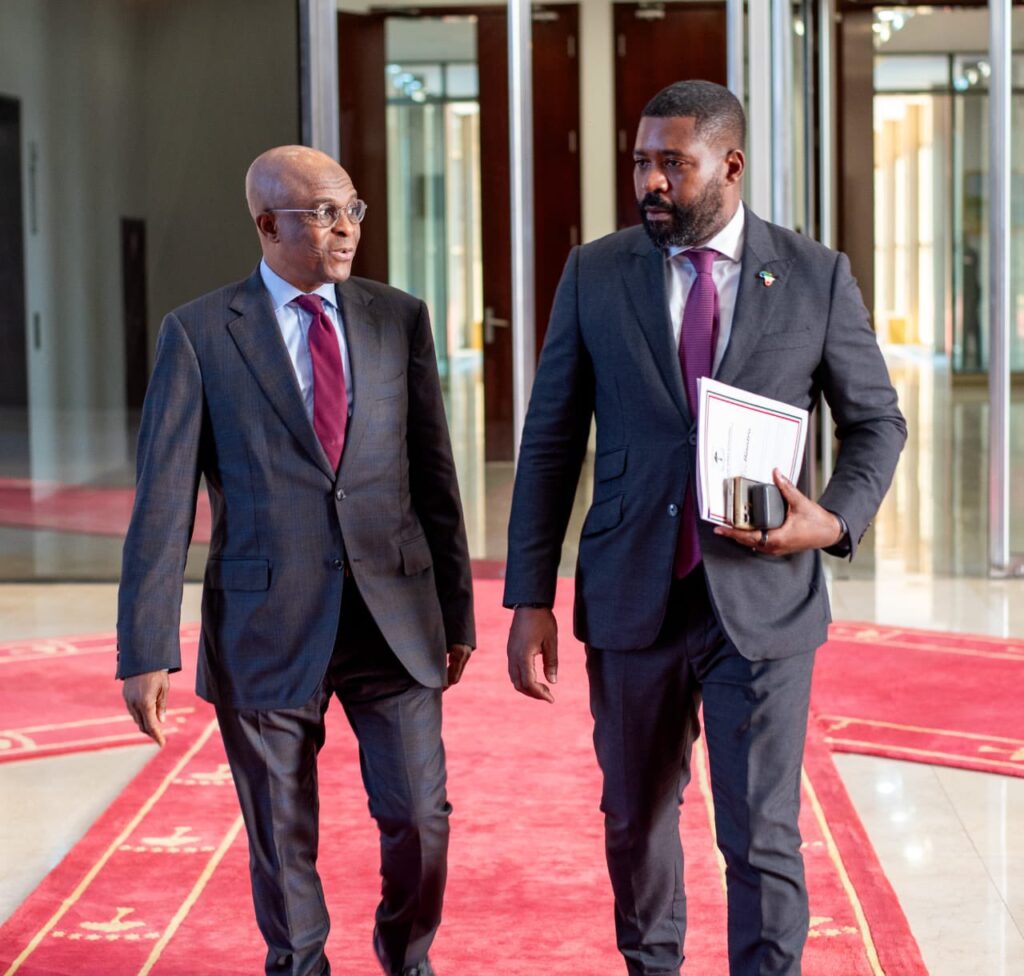
The President of the Port Management Association of West and Central Africa (PMAWCA), Dr Abubakar Dantsoho, has called for stronger collaboration among ports in the region to reduce cargo clearance delays, lower logistics costs and enhance the competitiveness of West and Central African economies.
Dantsoho made the call at the opening ceremony of the association’s 46th Annual Council and Joint Gulf of Guinea Commission-PMAWCA Forum in Sipopo, Malabo, Equatorial Guinea.
The PMAWCA President, who is also the Managing Director of the Nigerian Ports Authority (NPA), stressed the need for regional ports to embrace strategic cooperation rather than destructive competition to address common challenges confronting the maritime industry.
He said enhanced collaboration among port authorities would improve operational efficiency, strengthen logistics resilience and ensure that the benefits of maritime trade extend beyond coastal countries to landlocked nations that depend on efficient ports and transport corridors.
According to him, the Atlantic coastline stretching from Mauritania to Angola serves about 20 coastal countries, while five landlocked countries, including Mali, Burkina Faso, Niger, Chad and the Central African Republic, rely heavily on the efficiency of the region’s ports and transport networks.
“When a single port along our coast suffers congestion, it is a household or a market in Bamako, Niamey, N’Djamena, or Bangui that bears the cost,” he said.
Dantsoho acknowledged that West and Central African ports had witnessed significant transformation over the past decade through the development of deep-water terminals, public-private concessions and the deployment of modern port infrastructure.
However, he noted that persistent structural challenges continued to undermine the efficiency and competitiveness of ports across the region.
He identified prolonged cargo dwell times, high port charges, expensive corridor transportation and inadequate interoperability between customs administrations and port operations as major obstacles to seamless regional trade.
“Cargo dwell times remain excessively long across too many terminals, and high port and corridor transit costs continue to inflate the final price of consumer and industrial goods.
“Despite the deployment of single-window platforms, our customs and operational procedures still lack seamless interoperability, both between neighbouring ports and with hinterland administrations.
“Furthermore, our pressing requirements for dredging, infrastructure maintenance, and equipment renewal frequently outstrip our internal financing capacities,” he said.
The PMAWCA President further warned that the challenges were becoming more pronounced amid geopolitical disruptions along major international shipping routes, which had resulted in the redirection of maritime traffic and increased vessel calls along the West and Central African coastline.
He said the development presented strategic opportunities for regional ports to attract additional traffic and strengthen their positions in global maritime trade, but cautioned that it also placed additional pressure on infrastructure already operating close to capacity.
Dantsoho also highlighted climate change, rising sea levels, coastal erosion, maritime decarbonisation regulations and growing cyber threats as emerging challenges that port authorities must urgently address to remain competitive in the global shipping industry.
He particularly drew attention to the implications of evolving maritime decarbonisation regulations at the International Maritime Organization (IMO), warning that ports that fail to prepare for the global energy transition risk losing shipping traffic.
“Moreover, the maritime decarbonisation regulations currently taking shape at the International Maritime Organization will soon redraw global shipping routes and ports of call: any port that fails to prepare for this energy transition risks being bypassed altogether.
“Finally, rapid digitalisation, while indispensable, exposes our operations to sophisticated cyber threats that we can no longer afford to underestimate,” he said.
Discover more from Ameh News
Subscribe to get the latest posts sent to your email.