The Impact of Treasury Bill Auctions on Everyday Nigerians: depicting the impact of the CBN’s N650bn Treasury Bills auction on Nigerian citizens.
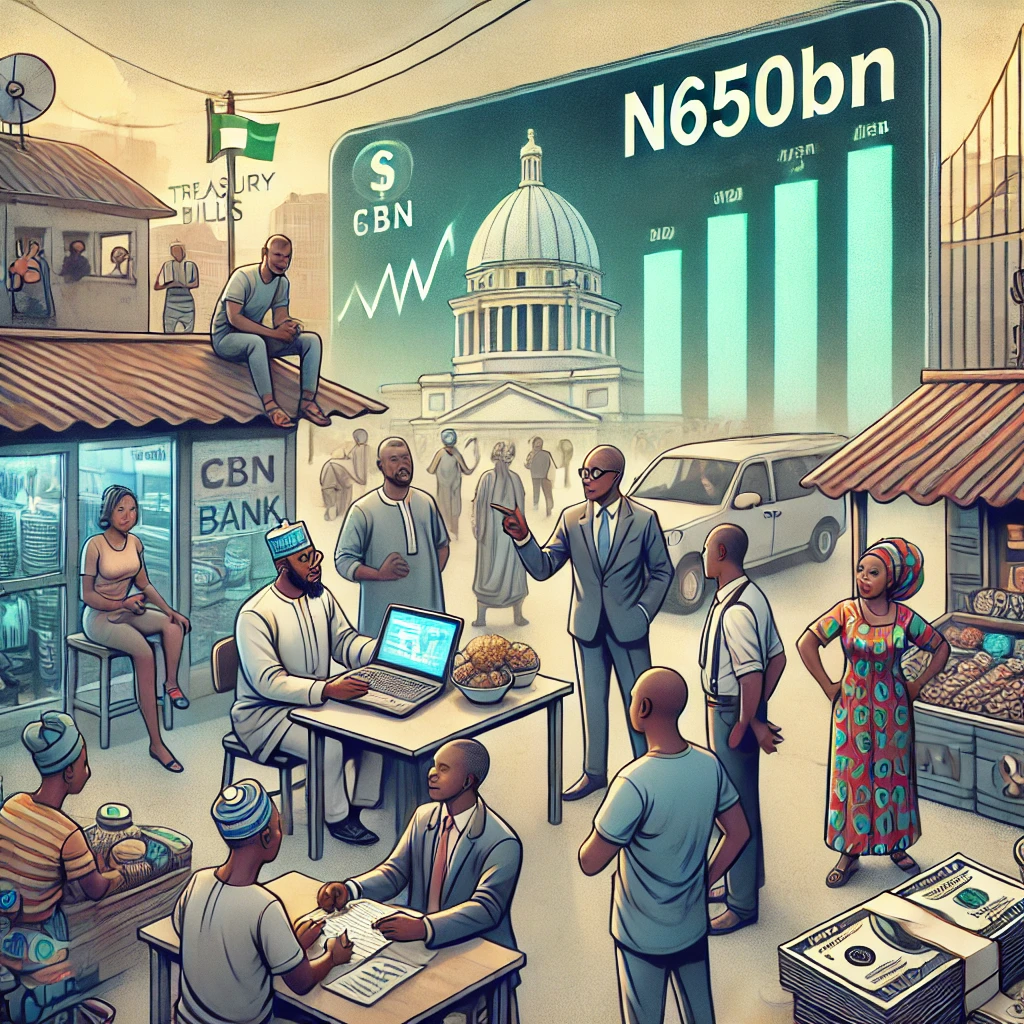 As the Central Bank of Nigeria (CBN) opens another N650 billion in Treasury Bills (NTBs) for subscription, investors are gearing up for what is expected to be another oversubscribed auction. However, beyond the boardrooms and financial markets, this move holds significant implications for everyday Nigerians. From interest rates on savings and loans to inflation and government revenue, the effects of these auctions ripple through the economy in ways that touch both the rich and the struggling masses.
A look back at previous auctions provides a telling picture. At the last PMA, CBN sold about N774.13 billion worth of NTBs, while total subscriptions skyrocketed to N2.408 trillion, reflecting an insatiable appetite for safe, high-yield government securities. This overwhelming demand enabled the apex bank to cut spot rates across tenors, with 91-day, 182-day, and 364-day Treasury Bills closing at 17.00%, 18.00%, and 18.43%, respectively.
While this benefits institutional investors and banks seeking stable returns, the average Nigerian faces a mixed outcome. On one hand, higher Treasury Bill yields encourage saving by offering better returns on fixed-income investments. This could benefit middle-class Nigerians with savings accounts tied to money market instruments. On the other hand, aggressive government borrowing through NTBs could tighten liquidity in the banking system, making credit more expensive for businesses and individuals seeking loans for expansion or personal needs.
A reflection on past trends shows that when the CBN intensifies Treasury Bill sales, banks tend to divert funds towards these risk-free assets rather than lending to businesses. This results in limited access to affordable loans for entrepreneurs, startups, and small-scale enterprises, potentially slowing economic growth. The impact is also felt by consumers as businesses pass on the burden of higher borrowing costs through increased prices of goods and services, fueling inflationary pressures.
READ ALSO THIS: https://amehnews.com/2025/03/03/cbn-to-open-n650bn-treasury-bills-for-subscription-amidst-soaring-investor-demand/
However, there’s a silver lining. The CBN’s ability to mop up excess liquidity through NTBs helps to curb inflation in the long run. With FAAC disbursements injecting N1.15 trillion into the economy and additional liquidity from maturing OMO and Treasury Bills, the risk of excessive cash in circulation could lead to inflationary spikes. By offering NTBs, the CBN aims to absorb excess liquidity and stabilize the naira.
Looking ahead, the outcome of the N650 billion NTB auction will set the tone for Nigeria’s financial landscape in the coming months. If demand remains strong and rates continue to decline, savings and investment instruments could become more attractive, benefiting financially disciplined Nigerians. However, for the millions struggling with rising costs of living and limited access to credit, the broader question remains—how does the government balance the need for debt financing with the real economic needs of its citizens?
As history has shown, the true impact of these auctions is not just in the figures but in how they shape the financial opportunities available to Nigerians at all levels. Depicting the impact of the CBN’s N650bn Treasury Bills auction on Nigerian citizens.
Stay informed, Stay ahead with The Ameh News
Discover more from Ameh News
Subscribe to get the latest posts sent to your email.