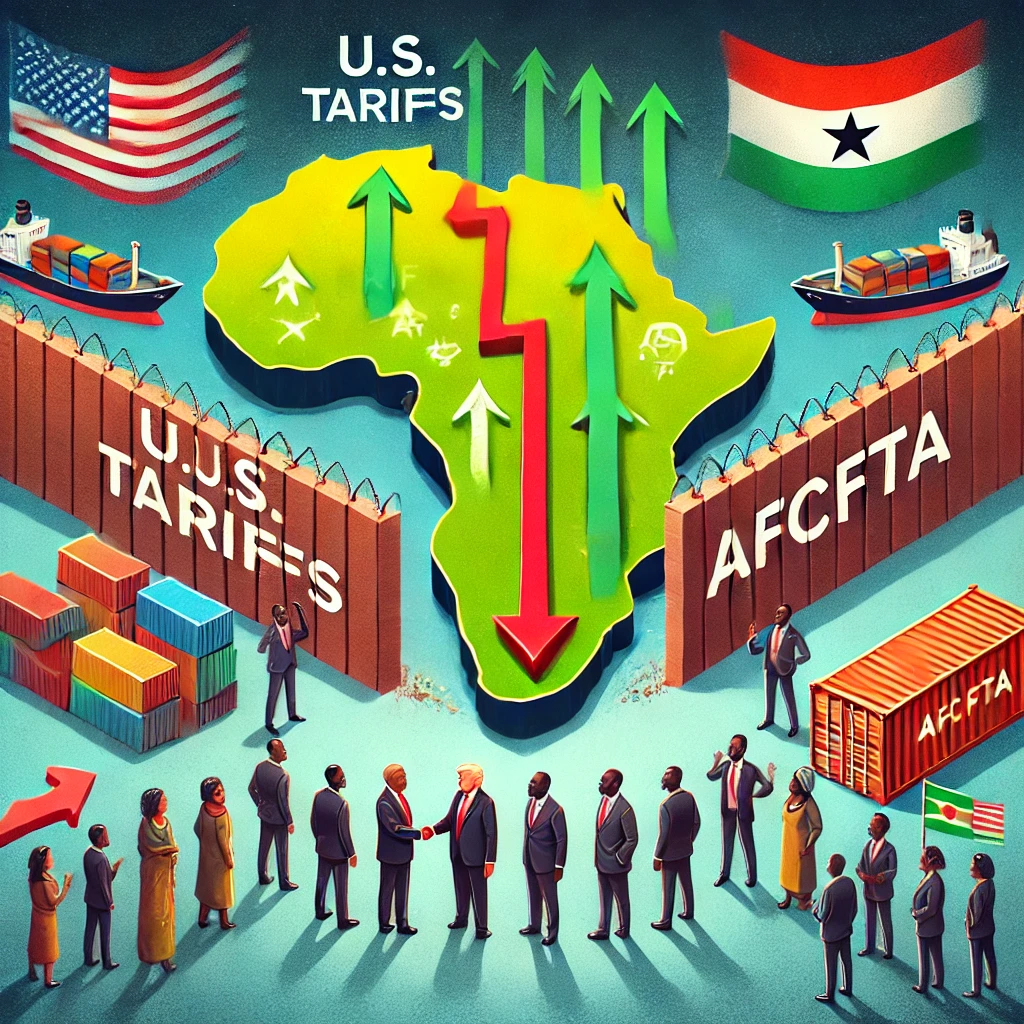
 The recent wave of steep tariffs imposed by the United States—ranging from 30% to 50%—under President Donald Trump’s trade policy doctrine has had a significant impact on Africa’s export relationship with Washington. These punitive tariffs have cast a shadow over the long-standing trade relations between Africa and the United States, particularly affecting the gains made under the African Growth and Opportunity Act (AGOA). AGOA, enacted in 2000, was a crucial platform that granted duty-free access to the U.S. market for over 6,500 products from eligible African countries, aiming to stimulate African industrialization and economic diversification.
The new tariffs imposed on goods such as textiles, agricultural products, and light manufacturing from key African economies now jeopardize much of the progress that had been made under AGOA. However, despite the challenges posed by these tariffs, they also present an opportunity for Africa to chart a new course through the African Continental Free Trade Area (AfCFTA). With AfCFTA already operational, African nations have the opportunity to recalibrate their trade ambitions by turning inward and building a more self-reliant economic bloc.
AfCFTA, encompassing 54 of 55 African Union member states and creating a single market of over 1.4 billion people, provides the continent with an unprecedented chance to grow intra-African trade and industrial value chains that are less vulnerable to geopolitical shocks. The current situation serves as a wake-up call for Africa to no longer rely solely on external goodwill but to utilize AfCFTA as a mechanism to build resilience and wealth from within.
Industries that have traditionally been AGOA-dependent, such as garment factories in Ethiopia, agricultural cooperatives in Kenya, and automobile assemblers in South Africa, are now rethinking their market strategies. For example, Ethiopia’s textile exports, once destined for U.S. department stores, are now being redirected towards fashion retailers in West Africa and North Africa, leveraging AfCFTA’s reduced tariff structure.

Furthermore, AfCFTA is driving investments in critical sectors such as transport infrastructure, trade facilitation, and regulatory harmonization. The roll-out of the AfCFTA Adjustment Fund and Digital Trade Protocol by the Secretariat aims to cushion member states from external shocks like those posed by U.S. tariffs while streamlining cross-border trade.
The current climate is pushing African governments and businesses to become more strategic about regional value chains. For instance, there is a growing realization that raw materials such as cocoa from Côte d’Ivoire and Ghana should not be exported to the U.S. but used to build competitive chocolate brands within Africa and sell across the continent. This shift in mindset is crucial for Africa to capitalize on the opportunities provided by AfCFTA.
Despite the challenges that persist, such as logistics bottlenecks, customs inefficiencies, and gaps in financing, the urgency driven by the new U.S. tariff landscape is compelling governments and businesses to act faster than ever. Leading African nations like South Africa, Nigeria, and Egypt are already engaging in discussions to build continental supply chains in key sectors such as pharmaceuticals, food processing, and technology.
In conclusion, the era of dependency on external markets is coming to an end, and the age of intra-African opportunity has begun. The current trade landscape, shaped by the imposition of steep tariffs by the United States, presents challenges but also opens the door for Africa to leverage AfCFTA in building a more self-reliant and resilient economic bloc. By seizing the opportunities provided by AfCFTA, African nations can overcome the obstacles posed by external tariffs and chart a new course towards sustainable economic growth and development.
Stay informed, Stay ahead with The Ameh News
Discover more from Ameh News
Subscribe to get the latest posts sent to your email.