 The Securities and Exchange Commission (SEC) has issued a stern warning to Nigerians about the rising threat of Ponzi schemes, citing their damaging effects on investor confidence, personal finances, and the overall stability of the country’s capital market.
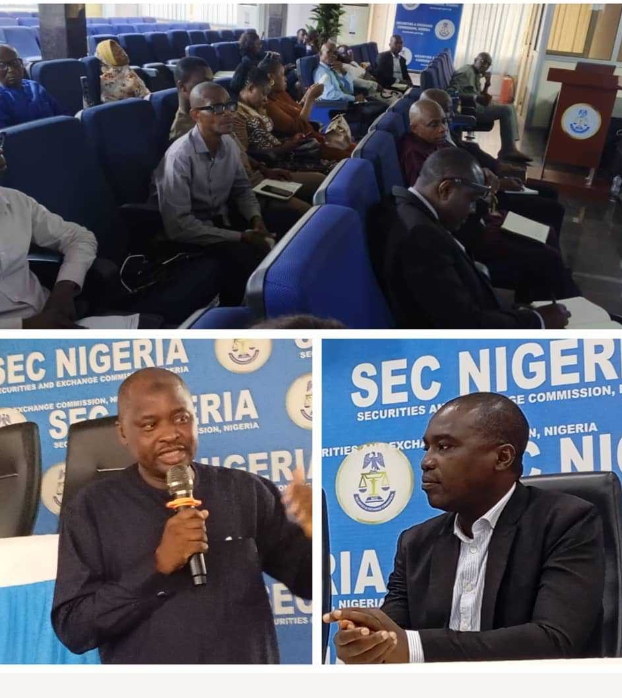
Speaking at the Capital Market Enlightenment Programme organized by the Capital Market Correspondents Association of Nigeria (CAMCAN), Dr. Sa’ad Abdulsalam, Head of the SEC’s Enforcement Department, said fraudulent investment platforms continue to exploit economic hardship and low financial literacy among Nigerians.
Presenting a paper titled “Ponzi Schemes: Avoiding the Pitfalls of Illegality”, Abdulsalam highlighted that such schemes, which promise unrealistic returns, are growing rapidly and pose a systemic risk to the financial ecosystem.
“The erosion of market confidence caused by Ponzi schemes leads to significant volatility and reduced investor engagement,” he said. “The fallout not only devastates individual finances but also undermines the credibility of regulatory institutions.”
A History of Financial Scams
Nigeria has had a long and troubling history with Ponzi operations, from the Umanah Umanah scheme of the 1990s to Nospecto in the early 2000s and the infamous MMM craze of the 2010s. According to Abdulsalam, over 400 illegal fund managers were identified by the SEC in 2010 alone.
“These schemes represent more than just financial losses,” he said. “They destroy trust, livelihoods, and ultimately deepen poverty in affected communities.”
Why Ponzi Schemes Thrive
Abdulsalam identified a mix of factors fueling the rise of Ponzi operations—including economic hardship, poor investor education, and the viral spread of misinformation through social media.
He admitted that enforcement has become increasingly difficult as fraudsters evolve with digital tools and platforms. “Ponzi schemes are multiplying geometrically, and our response must evolve at a similar pace,” he said.
SEC’s Multi-Pronged Response
In response, the SEC has intensified public awareness campaigns to educate Nigerians about the dangers of unregulated investments. This includes school outreach, community-based workshops, TV and radio broadcasts, and targeted digital engagement.
To assist the public in identifying legitimate operators, the Commission regularly publishes the list of licensed capital market operators on its official website. It has also taken decisive action against illegal operations, including sealing off premises and pursuing legal action.
“When illegal operations are identified, we do not hesitate to act,” Abdulsalam said, noting that the SEC works in tandem with law enforcement and the Office of the Attorney General to prosecute offenders.
Interagency Collaboration Key to Success
The SEC also emphasized the importance of cross-agency collaboration. Through the Financial Services Regulation Coordinating Committee—which includes the Central Bank of Nigeria (CBN), the Corporate Affairs Commission (CAC), and the Nigeria Deposit Insurance Corporation (NDIC)—the Commission is working to establish a united front against fraudulent operators.
“Ponzi schemes don’t respect boundaries, so our enforcement strategies must be just as coordinated,” Abdulsalam said.
Final Word to the Public
The Commission urged Nigerians to remain cautious and conduct due diligence before investing.
“Capital markets can only thrive in an environment of trust and transparency,” Abdulsalam stated. “Through vigilance, education, and joint action, we can protect our economy from the destructive impact of Ponzi schemes.”
Stay informed, stay ahead with The Ameh News
Discover more from Ameh News
Subscribe to get the latest posts sent to your email.