 The impressive first-quarter 2026 performance of United Airlines is reverberating far beyond the United States, with aviation analysts and industry stakeholders urging Nigerian airline operators to draw critical lessons from the carrier’s disciplined growth model though from different operating environments.
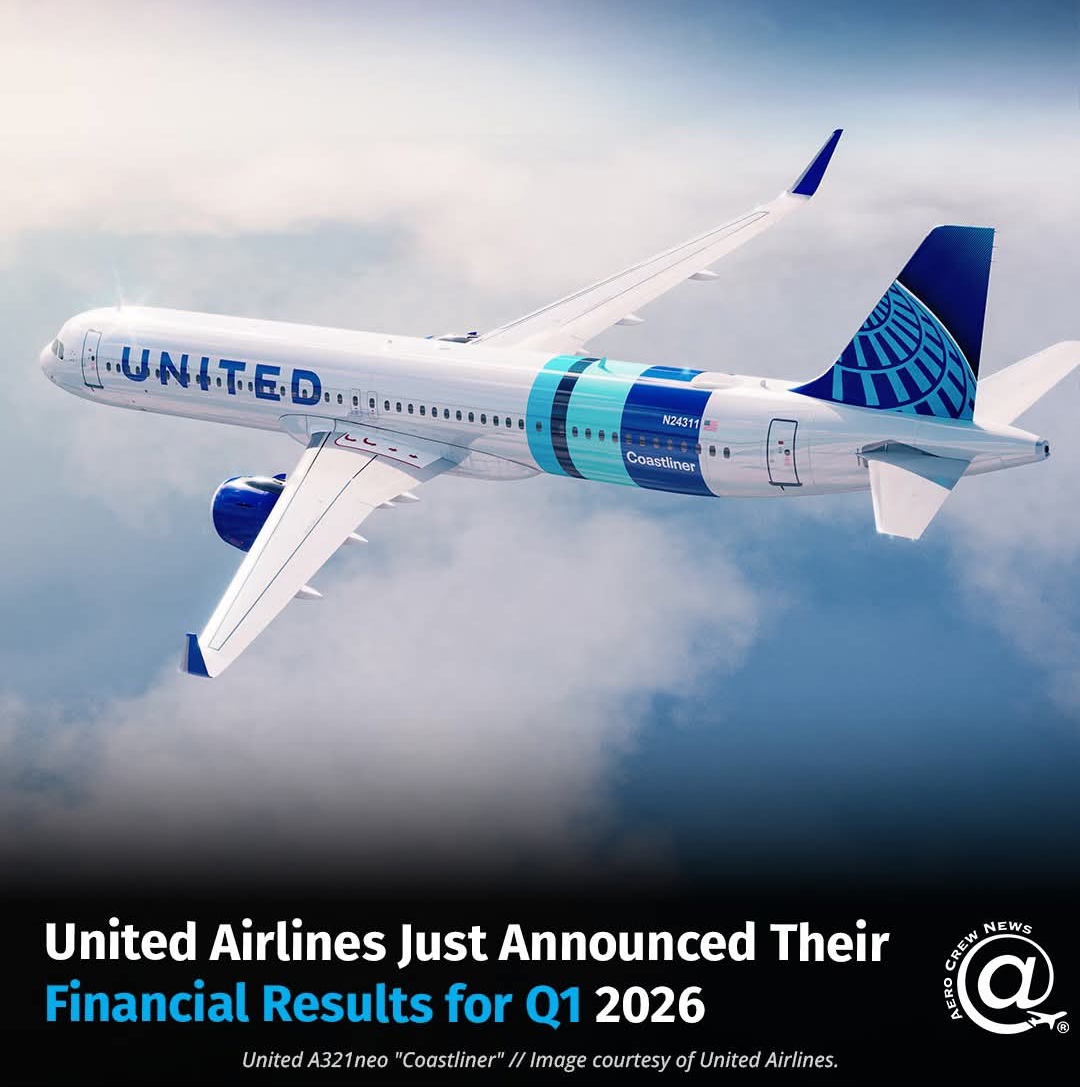
According to figures spotlighted by Aero Crew News, United posted a pre-tax profit of $870 million, a sharp rise from $478 million recorded in Q1 2025. The airline also reported $14.6 billion in revenue, representing a 10.6% year-on-year increase, while diluted earnings per share climbed 85% to $2.14. Its pre-tax margin rose to 6.0%, reflecting improved cost efficiency and operational discipline.
Operational Excellence Driving Performance
At the heart of the airline’s success is a renewed focus on operational efficiency and customer-centric services. United Airlines recorded the best on-time performance among the top eight U.S. carriers, alongside record passenger volumes—a testament to reliability and strong market demand.
The airline’s premium revenue grew by 14%, underscoring a strategic pivot toward high-value customers, a model increasingly adopted by global carriers seeking to boost profitability without excessive capacity expansion.
Looking ahead, United is taking a cautious but forward-thinking approach by reducing capacity by five percentage points for the rest of 2026, while investing in future-ready innovations such as Relax Row seating, deployment of the Airbus A321neo Coastliner fleet, and onboard Starlink Wi-Fi connectivity by 2027.
Experts: A Blueprint Nigerian Airlines Must Study
Industry experts say the United Airlines model offers a practical roadmap for Nigeria’s aviation sector, which continues to grapple with high operating costs, infrastructure deficits, and inconsistent service delivery.
An aviation economist notes that Nigerian carriers must move beyond survival tactics and adopt structured operational frameworks. According to him, “what we are seeing with United Airlines is not accidental. It is the result of deliberate planning—capacity discipline, fleet modernisation, and a focus on premium service segments. Nigerian airlines must begin to think along these lines if they want to scale sustainably.”
Similarly, another industry analyst emphasised the importance of reliability and scheduling efficiency. He pointed out that on-time performance is not just a metric, but a revenue driver, as it builds customer trust and encourages repeat business—an area where many Nigerian carriers still struggle.
Bridging the Gap in Nigeria’s Aviation Sector
Operators such as Air Peace, Ibom Air, and United Nigeria Airlines have made notable strides in recent years, particularly in fleet expansion and service quality. However, experts insist that deeper structural reforms are needed across the industry.
These include:
Strategic capacity management to avoid route oversupply and financial strain
Investment in modern aircraft to reduce maintenance and fuel costs
Enhanced passenger experience, particularly in premium segments
Data-driven operations to improve scheduling, pricing, and route optimisation
There are also calls for stronger regulatory and policy support from agencies such as the Nigerian Civil Aviation Authority to create an enabling environment for airlines to thrive.
A Moment of Reflection and Opportunity
For Nigeria’s aviation industry, the success of United Airlines is more than just a global headline—it is a case study in resilience, innovation, and strategic discipline.
As air travel demand continues to rebound globally, experts believe Nigerian carriers stand at a critical crossroads: either embrace structural transformation or risk falling behind in an increasingly competitive market.
The message is clear—profitability in modern aviation is no longer driven by scale alone, but by efficiency, innovation, and the ability to consistently deliver value to passengers.
United Airlines’ $870 million Q1 2026 profit has triggered fresh calls for Nigerian airlines to adopt disciplined operations, improve efficiency, and invest in premium passenger services to unlock growth.
United Airlines posts $870M Q1 profit as experts urge Nigerian carriers like Air Peace, Ibom Air and others to emulate its operational efficiency, capacity discipline, and premium service strategy for sustainable growth.
Discover more from Ameh News
Subscribe to get the latest posts sent to your email.