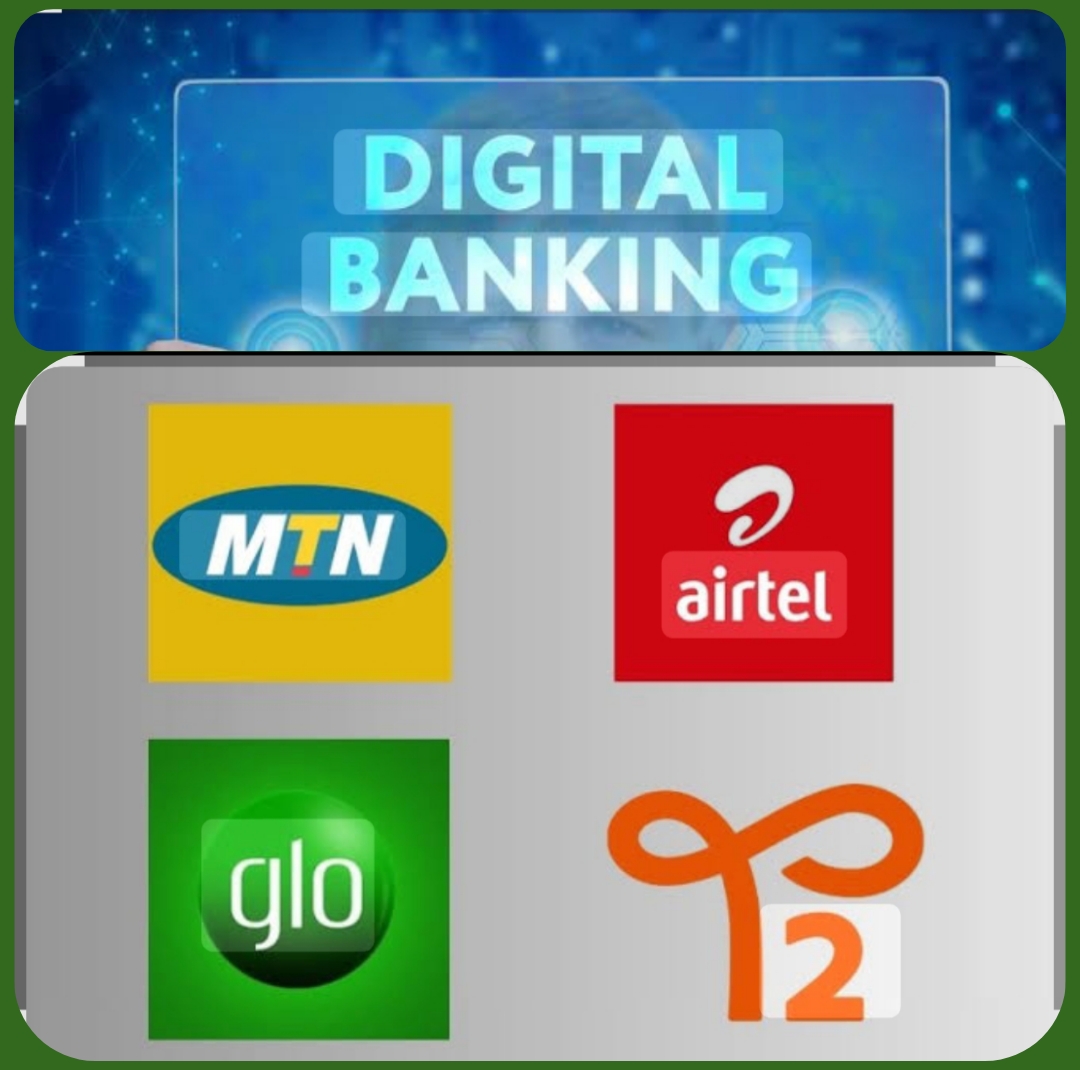
 A quiet but profound shift is taking place within Nigeria’s digital economy—one that is redefining the role of telecommunications companies and challenging the traditional boundaries of banking. Airtime, once a basic prepaid service for voice calls and data, is increasingly functioning as a form of currency and, more significantly, as an informal credit system powering millions of micro-transactions daily.
As this transformation deepens, a critical question is emerging: can telecom operators evolve into fully licensed digital banks?
Airtime Credit: Nigeria’s Invisible Lending System
The scale of airtime’s financial evolution is becoming clearer. According to Gbenga Adebayo, Chairman of the Association of Licensed Telecoms Operators of Nigeria (ALTON), airtime credit has effectively become a parallel credit system serving millions of Nigerians excluded from formal finance.
Adebayo explained that traders, artisans, and small-scale entrepreneurs rely heavily on airtime advances—popularly known as “borrow credit”—to sustain daily business activities, especially when access to bank loans is limited or non-existent.
“The airtime credit market serves as an informal credit mechanism for millions of Nigerians… particularly those who depend on short-term advances to sustain daily economic activity,” he said.
Industry estimates put the value of this airtime-driven credit market between ₦300 billion and ₦400 billion annually, highlighting its significance as a shadow financial system operating alongside formal banking.
Telcos as Financial Gateways
Telecom operators such as MTN Nigeria and Airtel Nigeria have built expansive networks that now double as financial access channels. Through USSD platforms, mobile wallets, and agent banking infrastructure, they enable millions of Nigerians to transfer money, pay bills, and access micro-services without visiting a bank branch.
Their reach—cutting across rural and urban communities—has made them indispensable to Nigeria’s financial inclusion drive.
Economist Weighs In: Opportunity Meets Structural Risk
Reacting to questions from The Ameh News, economist Celestine Ukpong described the rise of airtime credit as both “a market innovation and a policy signal.”
Ukpong noted that the emergence of a ₦300–₦400 billion informal credit ecosystem reflects a structural failure in Nigeria’s formal financial system to meet the needs of low-income earners and small businesses.
“What we are seeing is not accidental. It is the market responding to a vacuum. When formal credit is inaccessible, people naturally gravitate toward alternative systems—even if those systems are informal or inefficient,” he said.
However, he cautioned against assuming that telecom operators can seamlessly transition into full banking institutions without significant regulatory and operational reforms.
According to him, while telcos possess strong distribution networks and customer data, they currently lack the risk management frameworks, capital structures, and regulatory oversight required for large-scale lending.
“Banking is not just about transactions—it is about managing risk, particularly credit risk. Telcos are efficient at distribution, but lending requires a completely different institutional capacity,” Ukpong added.
Regulatory Constraints: The CBN Framework
Under existing regulations by the Central Bank of Nigeria (CBN), telecom operators are restricted to operating within frameworks such as Payment Service Banks (PSBs).
These licenses allow telcos to:
Accept deposits
Facilitate payments and remittances
But critically, they cannot issue loans, limiting their ability to function as full digital banks.
Ukpong argues that this restriction is both necessary and strategic.
“The CBN’s cautious approach is understandable. Expanding telcos into lending without adequate safeguards could introduce systemic risks. But at the same time, over-regulation may slow innovation and delay financial inclusion gains,” he noted.
Market Readiness: A System at a Crossroads
Nigeria’s financial ecosystem is increasingly showing signs of readiness for a more integrated model between telecoms and banking.
Key drivers include:
High mobile penetration across the country
Persistent financial exclusion levels
Rapid fintech innovation
Growing consumer trust in digital financial tools
For many analysts, the airtime credit market itself is proof that Nigerians are willing to adopt alternative financial systems when they are accessible and convenient.
The Future: From Airtime Credit to Digital Banking?
The path forward is likely to be evolutionary rather than immediate.
Ukpong outlined a phased approach that could enable telecom operators to expand their financial role without destabilising the system:
Gradual expansion of PSB licenses to include controlled lending
Stronger partnerships between telcos, banks, and fintech companies
Development of robust regulatory frameworks tailored to digital banking models
He stressed that any transition must be anchored on consumer protection, financial stability, and institutional capacity.
Redefining Banking in the Digital Age
The convergence of telecommunications and financial services is no longer speculative—it is already unfolding. Airtime has moved beyond communication to become a financial tool, a credit system, and a symbol of how innovation can outpace regulation.
As Gbenga Adebayo highlighted, millions of Nigerians already depend on this system for survival. And as Celestine Ukpong pointed out, its growth reflects deeper structural gaps within the formal financial sector.
The challenge for policymakers is clear:
whether to formalise and regulate this evolving ecosystem—or risk being overtaken by it.
In the end, Nigeria’s journey from airtime to assets may not just redefine telecoms. It may redefine banking itself.
Nigeria’s ₦400bn airtime credit market is reshaping financial access, with telcos playing a growing role. Experts, including economist Celestine Ukpong, say regulatory reforms could determine whether telecom firms evolve into digital banks.
Airtime is powering a ₦300–₦400bn informal credit market in Nigeria with whether telcos can become digital banks amid regulatory and financial system challenges.
Discover more from Ameh News
Subscribe to get the latest posts sent to your email.