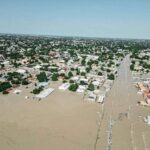
 The Lagos State Government has introduced a pioneering flood risk insurance programme designed to provide rapid, automated financial support to residents affected by flooding, marking a major shift from conventional disaster response to real-time climate resilience financing.
The initiative was formally launched in Lagos on April 29, 2026, with development partners, insurers, and multilateral institutions in attendance, alongside the signing of key implementation agreements with the state government.
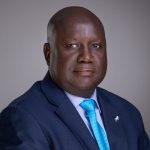
Governor Babajide Sanwo-Olu, represented at the event by the Secretary to the State Government, Mrs. Bimbola Salu-Hundeyin, said the policy introduces a parametric insurance model that triggers payouts automatically once pre-defined flood thresholds are met.
Unlike traditional insurance systems that require lengthy claims verification, the model relies on satellite data and advanced flood modelling to determine impact levels, enabling immediate disbursement of funds to affected populations.
Sanwo-Olu explained that the scheme will allow the government to deliver direct cash transfers and emergency assistance within days of a flooding event, significantly reducing recovery delays for households and small businesses.
In its first phase, the programme is expected to cover approximately four million vulnerable residents across seven local government areas in the state. It also provides up to $7.5 million in coverage per flood event, creating a financial buffer for high-risk communities.
The governor further noted that beneficiaries will not be required to apply or pay premiums, as the policy is structured as a government-backed social protection mechanism. Resident data from existing state registration systems will be used to identify and reach affected individuals swiftly during emergencies.
The scheme is being co-financed, with the InsuResilience Solutions Fund covering 90 percent of the first-year premium, while the Lagos State Government provides the remaining 10 percent, with plans to gradually increase its contribution to ensure long-term sustainability.
Sanwo-Olu warned that failure to address climate risks could cost Lagos an estimated $40 billion by 2050, urging stronger proactive adaptation strategies and calling on the Federal Government to consider scaling the model nationwide.
Commissioner for Finance, Mr. Abayomi Oluyomi, said the policy strengthens fiscal resilience by insulating public finances from climate shocks. He added that the parametric structure ensures rapid payouts based on flood intensity, allowing quicker recovery without conventional damage assessments.
Under the pilot phase, the initiative is expected to provide rapid response support to up to 1.7 million households across the targeted LGAs, including Ajeromi-Ifelodun, Shomolu, Alimosho, Amuwo-Odofin, Apapa, Kosofe, and Ojo.
Speaking on the global partnership framework, the United Nations Development Programme described the initiative as a transformative model for disaster preparedness and climate resilience. The UNDP said flooding has continued to cause significant economic losses in Lagos, affecting livelihoods, infrastructure, and urban productivity.
Insurance industry leaders also commended the initiative. Mr. Kunle Ahmed, Chief Executive Officer of AXA Mansard Insurance Plc, speaking for the underwriting consortium, said the system guarantees swift payouts once flood parameters are triggered, eliminating delays associated with traditional claims processing.
Dr. Oreoluwa Finnih, Special Adviser on Sustainable Development, said the programme represents a shift toward data-driven disaster management, strengthening the state’s ability to protect vulnerable populations while improving fiscal planning.
Similarly, Ms. Ekhosuehi Iyamen, Secretary-General of the Insurance Development Forum, described the initiative as a landmark development in climate risk financing, noting that its satellite-triggered payout mechanism offers a scalable model for other African economies.
The project is being implemented with support from international development partners, including the German Federal Ministry for Economic Cooperation and Development (BMZ), the UNDP, and the Insurance Development Forum.
Officials say the Lagos flood insurance scheme positions the state among global frontrunners in innovative climate adaptation strategies, blending technology, insurance, and social protection to reduce disaster vulnerability.
Lagos State has launched a parametric flood insurance scheme under Governor Babajide Sanwo-Olu to deliver instant cash relief to about four million residents affected by flooding. The $7.5m per event model, supported by UNDP, AXA Mansard, and global partners, uses satellite data for automatic payouts to boost climate resilience and disaster response efficiency.
Discover more from Ameh News
Subscribe to get the latest posts sent to your email.