 The Central Bank of Nigeria has retained the country’s Monetary Policy Rate (MPR) at 26.5 per cent, signalling a cautious but confident stance by policymakers as inflationary pressures continue to test the Nigerian economy amid rising geopolitical and global economic uncertainties.
At the end of its 305th meeting held on May 19 and 20, 2026, the Monetary Policy Committee (MPC) of the apex bank voted unanimously to maintain all key monetary parameters, citing the need to sustain macroeconomic stability while allowing earlier policy reforms to continue yielding results.
Governor of the CBN and Chairman of the MPC, Olayemi Cardoso, disclosed that the Committee resolved to retain the Monetary Policy Rate at 26.5 per cent, while also maintaining the asymmetric corridor around the MPR at +50/-450 basis points.
The Committee further retained the Cash Reserve Requirement (CRR) for Deposit Money Banks at 45 per cent, Merchant Banks at 16 per cent, and non-TSA public sector deposits at 75 per cent.
According to the MPC, the decisions were based on a broad assessment of domestic and global economic developments, especially the renewed inflationary pressures triggered by external shocks and geopolitical tensions in the Middle East.
Despite headline inflation rising marginally for the second consecutive month, the Committee expressed confidence that the current uptick remains temporary and manageable.
The MPC noted that the spillover effects from the Middle East crisis have increased global energy prices, transportation costs, and logistics expenses, contributing to inflationary pressures across many economies, including Nigeria.
However, the Committee emphasised that Nigeria’s exposure to these shocks has been considerably reduced due to earlier economic reforms undertaken by the Federal Government and the apex bank.
According to the MPC, improvements in exchange rate stability, stronger external reserves, enhanced monetary policy transmission, fiscal consolidation efforts, and a more resilient banking sector have collectively strengthened the economy’s shock-absorption capacity.
The Committee stressed that without these reforms, the impact of global commodity and energy price increases on domestic inflation would have been significantly worse.
The MPC also welcomed Nigeria’s recent sovereign credit rating upgrade, describing it as a strong endorsement of the country’s improving macroeconomic fundamentals, policy credibility, and ongoing reform trajectory.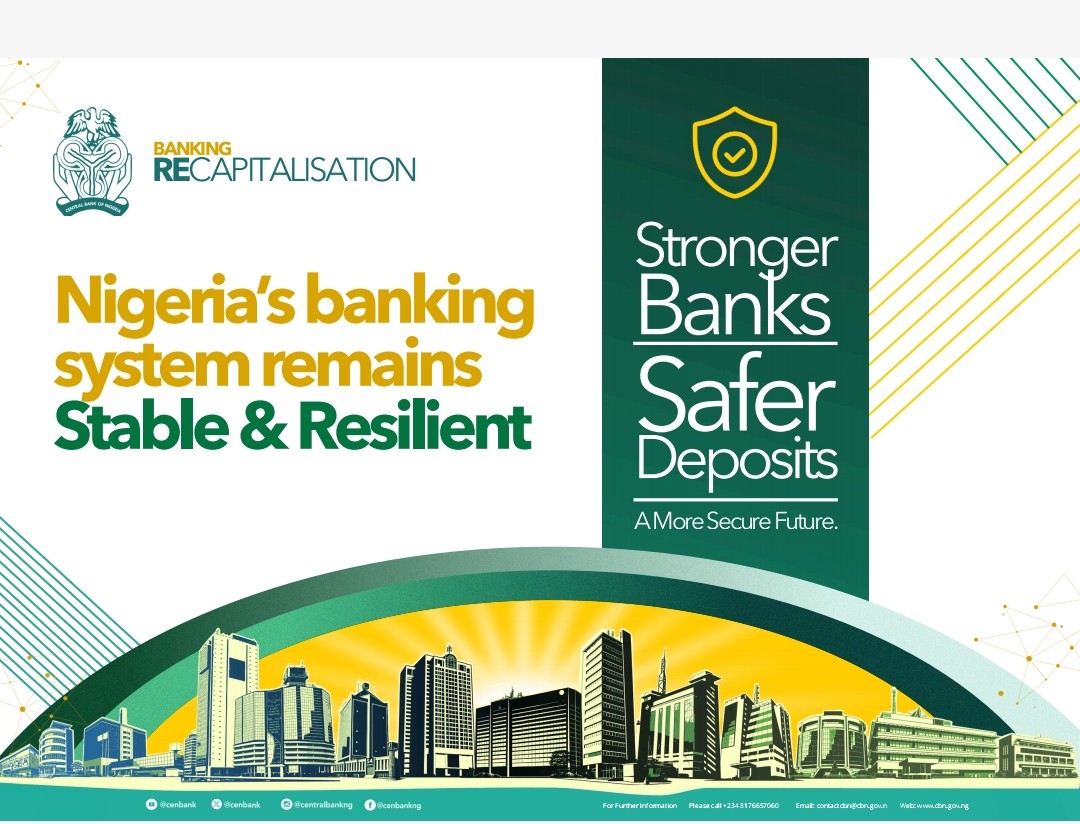
Members of the Committee maintained that a cautious and vigilant monetary policy stance remains necessary to anchor inflation expectations and preserve macroeconomic stability.
In a major development for the banking sector, the MPC expressed satisfaction with the successful completion of the banking recapitalisation exercise, which resulted in the emergence of 33 stronger and better-capitalised banks.
The Committee noted that the strengthened financial institutions are now better positioned to support economic growth and withstand future shocks, while urging regulators to remain proactive in addressing any post-recapitalisation risks.
On domestic economic performance, the Committee highlighted that headline inflation rose slightly to 15.69 per cent in April 2026 from 15.38 per cent recorded in March.
Food inflation climbed to 16.06 per cent from 14.31 per cent, largely due to higher transportation and logistics costs as well as seasonal supply challenges.
Core inflation, however, moderated to 15.86 per cent from 16.21 per cent in March, indicating easing pressure in non-food components.
The MPC also pointed to encouraging signs in the broader inflation trend, noting that the 12-month average inflation rate declined for the sixth consecutive month to 19.16 per cent in April 2026 from 20.05 per cent in March.
Month-on-month inflation equally slowed sharply to 2.13 per cent compared to 4.18 per cent in the previous month, reflecting moderation across both food and core inflation segments.
Nigeria’s economic growth outlook also remained positive, with real Gross Domestic Product (GDP) expanding by 4.07 per cent in the fourth quarter of 2025, compared to 3.98 per cent in the preceding quarter.
The growth was driven mainly by stronger industrial and agricultural activities, alongside continued expansion in the non-oil sector.
The non-oil sector recorded 3.99 per cent growth, supported by activities in information and communication, transportation, and storage services.
Meanwhile, growth in the oil sector accelerated to 6.79 per cent from 5.84 per cent, largely due to improved refining activities in the downstream petroleum sector.
Nigeria’s external reserves also showed further improvement, rising to $49.49 billion as of May 15, 2026, from $48.35 billion at the end of March.
The reserves are estimated to provide import cover for approximately 9.04 months of goods and services, reinforcing investor confidence and supporting exchange rate stability.
Globally, the MPC observed that economic growth is expected to moderate in 2026 amid tighter financial conditions, geopolitical tensions, and disruptions in energy markets.
The Committee warned that global inflationary pressures could remain elevated due to rising commodity prices, supply chain disruptions, and exchange rate pressures in emerging markets.
As a result, many central banks across advanced and developing economies are expected to maintain cautious, data-driven monetary policy approaches rather than aggressively cutting interest rates.
Looking ahead, the MPC projected that Nigeria’s economic output would remain resilient in 2026 despite downside risks associated with the Middle East conflict.
The Committee also acknowledged the possibility of moderate inflation increases in the near term but expressed optimism that previous monetary tightening measures, exchange rate stability, and improved food supply conditions would help restore disinflation over time.
Reaffirming its commitment to price stability and financial system resilience, the MPC stated that it would continue to adopt a forward-looking and evidence-based policy framework in response to evolving domestic and global economic conditions.
The next meeting of the Monetary Policy Committee is scheduled for July 20 and 21, 2026.
The Central Bank of Nigeria has retained the Monetary Policy Rate at 26.5%, citing inflation pressures, global uncertainties, stronger reserves, and improving economic fundamentals.
Discover more from Ameh News
Subscribe to get the latest posts sent to your email.