…..From First Bank and UAC’s historical dominance to a new industrial heavyweight, analysts say the planned Dangote Refinery listing could redefine how Nigeria’s economy is measured in real time.
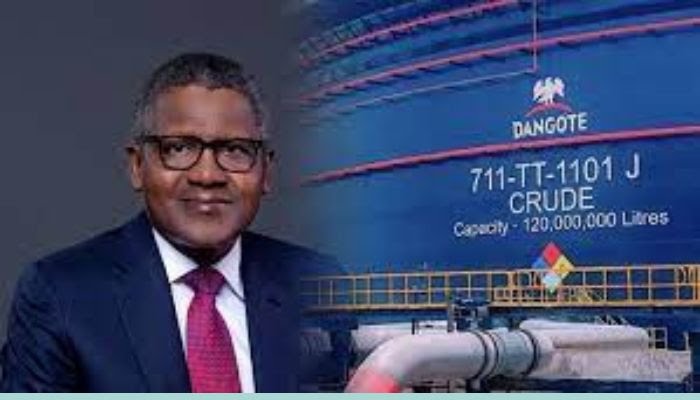 As anticipation builds around the potential stock market listing of the refinery arm of Dangote Industries Limited, financial analysts and policy experts are increasingly describing the development as more than a corporate milestone.
They say it could represent a structural shift in how Nigeria’s economic performance is tracked, interpreted, and benchmarked—both domestically and internationally.
If all goes according to plan over the next two years, the listing could position the refinery as a live economic indicator of Nigeria’s industrial output, energy transformation, and import substitution progress—similar, in symbolic terms, to how legacy institutions once reflected national economic sentiment.
Historically, firms such as First Bank of Nigeria and UAC of Nigeria served as informal “economic thermometers,” reflecting the country’s trade cycles, consumer demand, and financial stability. But analysts argue that Nigeria’s economic structure has evolved significantly since then, moving from a largely consumption-driven system to one increasingly shaped by large-scale industrial assets and infrastructure investments.
The emergence of a globally significant refinery project entering the capital market could therefore mark a turning point.
Speaking to The Ameh News, veteran journalist and media scholar Dr Akin Olaniyan described the development as “a potential redefinition of Nigeria’s economic storytelling.”
“For decades, we have relied on financial institutions and trading companies to interpret the pulse of the economy. But a refinery of this scale introduces a new dimension—production capacity as a measurable market signal. If the listing happens, it will shift attention from consumption metrics to industrial output indicators,” he said.
Olaniyan noted that the symbolic weight of such a listing may be as important as its financial valuation.
Economist Celestine Ukpong said the development could improve transparency in Nigeria’s real sector performance, but warned that global oil volatility would heavily influence market perception.
“A listed refinery will not just be a company—it will be a proxy for Nigeria’s energy transition journey. Investors will effectively be pricing Nigeria’s refining capacity, foreign exchange savings, and import substitution efficiency in real time,” he explained.
He added that while the opportunity is significant, macroeconomic risks such as currency instability and crude supply dynamics would remain critical variables.
Public relations strategist and founder of Henryjvaleens, Dr Ejike Nduilo, emphasised the communication and perception implications of the listing.
“This is not just a financial event; it is a global perception event. Nigeria will be telling a story of industrial maturity. How that story is communicated will influence investor confidence, sovereign perception, and even diaspora engagement,” he said.
He stressed that consistent transparency and strategic messaging would be essential to sustain investor trust.
Chartered accountant and financial analyst Peter Adebayo FCA focused on valuation discipline and market readiness.
“The key question is not only whether the refinery is profitable, but how its earnings will be structured for public markets. Investors will demand clarity on debt profile, forex exposure, subsidy dynamics, and cash flow stability,” he said.
He added that proper regulatory alignment and governance structures would determine long-term investor confidence.
From Legacy Benchmarks to Industrial Signals
Market observers note that the potential listing could represent a generational shift in Nigeria’s capital market identity.
Where once banking and trading firms defined the rhythm of economic sentiment, today large-scale industrial assets may take on that role. In that context, the refinery project under Dangote Industries Limited could emerge as a new reference point for measuring Nigeria’s real economy.
If successfully listed and transparently governed, analysts believe it could function as a live barometer of Nigeria’s industrial strength—tracking everything from fuel supply stability to foreign exchange savings and domestic production efficiency.
A New Economic Narrative in the Making
Beyond financial markets, the deeper implication lies in narrative power. Nigeria, long characterised by oil exports and import dependence, could begin to reframe itself through industrial capacity rather than raw extraction.
For investors, policymakers, and citizens alike, the refinery’s performance on the exchange may soon become more than a stock chart—it may become a national economic scoreboard.
And in that shift, experts say, lies the true significance of the anticipated listing: not just a new company on the market, but potentially a new way of reading Nigeria’s economy altogether.
Experts say the planned listing of Dangote Refinery could transform Nigeria’s capital market by becoming a new industrial barometer of economic performance, replacing legacy benchmarks like First Bank and UAC.
Discover more from Ameh News
Subscribe to get the latest posts sent to your email.