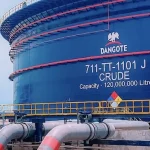
 Nigeria’s decades-long reliance on imported refined petroleum products is undergoing a major structural shift as the 650,000-barrels-per-day Dangote Petroleum Refinery & Petrochemicals continues its rapid ramp-up, reshaping the downstream oil market and improving the country’s external economic position, according to a new assessment by the Economist Intelligence Unit (EIU).
The report suggests that the refinery’s growing output is already reducing Nigeria’s fuel import burden, strengthening foreign exchange inflows, improving energy security, and setting the stage for stronger GDP performance in the medium term.
A Structural Break from Decades of Import Dependence
For years, Nigeria operated a paradoxical fuel system—despite being Africa’s largest crude oil producer, it relied heavily on imported refined petroleum products due to the collapse of state-owned refineries.
The EIU described the downstream sector as “long dysfunctional,” noting that Nigeria produced around 1.5 million barrels of crude oil daily while importing nearly all of its petrol and refined fuels.
That structure, the report said, placed heavy pressure on foreign reserves, increased exposure to global price shocks, and created inefficiencies in domestic energy supply.
The emergence of the Dangote refinery, however, marks a turning point.
Refinery Now Meets Majority of Domestic Demand
According to the EIU, the refinery’s ramp-up since 2023 has significantly altered supply dynamics in Nigeria’s fuel market.
By April, it was reportedly meeting close to 80 per cent of domestic petrol demand, with output levels rising steadily as operations approached full capacity.
Once fully optimised, the facility is expected to satisfy Nigeria’s entire domestic fuel requirement while generating surplus volumes for export markets across Africa and beyond.
Energy analysts say this marks the first time in decades that Nigeria has had meaningful domestic refining capacity capable of displacing imports at scale.
FX Relief and Export-Led Growth Potential
A key implication of the refinery’s expansion is its impact on Nigeria’s external accounts.
By reducing the need for imported refined products, the country is lowering pressure on foreign exchange reserves while simultaneously creating new export streams.
The EIU projects that by 2026 and 2027, increased output and exports from the refinery will contribute to stronger GDP growth and improved FX earnings.
It further noted that a planned expansion of capacity toward the end of the decade could amplify these gains, positioning Nigeria as a net exporter of refined petroleum products.
The report stated:
“The attainment of full capacity at, and an increase in exports from, the Dangote refinery will support real GDP growth and foreign exchange earnings in 2026 and 2027 and beyond.”
Policy Reforms Reshape Downstream Sector
The refinery’s emergence coincides with major structural reforms in Nigeria’s petroleum sector, including the removal of fuel subsidies and the adoption of market-driven pricing mechanisms.
These reforms have aimed to reduce fiscal burdens, improve efficiency, and attract private investment into downstream infrastructure.
However, the transition has also exposed tensions between domestic refining ambitions and continued fuel import approvals.
Regulatory Tensions Over Import Policy
Recent developments saw the Nigerian Midstream and Downstream Petroleum Regulatory Authority ease restrictions on petrol imports, even as domestic refining capacity expands.
The move has triggered industry debate, with stakeholders questioning whether continued importation aligns with Nigeria’s long-term industrial strategy.
In response, Dangote Industries Limited filed legal action, arguing that import approvals undermine domestic refining investments and conflict with the objectives of the Petroleum Industry Act, which prioritises local production and energy self-sufficiency.
Experts Warn Against Policy Inconsistency
Policy analysts and economic observers have cautioned that inconsistent import policies could weaken investor confidence in Nigeria’s refining sector.
The Centre for the Promotion of Private Enterprise (CPPE) warned that sustained reliance on imported fuel could undermine industrialisation goals and discourage further investment in domestic refining capacity.
It also noted that Nigeria’s historic dependence on imports contributed significantly to exchange rate instability and pressure on external reserves.
Macroeconomic Signals Turning Positive
The refinery’s impact is increasingly reflected in broader macroeconomic indicators.
Earlier this year, S&P Global Ratings cited rising domestic refining capacity and improved hydrocarbon export potential as key factors behind Nigeria’s sovereign credit rating upgrade—the first in 14 years.
Analysts say this reflects growing investor confidence in Nigeria’s energy reforms and external stability outlook.
Regional Energy Implications
Beyond Nigeria, the refinery is being closely watched across Africa as a potential game-changer for regional fuel markets.
Many African countries remain heavily dependent on imported refined petroleum products despite rising demand from transportation, industrial production, and power generation.
Analysts suggest that Nigeria’s emergence as a refining hub could gradually reshape West African fuel trade flows, reduce import dependency, and strengthen regional supply resilience.
Outlook
The EIU concludes that Nigeria’s downstream transformation is still evolving but already represents one of the most significant structural shifts in the country’s modern economic history.
If current production and expansion targets are achieved, Nigeria could transition from a structurally import-dependent fuel market to a major exporter of refined petroleum products within the next decade—reshaping both its fiscal outlook and its position in global energy markets.
EIU says Dangote Refinery is transforming Nigeria’s downstream oil sector by reducing fuel imports, boosting FX earnings, improving GDP outlook, and strengthening energy security amid regulatory tensions.
Discover more from Ameh News
Subscribe to get the latest posts sent to your email.