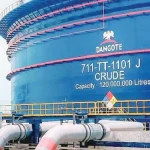
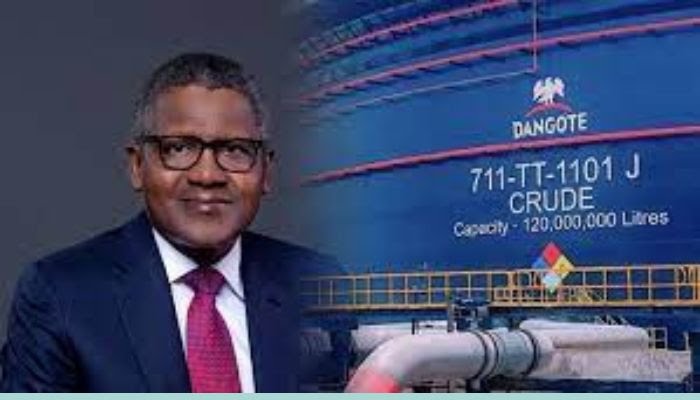
 What was once celebrated by the Federal Government as a landmark achievement in Nigeria’s industrial history has now evolved into one of the country’s most divisive economic controversies.
When President Bola Ahmed Tinubu publicly praised the Dangote Refinery during international engagements in Kigali, the refinery was projected as a symbol of Nigeria’s economic rebirth and Africa’s industrial awakening.
For many Nigerians, it represented hope after decades of dependence on imported petroleum products despite Nigeria’s status as one of Africa’s largest crude oil producers.
But months later, the same refinery has become the centre of legal battles, regulatory disputes, and wider accusations of economic sabotage tied to fuel importation policies and alleged external influence from global financial institutions.
The growing controversy intensified after legal disputes emerged over import licences granted to petroleum marketers despite rising domestic refining capacity.
Supporters of the refinery argue that continued large-scale fuel importation could undermine Nigeria’s long-awaited push toward energy independence and industrial self-sufficiency.
The situation has now triggered heated public debates about the roles of the International Monetary Fund and the World Bank in shaping Nigeria’s economic policies.
Some commentators claim Nigeria is being pressured toward policies that could weaken domestic production in favour of sustained import dependency. In contrast, others insist market competition remains necessary to avoid monopolistic control within the downstream sector.
As emotions rise nationwide, experts who spoke with The Ameh News offered varying perspectives on the unfolding crisis.
“Nigeria Must Protect Strategic National Investments” — Dr Akin Olaniyan
Reacting to the controversy, Dr Akin Olaniyan, a lecturer at the Lagos Business School with more than three decades of journalism experience, described the refinery dispute as a defining moment in Nigeria’s economic history.
According to him, nations that successfully industrialised historically protected critical sectors during their growth stages before exposing them fully to global competition.
He warned that policy inconsistency could discourage long-term investments and damage investor confidence in Nigeria’s industrial environment.
“Every serious economy protects strategic industries at critical moments of development,” Olaniyan said.
He added that while competition is important, policymakers must also consider the broader national implications of weakening local refining capacity after decades of failed public refinery investments.
Olaniyan further stressed that the controversy reflects deeper concerns about Nigeria’s economic direction and whether the country truly intends to pursue industrial independence.
“Import Dependency Weakens National Sovereignty” — Celestine Ukpong
Economist Celestine Ukpong told The Ameh News that Nigeria’s fuel import history has long exposed the economy to foreign exchange instability and inflationary pressure.
He argued that any country heavily dependent on imported refined petroleum products remains vulnerable to external market shocks.
According to Ukpong, the emergence of large-scale domestic refining should ordinarily reduce pressure on foreign reserves and strengthen the naira over time.
He warned that excessive reliance on imported fuel, even in the presence of growing domestic capacity, could delay Nigeria’s economic stabilisation efforts.
“Nigeria cannot continue exporting crude and importing poverty,” he said.
Ukpong noted that while market competition is healthy, strategic industries such as energy require balanced policies capable of supporting local productivity while ensuring fair pricing mechanisms.
He also cautioned against emotionally charged narratives, urging Nigerians to focus on long-term structural reforms rather than political divisions.
“Investor Confidence Depends on Policy Stability” — Peter Adebayo FCA
Financial analyst Peter Adebayo described the refinery controversy as a major test of Nigeria’s regulatory credibility ahead of potential large-scale investment activities linked to the sector.
Speaking with The Ameh News, Adebayo noted that investors closely monitor legal disputes, policy reversals, and regulatory uncertainty when evaluating emerging markets.
According to him, Nigeria risks sending conflicting signals to both domestic and international investors if major industrial projects become entangled in prolonged policy contradictions.
“You cannot encourage investors to build billion-dollar infrastructure and later create uncertainty around market protection and regulatory direction,” he stated.
Adebayo explained that stable policy frameworks are essential for industrial growth, particularly in capital-intensive sectors such as refining, manufacturing, and energy infrastructure.
He added that the controversy surrounding fuel imports, market competition, and refining capacity should be addressed through transparent dialogue rather than prolonged institutional confrontations.
“Public Communication Has Become a National Challenge” — Dr Ejike Nduilo
Also reacting, public relations expert Dr Ejike Nduilo, founder of Henryjvaleens, said the growing tension reflects a broader communication crisis between policymakers and the Nigerian public.
According to him, many Nigerians feel disconnected from major economic decisions because government institutions often fail to communicate reforms in ways that build public trust and confidence.
Nduilo stated that conflicting public narratives surrounding the refinery, fuel imports, and market liberalisation have created confusion and intensified suspicion across the country.
“When citizens do not fully understand the intentions behind economic reforms, speculation naturally fills the vacuum,” he said.
He stressed the importance of transparency, stakeholder engagement, and consistent communication in managing sensitive national economic reforms.
Nduilo added that public trust remains essential if Nigeria hopes to navigate its ongoing economic transition successfully.
A Nation at an Economic Crossroads
As legal battles continue and public emotions intensify, the Dangote refinery dispute has evolved beyond a business disagreement into a broader national conversation about economic sovereignty, industrial protection, and Nigeria’s development model.
For supporters of the refinery, the project symbolises Nigeria’s best opportunity in decades to break free from fuel import dependency.
For critics, market concentration within a critical sector must still be carefully monitored to avoid future distortions.
Yet beneath the political rhetoric lies a deeper national dilemma: whether Nigeria can finally build and sustain strategic industries without becoming trapped between domestic policy contradictions and external economic pressures.
For many observers, the answer to that question may shape the future of Nigeria’s energy security and economic independence for decades to come.
Experts including Dr Akin Olaniyan, Celestine Ukpong, Peter Adebayo FCA and Dr Ejike Nduilo have reacted to the growing controversy surrounding Dangote Refinery, fuel imports, IMF influence, and Nigeria’s economic future.
Discover more from Ameh News
Subscribe to get the latest posts sent to your email.