…..a pivotal National Insurance Conference in Abuja and compulsory building insurance compliance and public awareness reforms
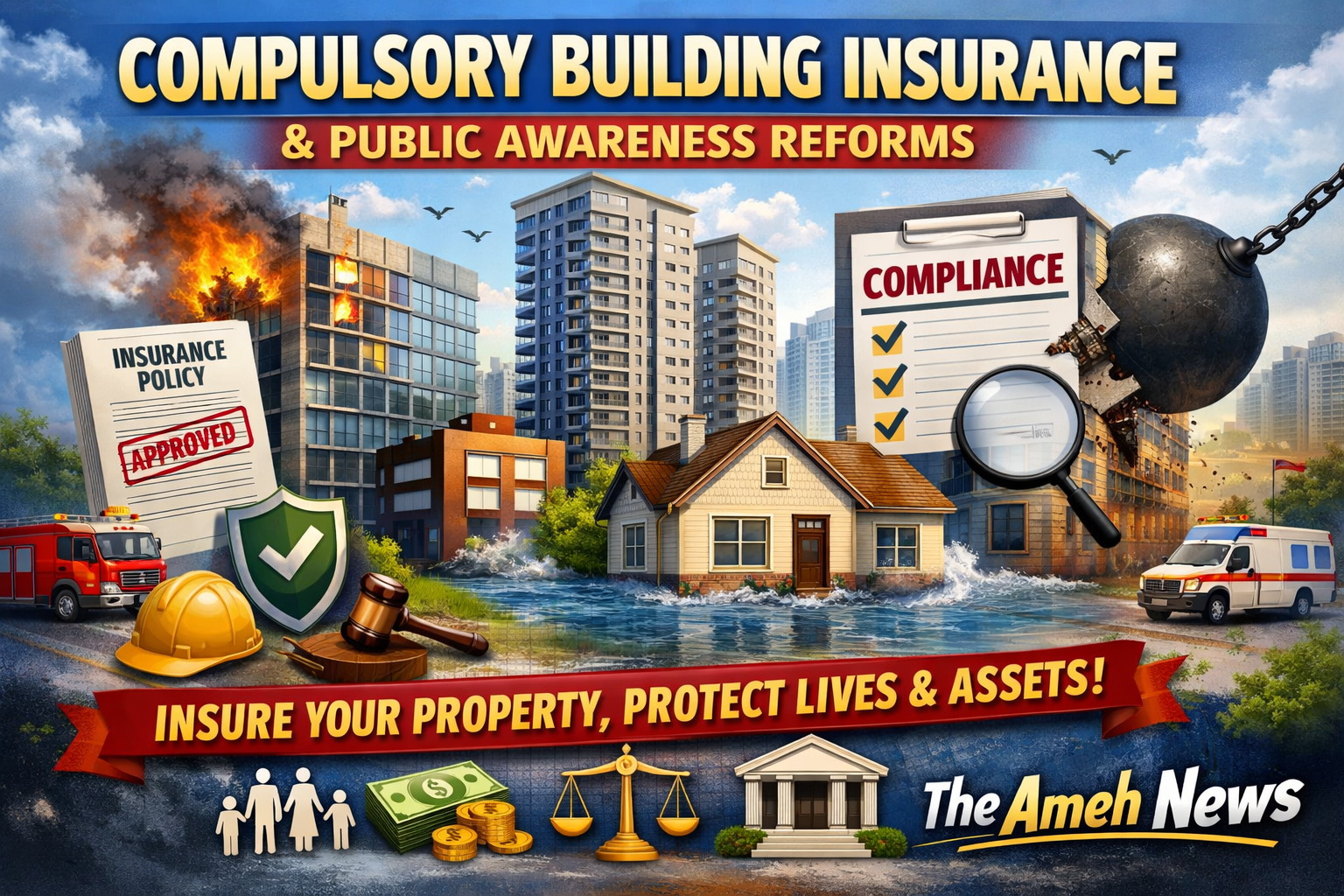 As Nigeria edges toward the three-year mark since a pivotal National Insurance Conference in Abuja, a pivotal National Insurance Conference in Abuja,convened under the leadership of then Commissioner for Insurance, Sunday Olorundare Thomas, stakeholders in the financial and real estate sectors are now intensifying scrutiny over the pace of implementation—particularly on compulsory building insurance compliance and public awareness reforms.
The conference, widely regarded as a defining moment in Nigeria’s insurance reform journey, placed strong emphasis on addressing recurring urban disasters, strengthening risk coverage frameworks, and improving enforcement of existing insurance obligations tied to buildings and public infrastructure.
Today, however, industry observers say the key question is no longer about policy articulation—but execution, enforcement, and measurable impact.
From Policy Momentum to Implementation Gap
At the time of the Abuja conference, NAICOM’s agenda centered on:
Expanding compulsory insurance compliance for buildings
Strengthening public awareness on property risk protection
Reducing Nigeria’s exposure to fire, collapse, and flood-related losses
Integrating insurance into urban planning and building approval systems
Despite these commitments, stakeholders now argue that implementation has been uneven across states and local authorities.
A recurring concern is that while regulatory frameworks exist, compliance levels among property owners remain low, especially in residential and informal housing segments where awareness is weakest.
The NIIRA 2025 Effect: A New Compliance Pressure Point
The emergence of the Nigeria Insurance Industry Reform Act (NIIRA) 2025 Under the new leadership of Olusegun Ayo Omosehin Commissioner For Insurance and NAICOM CEO, has significantly reshaped the policy conversation.
The reform framework is expected to:
Strengthen enforcement mechanisms for compulsory insurance policies
Digitise insurance verification and regulatory oversight
Link building approvals and occupancy certificates to insurance compliance
Improve penalties for non-compliance
Expand insurance penetration through structured enforcement channels
Analysts say NIIRA 2025 effectively transforms earlier conference resolutions into legally enforceable obligations, shifting the system from persuasion to compulsion.
Performance Review: What Has Changed Since the Conference?
While NAICOM has made incremental progress in public sensitisation and regulatory coordination, stakeholders highlight several implementation realities:
1. Limited Enforcement at Subnational Level
Insurance enforcement remains inconsistent across states, particularly in building approval processes.
2. Low Insurance Penetration
Nigeria’s insurance penetration is still estimated at below 1% of GDP, reflecting slow adoption of compulsory policies.
3. Awareness Deficit
Many property owners remain unaware of compulsory building insurance requirements or do not perceive immediate benefits.
4. Claims Trust Gap
Public scepticism around claims settlement continues to affect voluntary compliance levels.
Economic and Risk Implications
Experts argue that weak enforcement of building insurance has broader macroeconomic consequences:
Rising fiscal exposure for government disaster response
Continued household wealth destruction after urban disasters
Increased vulnerability in high-density urban settlements
Weak capital recovery cycles in real estate markets
Economist Celestine Ukpong notes that the issue goes beyond insurance policy:
“Without enforcement, insurance remains symbolic. The real economic cost is carried by households and government after every disaster.”
Dr. Akin Olaniyan, a veteran journalist adds that regulatory communication must evolve into accountability:
“The challenge is not what was said at the conference—it is what was done afterward. Policy memory without enforcement is ineffective governance.”
Stakeholder Position: Growing Demand for Accountability
As the anniversary of the Abuja conference approaches, stakeholders across the insurance, construction, and financial sectors are calling for:
A public implementation scorecard from NAICOM
Clear data on insured building coverage growth
Stronger collaboration with state governments
Transparent reporting on enforcement actions
Faster integration of NIIRA 2025 compliance systems
Industry players argue that Nigeria is now at a critical transition point between regulatory intent and institutional delivery.
Outlook: A Reform at a Defining Crossroads
The legacy of the Abuja National Insurance Conference under Sunday Olorundare Thomas is increasingly being judged not by its policy declarations, but by its measurable outcomes.
With NIIRA 2025 introducing stronger legal backing for compulsory insurance, stakeholders believe the next phase will determine whether Nigeria finally achieves:
A functional compulsory building insurance system
Improved urban risk resilience
Higher insurance penetration rates
Reduced post-disaster fiscal strain
For now, the conversation has shifted from conference resolutions to a more pressing question: has Nigeria’s building insurance system truly moved from policy to practice?
Three years after NAICOM’s Abuja Insurance Conference led by Sunday Olorundare Thomas, stakeholders question progress on compulsory building insurance as NIIRA 2025 raises enforcement expectations in Nigeria’s insurance sector.
Discover more from Ameh News
Subscribe to get the latest posts sent to your email.