…….Two Years of Transformation: How Olusegun Ayo Omosehin is Reshaping Nigeria’s Insurance Industry Through NIIRA 2025 Reforms
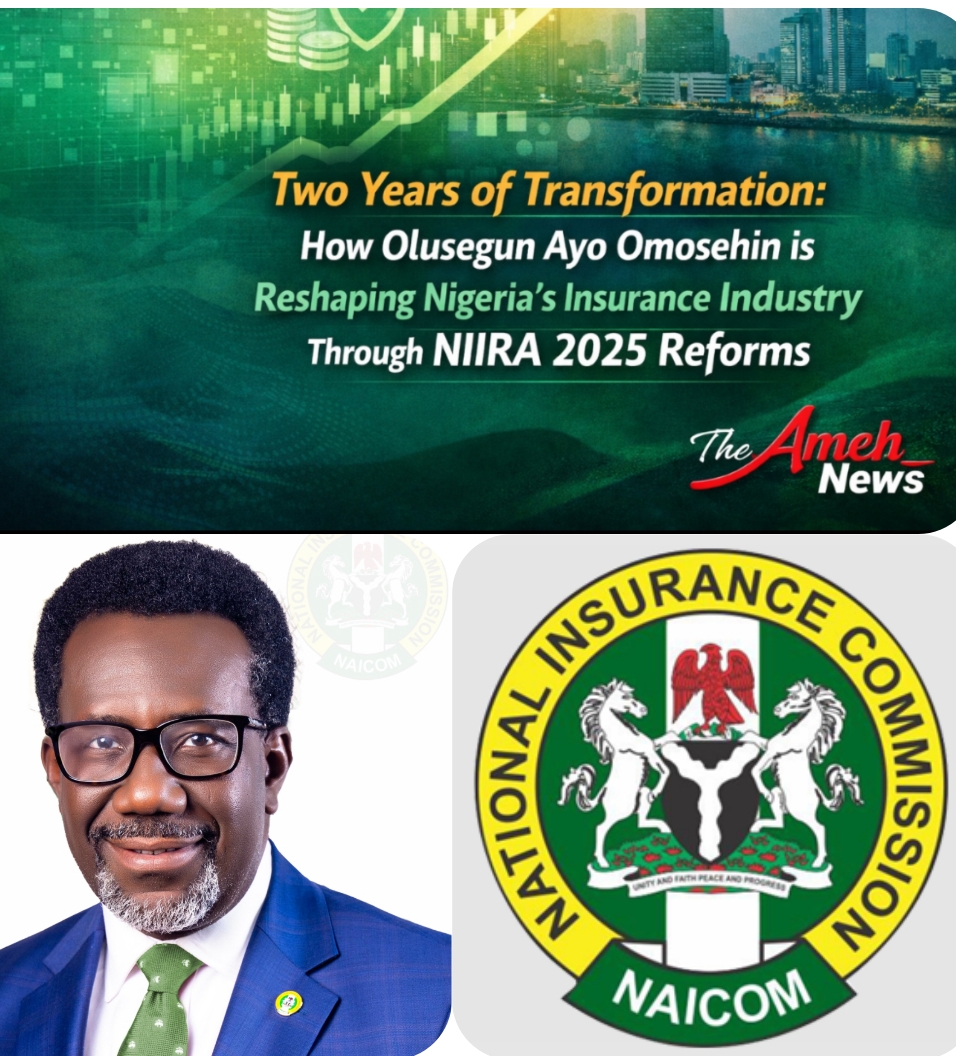 Since assuming office on May 16, 2024, following his appointment by President Bola Ahmed Tinubu, Mr Olusegun Ayo Omosehin has steadily positioned the National Insurance Commission (NAICOM) at the centre of Nigeria’s economic reform agenda.
With more than three decades of experience across underwriting, regulation, corporate governance and insurance management, Omosehin’s emergence as Commissioner for Insurance and Chief Executive Officer of NAICOM came at a critical period for the Nigerian insurance sector — a sector long challenged by low penetration, weak public confidence, poor compliance culture and limited technological integration.
Two years into his administration, stakeholders across the insurance ecosystem are beginning to assess the impact of his leadership, especially in the implementation of the Nigerian Insurance Industry Reform Act (NIIRA) 2025, digital transformation initiatives and the strengthening of enforcement mechanisms aimed at restoring public confidence in insurance operations.
Driving a New Regulatory Era
Industry observers note that one of Omosehin’s biggest achievements has been his aggressive pursuit of regulatory modernisation.
Under his leadership, NAICOM has intensified efforts to reposition the insurance industry as a strategic contributor to Nigeria’s projected $1 trillion economy. Central to this agenda is the implementation of the NIIRA 2025 reforms, which introduced risk-based capital requirements, improved solvency regulations, enhanced governance standards and the establishment of a consumer protection framework designed to protect policyholders.
The reforms are also intended to align Nigeria’s insurance market with global best practices while creating stronger and more resilient operators capable of supporting major sectors of the economy including oil and gas, aviation, infrastructure, marine and agriculture.
A key highlight of this shift is the growing integration between insurance reforms and the aviation sector ecosystem, where regulatory innovation is no longer seen as a constraint but as an enabler of growth. The aviation industry is increasingly being repositioned not as a high-risk compliance-heavy space, but as a strategic frontier for insurance expansion, risk diversification, and investment opportunities. Through ongoing reforms anchored on NIIRA 2025 and broader market modernisation efforts, NAICOM is reshaping how insurers, aviation operators, and regulators interact—creating a system where collaboration replaces fragmentation, and opportunity replaces limitation. Stakeholders say the Commission’s renewed focus on digital transformation has equally helped improve operational transparency, market monitoring and policy administration across the industry.
Since taking over leadership of the Commission, Omosehin has repeatedly emphasised the importance of innovation, technology-driven supervision and data transparency in deepening insurance penetration in Africa’s largest economy.
His administration has also prioritised collaboration with critical national institutions.
In one of the most significant moves of 2026, NAICOM entered into a strategic partnership with the Nigeria Police Force to enforce compulsory insurance compliance under NIIRA 2025, especially in areas relating to motor insurance enforcement and anti-fraud measures.
Industry analysts believe the collaboration could significantly reduce fake insurance certificates and improve compliance among motorists and businesses nationwide.
The latest partnership is between National Insurance Commission and Association of Registered Insurance Agents of Nigeria is aimed at strengthening the enforcement of NIIRA 2025 and enhancing the protection of insurance consumers in Nigeria. Stakeholders Assess Omosehin’s Leadership
Speaking on the performance of the insurance ecosystem under Omosehin’s leadership with The Ameh News, Dr Akin Olaniyan, a leadership coach, lecturer at Lagos Business School and veteran journalist with over three decades of professional experience, described the NAICOM boss as “a reform-driven regulator with strategic clarity.”
According to Olaniyan, the insurance sector had for years struggled with perception challenges and weak market visibility, but the current leadership appears determined to reposition the industry for relevance in Nigeria’s evolving economy.
He stated:
“Omosehin came into office with deep industry experience and an understanding of both the operational and regulatory sides of insurance. In two years, the focus has clearly shifted towards institutional reforms, consumer protection and digital efficiency.”
Olaniyan added that while insurance penetration remains relatively low compared to global standards, the regulatory reforms initiated under NAICOM’s current leadership could lay the foundation for long-term industry expansion.
Economist Celestine Ukpong also commended the Commission’s push for risk-based supervision and stronger capital requirements, noting that the reforms could improve investor confidence and strengthen the financial stability of insurance operators.
According to Ukpong:
“The insurance industry is becoming increasingly important in supporting economic resilience. What NAICOM is trying to achieve through NIIRA 2025 is to create stronger insurance institutions capable of financing risks associated with a growing economy.”
He noted that stronger regulation could encourage more foreign investment into Nigeria’s insurance market while helping operators improve product innovation and claims settlement capacity.
On his part, Dr Ejike Nduilo, public relations expert and founder of Henryjvaleens, said the current NAICOM leadership has demonstrated improved communication and stakeholder engagement compared to previous years.
He observed that public awareness campaigns and strategic partnerships have helped increase conversations around insurance compliance and consumer rights.
“The Commission is beginning to understand that insurance is not only about regulation but also about public trust and communication. The industry’s reputation management is improving gradually,” Nduilo stated.
Financial analyst and chartered accountant, Peter Adebayo FCA, however, urged operators to complement NAICOM’s reforms with stronger corporate governance and ethical business practices.
According to him, sustainable growth in the industry would depend largely on operators’ ability to settle claims promptly, embrace innovation and maintain capital adequacy.
“The reforms are commendable, but implementation remains critical. Operators must move beyond compliance on paper and build stronger governance systems that can support long-term growth,” he said.
Challenges Still Facing the Industry
Despite the reforms and regulatory progress, analysts maintain that Nigeria’s insurance industry still faces major structural challenges.
Insurance penetration remains below 1 per cent of GDP, largely due to low public awareness, weak enforcement of compulsory insurance policies, trust deficits and limited retail insurance adoption.
Economic pressures, inflation, foreign exchange volatility and rising operational costs have also affected underwriting profitability for many operators.
However, stakeholders believe that NAICOM’s current reforms could gradually improve industry resilience if consistently implemented.
There are also expectations that digital insurance platforms, InsurTech partnerships and data-driven underwriting models could open new growth opportunities for operators targeting Nigeria’s large uninsured population.
Future Outlook for Operators and NAICOM
Looking ahead, experts believe the future of Nigeria’s insurance sector will depend on three critical pillars — regulatory consistency, technology adoption and public confidence.
For insurance operators, the next phase is expected to involve stronger capitalisation, increased mergers and acquisitions, digital product innovation and expansion into underserved markets such as agriculture, SMEs and informal sectors.
For NAICOM, analysts expect the Commission to intensify market enforcement, strengthen solvency monitoring and deepen collaboration with government institutions to ensure full implementation of compulsory insurance policies nationwide.
Industry stakeholders also anticipate that the Commission will continue pushing for increased insurance contribution to national GDP while positioning the sector as a critical risk management backbone for Nigeria’s economic transformation agenda.
Two years after taking office, Olusegun Ayo Omosehin’s leadership is increasingly being viewed as a turning point for Nigeria’s insurance regulatory environment.
While challenges remain, many stakeholders agree that the reforms initiated under his administration have set the stage for a more transparent, technology-driven and financially resilient insurance industry capable of supporting Nigeria’s long-term economic ambitions. “The four panel of analysts unanimously commended the Commissioner for the ongoing collaborative strategies aimed at deepening insurance sector awareness and accelerating insurance penetration growth across the ecosystem. They also urged the apex regulator to remain firm on post-recapitalisation compliance measures to prevent the misuse of capital by operators, stressing that available funds should be effectively channelled toward productive investments and sustainable industry growth.”. Analysts were on the same page about Olusegun Ayo Omosehin’s two years as NAICOM Commissioner/CEO, which have triggered major insurance reforms through NIIRA 2025, digital transformation, stricter compliance and consumer protection initiatives aimed at deepening Nigeria’s insurance penetration and supporting a $1 trillion economy.
Discover more from Ameh News
Subscribe to get the latest posts sent to your email.