Experts Say Historic Broadcasting Transition Must Now Deliver Real Economic and Media Value
 After 17 years of delays, policy reversals, missed international deadlines and more than ₦60 billion in public expenditure, Nigeria has finally completed its long-awaited Digital Switch-Over (DSO), marking a watershed moment in the country’s broadcasting and digital transformation journey.
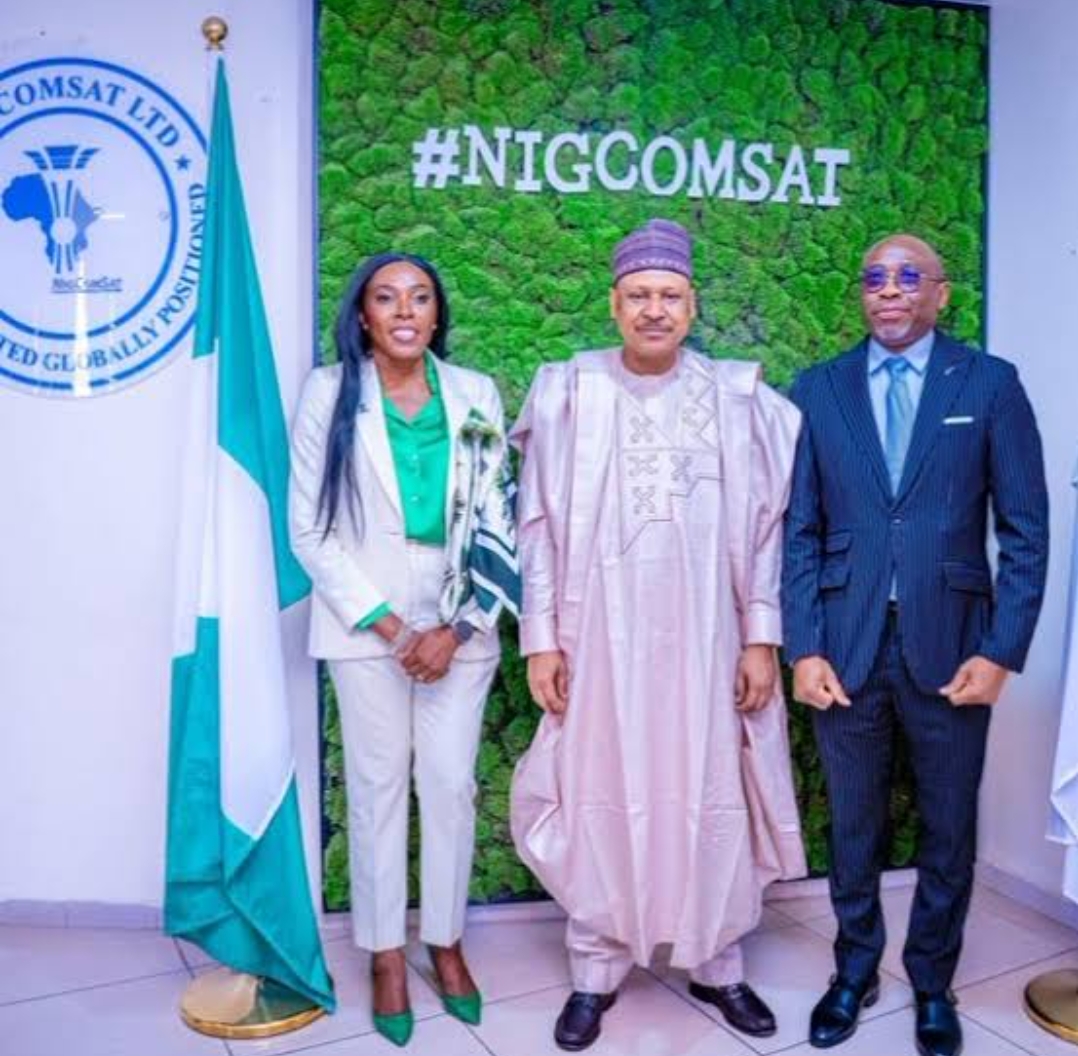
The Minister of Information and National Orientation, Mohammed Idris, officially announced the completion of the transition during a facility tour of the Nigerian Communications Satellite Limited (NigComSat) headquarters in Abuja on Wednesday.
Idris declared that Nigeria’s migration from analogue to digital broadcasting had now been completed, describing the achievement as a fulfilment of President Bola Ahmed Tinubu’s commitment to reform critical sectors of the economy and accelerate national development through technology-driven initiatives.
According to the minister, the launch represents a major milestone in modernising Nigeria’s broadcasting ecosystem and positioning the country to benefit from emerging opportunities in digital content, telecommunications and advertising.
However, while government officials celebrate the breakthrough, industry experts say the bigger story is not that the Digital Switch-Over has finally happened, but why it took nearly two decades to become reality.
A 17-Year Journey Finally Reaches the Finish Line
Nigeria first committed to digital broadcasting migration in 2006 under the framework established by the International Telecommunication Union (ITU), which required member nations to transition from analogue to digital television broadcasting.
The deadline for completion was June 2015.
Nigeria missed that target and several subsequent timelines, turning what was expected to be a decade-long infrastructure project into one of the country’s most prolonged technology transitions.
Data released by the National Broadcasting Commission (NBC) earlier this year revealed that approximately ₦60 billion had been spent on the project over 17 years, yet digital terrestrial television coverage had reached only eight states before the latest rollout.
The figures continue to raise questions about implementation efficiency, governance and project accountability.
Why the Delay Lasted So Long
Conventional explanations have often centred on inadequate funding, policy inconsistencies and bureaucratic bottlenecks.
While these factors played a role, analysts argue that the delay reflected a deeper structural challenge involving competing interests within the broadcasting ecosystem.
Analogue broadcasting operates within a framework of limited spectrum availability, restricting the number of broadcasters that can access the airwaves.
Digital broadcasting removes many of those limitations by significantly increasing channel capacity and expanding access opportunities.
Industry observers note that digital migration inevitably redistributes influence within the media industry, creating winners and losers in the process.
As a result, momentum toward implementation remained inconsistent for years.
Government Sees New Era for Broadcasting
Speaking during the inspection of NigComSat facilities, Mohammed Idris said the successful completion of the Digital Switch-Over demonstrates the Federal Government’s commitment to transforming critical sectors through innovation and strategic infrastructure investments.
He noted that the digital broadcasting platform would improve access to information, strengthen the media sector and create new opportunities for content producers and advertisers.
The minister also emphasized the role of NigComSat in supporting nationwide digital broadcasting coverage and expanding access to television services across underserved communities.
Nigeria Lost Valuable Economic Opportunities
Reacting to questions from The Ameh News, economist Celestine Ukpong said the completion of the DSO project should be celebrated but also carefully evaluated from an economic perspective.
“The launch is undoubtedly a significant achievement, but it also reminds us of opportunities that were delayed for over a decade. Digital migration is not simply a broadcasting project; it is an economic enabler,” he said.
Ukpong explained that the release of valuable spectrum in the 700MHz and 800MHz frequency bands could unlock substantial revenue opportunities for government while supporting broader digital connectivity.
“For years, Nigeria could not fully harness the economic benefits associated with the digital dividend. These frequencies are critical assets capable of supporting broadband expansion, financial inclusion and digital innovation across multiple sectors.”
According to him, every year of delay translated into missed investments, slower technological adoption and reduced economic productivity.
Success Depends on Accessibility and Content
Also responding to The Ameh News inquiry, veteran journalist, Lagos Business School lecturer and leadership coach, Dr. Akin Olaniyan, described the launch as an important milestone but cautioned that infrastructure deployment alone would not guarantee success.
“The completion of the Digital Switch-Over should be viewed as the beginning of a new chapter, not the conclusion of the story,” he said.
Olaniyan noted that digital broadcasting offers significant opportunities for media pluralism, improved audience engagement and the growth of local content industries.
“More channels mean more voices, more local content, greater diversity of perspectives and stronger democratic participation. These are among the most important benefits of digital broadcasting.”
He, however, stressed the importance of affordability and public awareness.
“If set-top boxes remain beyond the reach of ordinary Nigerians or if access remains concentrated in urban centres, then the objectives of the migration will not be fully achieved. The focus must now shift from infrastructure to inclusion.”
The Billion-Dollar Spectrum Opportunity
One of the most significant benefits of digital migration lies in the release of analogue spectrum within the highly valuable 700MHz and 800MHz bands.
Telecommunications experts estimate that future spectrum auctions could generate more than $1 billion in revenue while providing operators with the resources needed to expand broadband infrastructure and improve service delivery.
The development is expected to support Nigeria’s broader digital economy ambitions, particularly in areas such as e-commerce, fintech, education technology and rural connectivity.
NBC Projects ₦605 Billion Advertising Market
The National Broadcasting Commission has projected that a fully operational digital broadcasting ecosystem could unlock a media and advertising market valued at approximately ₦605 billion.
Digital audience measurement tools are expected to provide advertisers with more accurate consumer insights while enabling broadcasters to create specialized content targeted at specific audience segments.
Industry stakeholders believe the transition could stimulate investment across television production, filmmaking, creative services, marketing, media technology and content distribution.
Beyond the Celebration
For many stakeholders, June 2026 will be remembered as the month Nigeria finally completed one of its most ambitious media infrastructure projects.
Yet experts agree that the true measure of success will not be the launch ceremony or policy declarations.
It will be determined by how effectively the Digital Switch-Over improves access to information, expands opportunities for content creators, attracts investment, strengthens digital inclusion and delivers measurable economic value to Nigerians.
After 17 years, ₦60 billion in spending and multiple missed deadlines, Nigeria’s digital broadcasting era has finally arrived.
The challenge now is ensuring that the promise of digital television translates into tangible benefits for businesses, broadcasters and millions of viewers across the country.
Nigeria has officially completed its Digital Switch-Over after 17 years and over ₦60 billion in spending. Information Minister Mohammed Idris, economist Celestine Ukpong and media expert Dr. Akin Olaniyan assess the opportunities and challenges ahead.
Discover more from Ameh News
Subscribe to get the latest posts sent to your email.