By Ameh News
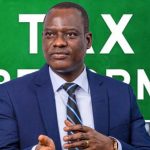
 Nigeria’s drive to attract long-term investment and deepen its capital market received a major boost on Tuesday as the Minister of Finance and Coordinating Minister of the Economy, Taiwo Oyedele, proposed the establishment of a specialised Commercial Dispute Resolution Tribunal to accelerate the resolution of business disputes, describing efficient justice delivery as a critical pillar for unlocking capital and sustaining economic growth.
Speaking while delivering his inaugural lecture as a Fellow of the Capital Market Academics of Nigeria during the association’s Second Biennial Conference in Abuja, themed “The Nigerian Capital Market as a Catalyst for Equitable and Inclusive Growth,” Oyedele argued that Nigeria’s lengthy judicial process remains one of the biggest deterrents to both local and foreign investment.
According to him, commercial disputes currently spend an average of 15 years moving through the High Court, Court of Appeal and Supreme Court, creating uncertainty that discourages investors, delays projects and raises the cost of doing business.
He therefore advocated the creation of a dedicated Commercial Dispute Resolution Tribunal staffed by judges and arbitrators with specialist expertise in commercial, financial and capital market matters.
The minister said the tribunal should leverage digital case management systems and mandatory timelines to ensure the speedy resolution of disputes involving businesses, investors, suppliers, joint venture partners and other commercial entities.
He explained that such a specialised court would complement existing investment protection mechanisms by providing businesses with confidence that contractual disagreements would be resolved promptly.
According to Oyedele, virtually every capital market instrument—including bonds, syndicated loans, private placements and structured notes—is built on enforceable contracts, making an efficient dispute resolution system indispensable to the growth of Nigeria’s financial markets.
Debt Should Be Judged by Results, Not Size
Beyond judicial reforms, the finance minister challenged prevailing public attitudes towards government borrowing, insisting that debt should be evaluated based on what it finances rather than the volume of borrowing.
He argued that borrowing remains an important economic tool capable of driving development when invested in productive projects that generate returns exceeding the cost of capital.
“The relevant question is never simply how much debt there is. It is always debt for what, at what cost, against what return and repayable on what terms,” he stated.
Oyedele criticised the tendency to condemn every government borrowing programme without considering whether the borrowed funds are financing infrastructure, productive investments or other assets capable of expanding economic output and improving national productivity.
According to him, governments and businesses that invest borrowed funds wisely create long-term value, while refusing to borrow under favourable conditions may result in missed development opportunities.
Entrepreneurs Urged to Embrace External Capital
The minister also urged Nigerian entrepreneurs to rethink their reluctance to dilute ownership by bringing in external investors.
He observed that many business owners prefer maintaining full ownership of relatively small enterprises rather than partnering with investors to build larger, more competitive businesses.
According to him, owning a significant share of a well-capitalised and rapidly growing company often delivers greater value than retaining absolute ownership of a smaller enterprise.
Seven Laws of Capital Attraction
Oyedele further outlined what he described as the “Seven Laws of Capital Attraction,” stressing that investors are driven more by trust, policy consistency and institutional credibility than by tax incentives.
He noted that capital naturally flows to jurisdictions offering predictable returns, transparent governance and policy stability.
“Capital hates uncertainty more than taxation,” he said, attributing investor caution to policy reversals, regulatory inconsistency, foreign exchange uncertainty and weak contract enforcement.
He added that sustainable investment is attracted by credible institutions—including an independent judiciary, a trusted central bank and an efficient public service—rather than by individual political leaders.
The minister equally urged government officials, professionals and the media to communicate economic reforms more effectively, arguing that Nigeria continues to suffer from a “perception premium” because many positive policy reforms are poorly communicated to international investors.
SEC Seeks Research-Based Capital Market Reforms
Also speaking at the conference, the Director-General of the Securities and Exchange Commission, Emomotimi Agama, called for stronger collaboration between regulators and academia to promote evidence-based policymaking capable of strengthening Nigeria’s capital market.
Agama described the Capital Market Academics of Nigeria as a critical bridge between academic research and financial market regulation.
“I have long believed that good regulation begins with good thinking. The policies we make at the Securities and Exchange Commission are only ever as strong as the evidence and the ideas that inform them,” he said.
According to him, research produced through academic conferences, journals and peer-reviewed studies provides the foundation for responsive regulations that strengthen investor confidence and support sustainable market development.
He disclosed that Nigeria’s capital market is undergoing far-reaching reforms following the implementation of the Investments and Securities Act 2025 and a new 10-year Capital Market Master Plan.
Agama urged academics to ensure their research produces practical recommendations capable of shaping policies and improving market operations.
“The Commission’s door is open to evidence, to challenge and to fresh ideas, wherever they may lead. The finest measure of these two days will not be the sessions we hold, but the policies and the practices they go on to shape,” he said.
He reaffirmed the Commission’s commitment to working closely with researchers and universities to strengthen regulation, improve investor confidence and support the long-term development of Nigeria’s capital market.
CMAN President Calls for Stronger Academia-Industry Partnership
Earlier, President of the Capital Market Academics of Nigeria, Uche Uwaleke, urged government, regulators and financial institutions to institutionalise stronger collaboration between universities and the financial services industry.
According to him, Nigeria possesses enormous academic talent and practical expertise but lacks an organised framework that effectively connects both sectors.
Uwaleke called on the National Universities Commission and the Federal Ministry of Education to recognise industry experience alongside academic publications when appointing and promoting lecturers in professionally oriented disciplines such as Banking, Finance, Insurance, Accounting and Capital Market Studies.
He also advocated recruiting accomplished retired bankers, investment professionals and capital market practitioners as adjunct lecturers to bridge the gap between classroom teaching and industry practice.
The professor further proposed structured sabbatical programmes and research fellowships within financial sector regulators—including the Central Bank of Nigeria, Securities and Exchange Commission, National Insurance Commission, National Pension Commission and Nigeria Deposit Insurance Corporation—to enable academics undertake policy-oriented research while supporting evidence-based regulation.
He also proposed the establishment of a Financial Markets Research Partnership involving regulators, universities and industry players to commission research on capital market development, infrastructure finance, pension reforms, insurance penetration, financial inclusion and sustainable finance.
Uwaleke commended the SEC, Bank of Industry, Cowry Asset Management Limited and the Chartered Institute of Stockbrokers for supporting sabbatical opportunities for CMAN members.
He reaffirmed CMAN’s commitment to providing independent research, policy advice and intellectual leadership aimed at strengthening Nigeria’s financial markets and supporting inclusive economic transformation.
Ameh News Analysis
The conference highlighted a growing consensus among policymakers, regulators and academics that Nigeria’s ambition to attract long-term domestic and foreign capital depends on more than macroeconomic reforms. Faster commercial justice, stronger institutions, research-driven regulation, policy consistency and closer collaboration between academia and industry are increasingly being viewed as essential building blocks for a globally competitive capital market capable of financing sustainable national development.
Discover more from Ameh News
Subscribe to get the latest posts sent to your email.