 Managing Director/Chief Executive Officer of Guinea Insurance Plc, Mr. Ademola Abidogun
Nigeria’s insurance and oil and gas sectors must embrace digital innovation, strengthen local content policies and deepen strategic collaboration to unlock greater economic value and reduce capital flight, Managing Director/Chief Executive Officer of Guinea Insurance Plc, Mr. Ademola Abidogun, has said.
Speaking at the SuperNews Conference 2026, Abidogun stressed that the future of both industries depends on how effectively stakeholders leverage technology, data-driven insurance solutions and indigenous capacity to address emerging risks while supporting sustainable economic growth.
Addressing regulators, operators, insurers, brokers, financial institutions and other stakeholders, he noted that Nigeria possesses enormous opportunities in the oil and gas sector, but the country must deliberately strengthen local participation and ensure that insurance capacity keeps pace with the industry’s evolving needs.
Digital Transformation No Longer Optional
Abidogun observed that rapid technological advancement is reshaping global business operations, making digital transformation a necessity rather than an option.
According to him, insurers must invest in digital platforms capable of providing faster underwriting, seamless claims processing, improved customer experience and better risk assessment for oil and gas assets.
He explained that technologies such as artificial intelligence, big data analytics, blockchain, cloud computing and cybersecurity solutions are redefining insurance globally and should be fully embraced by Nigerian operators.
“The future belongs to institutions that can combine technology with innovation to deliver efficient, transparent and customer-focused insurance services,” he said.
He added that digital integration would significantly improve operational efficiency while increasing trust among policyholders.
Local Content Must Translate into Local Value
The Guinea Insurance boss also urged policymakers and industry players to strengthen the implementation of local content policies to ensure that more insurance premiums generated by Nigeria’s energy sector remain within the country’s economy.
According to him, retaining energy risks locally will help build stronger insurance companies, create employment opportunities, deepen technical expertise and strengthen Nigeria’s financial system.
He noted that indigenous insurers have significantly improved their financial capacity and technical competence over the years and are increasingly capable of underwriting complex energy risks through collaboration and adequate reinsurance arrangements.
Abidogun said increased patronage of local insurers would reduce capital flight while supporting the Federal Government’s drive for economic diversification and financial inclusion.
Collaboration Is Critical
He emphasized that sustainable growth cannot be achieved by any sector operating in isolation.
According to him, closer collaboration among insurers, oil companies, regulators, technology firms, financial institutions and government agencies will create stronger risk management frameworks capable of supporting investments across the petroleum value chain.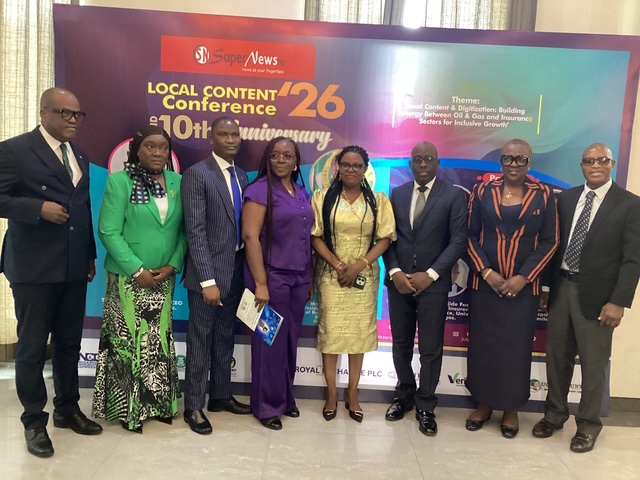
He noted that effective partnerships would encourage innovation, improve transparency, promote regulatory compliance and enhance investor confidence.
Insurance as an Enabler of Energy Growth
Abidogun described insurance as one of the critical pillars supporting investment in the oil and gas industry.
Without adequate insurance protection, he said, financing major exploration, production, transportation and refining projects would become increasingly difficult.
He explained that insurance provides businesses with confidence to undertake large-scale investments by mitigating operational, environmental and financial risks.
He urged energy operators to view insurance not merely as a regulatory requirement but as a strategic business partner that enhances resilience and long-term sustainability.
Need for Capacity Building
The insurance executive also called for continuous investment in human capital development.
According to him, professionals across both industries must continually upgrade their knowledge and technical skills to keep pace with emerging technologies, climate-related risks, cyber threats and changing regulatory requirements.
He advocated stronger collaboration between industry and academic institutions to develop specialized training programmes capable of producing globally competitive professionals.
Sustainability Should Drive Future Investments
Abidogun further stressed that environmental, social and governance (ESG) principles are becoming increasingly important in global investment decisions.
He urged insurers and energy companies to integrate sustainability into their operations by promoting cleaner technologies, responsible corporate governance and environmental risk management.
According to him, companies that embrace sustainability will enjoy stronger investor confidence and improved long-term profitability.
Industry Stakeholders React
Participants at the conference agreed that Nigeria’s insurance penetration remains low despite the country’s enormous economic potential.
They noted that greater digital adoption, improved public awareness, stronger regulation and effective enforcement of compulsory insurance policies would significantly increase insurance penetration while providing greater support for critical sectors such as oil and gas.
Many participants also emphasized the need for stronger implementation of the Nigerian Oil and Gas Industry Content Development Act and greater collaboration between insurers and energy operators.
Why It Matters
Experts say Nigeria’s oil and gas industry remains one of Africa’s largest investment destinations, with billions of dollars committed annually to exploration, production, refining, gas infrastructure and energy transition projects.
As investments continue to grow, the insurance industry has a significant opportunity to provide risk protection, mobilize long-term capital and contribute to national economic development.
Digital innovation and stronger local content implementation are expected to play a decisive role in ensuring that more value created within the energy sector remains in Nigeria.
The Ameh News Analysis
Mr. Ademola Abidogun’s message reflects a growing consensus within Nigeria’s financial services industry that technology and local capacity development will determine the next phase of growth.
Beyond improving operational efficiency, digital insurance platforms can help reduce claims delays, improve transparency and expand insurance access to businesses of all sizes.
Similarly, retaining more oil and gas insurance business within Nigeria would strengthen local insurers’ balance sheets, generate employment, conserve foreign exchange and support broader economic development.
His call for greater collaboration between the insurance and energy sectors aligns with Nigeria’s ambition to build a resilient financial ecosystem capable of supporting industrialization, infrastructure development and sustainable economic growth.
Guinea Insurance Plc Managing Director Ademola Abidogun has called for stronger digital collaboration, local content implementation and strategic partnerships to drive sustainable growth in Nigeria’s oil and gas and insurance sectors at the SuperNews Conference 2026.
Guinea Insurance, Ademola Abidogun, SuperNews Conference 2026, Oil and Gas, Insurance Industry, Digital Transformation, Local Content, Energy Insurance, Nigeria Economy, Insurance Innovation
Discover more from Ameh News
Subscribe to get the latest posts sent to your email.