

By Lucy Daniel
There are political endorsements that are born out of party loyalty, and there are those that emerge from personal experiences, visible interventions and a sense of belonging. The endorsement of Governor Umo Bassey Eno, Ph.D., by the Akwa Ibom students’ community at the 2026 International Students’ Day celebration belongs to a category that deserves closer examination.
Yesterday, the Uyo Township Stadium became more than a venue for a students’ celebration. It became a gathering where young people publicly acknowledged an administration whose educational interventions have increasingly become part of their everyday conversations and expectations.
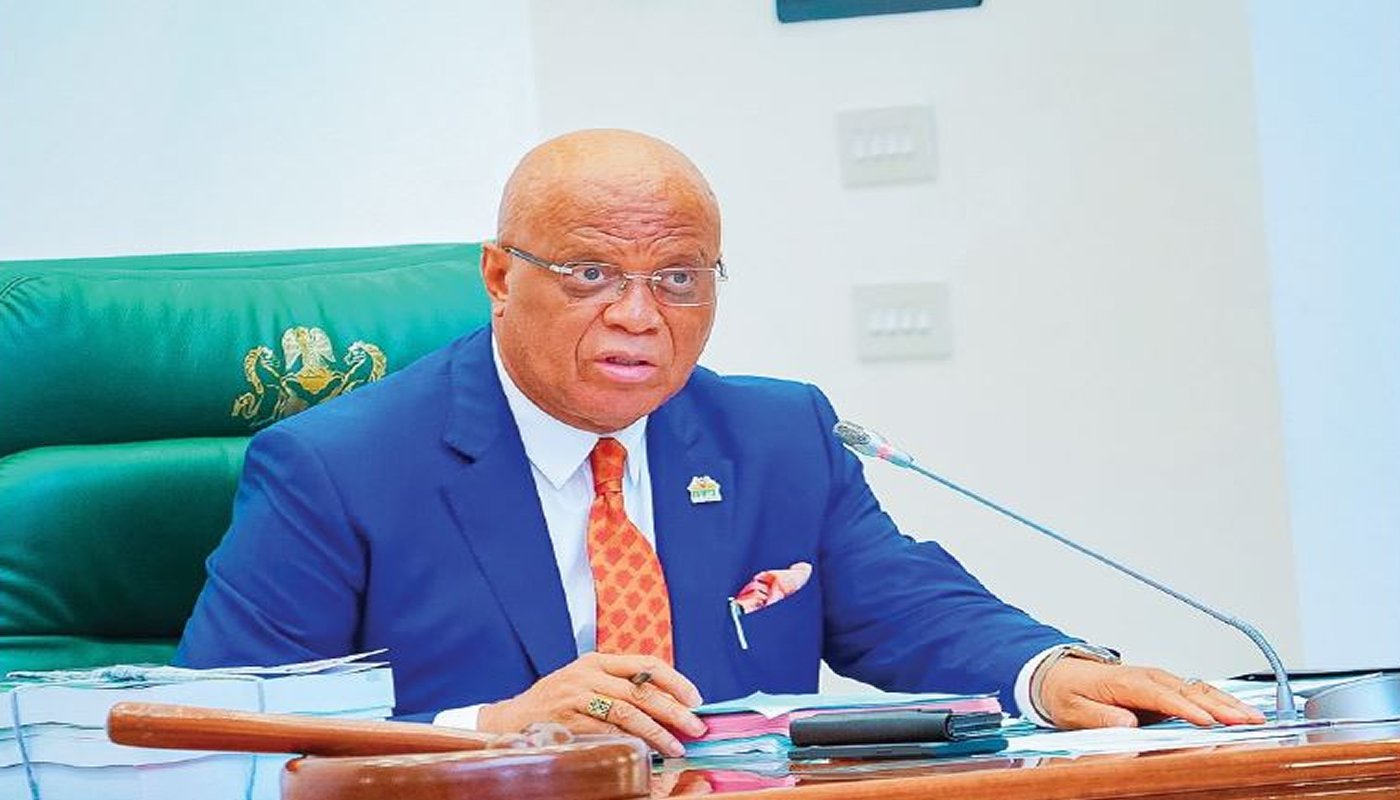
The presentation of three buses to students across the state’s three senatorial districts and a brand-new car to the President of the National Association of Akwa Ibom State Students (NAAKISS), Comrade Torobong Obot, was a major highlight. Beyond the symbolism, the gesture addressed practical transportation needs and demonstrated recognition of student leadership.
But the significance of the occasion went beyond the gifts. The students unanimously endorsed Governor Eno, President Bola Ahmed Tinubu, Senate President Godswill Akpabio and other APC candidates for the 2027 elections.
The question of why students would take such a position becomes clearer when the endorsement is examined against the administration’s record in education.
For many students, the most immediate evidence of government commitment is not found in official speeches but in the financial support that makes it possible to remain in school.
The increase in the state bursary from ₦20,000 to ₦50,000 represents a significant intervention for students of Akwa Ibom origin in tertiary institutions. More recently, Governor Eno announced a planned increase to ₦200,000 for eligible students and ₦250,000 for those studying Medicine, Law and Engineering, beginning in 2027.
This is a substantial shift in the administration’s approach to student support. At a time when rising tuition, accommodation, transportation, textbooks and other academic expenses place enormous pressure on families, an increased bursary provides meaningful relief.
The Governor explained that the proposed increase was intended to help students meet their tuition obligations, reduce the financial burden on parents and allow them to concentrate on their academic pursuits.
It is an intervention that recognises an important reality: access to education is not determined by admission alone. The ability to remain in school and complete a course of study is equally important.
The administration has also sustained support for examination fees, including WAEC and NABTEB, helping to reduce the financial obstacles confronting pupils and parents at the secondary school level.
Perhaps one of the most inspiring aspects of the administration’s educational interventions is the UK Educational Trip, popularly known as EduTrip.
By selecting outstanding students from public secondary schools across the 31 local government areas, including rural communities, the programme introduced young people to international academic environments that many had previously encountered only through textbooks and television.
The students visited renowned institutions, including Imperial College London, the University of Cambridge and Coventry University, while participating in academic interactions and educational excursions.
The impact was captured in the testimony of Anne Sambo, one of the beneficiaries, who described the experience as an eye-opener.
Speaking to journalists after the trip, she said: “This has shown us that the world is much bigger than we thought. We have been challenged to develop a new mindset.”
Another beneficiary, Godswill Asuquo, who had aspirations in the sciences, said the experience stimulated his interest in global scientific participation.
UThese are not merely ceremonial expressions of appreciation. They reflect the power of exposure to reshape the ambitions of young people.
A student from a rural community who has the opportunity to visit Cambridge or Imperial College begins to see possibilities beyond the limitations of immediate circumstances. Such an experience can influence academic choices, career aspirations and the confidence to compete internationally.
The significance of EduTrip, therefore, lies not simply in the journey to the United Kingdom but in the possibilities it has opened in the minds of its beneficiaries.
The physical learning environment is another important part of the Eno administration’s educational record.
The construction and commissioning of modern model primary schools across the state reflect an effort to improve the quality of basic education, particularly in communities where access to functional and adequately equipped facilities has remained a challenge.
These schools feature modern classrooms, computer laboratories, assembly halls, solar-powered facilities and befitting teachers’ quarters.
The transformation of the QIC Government Model Primary School in Oku, Uyo, and the commissioning of modern schools in communities such as Oruk Anam, Essien Udim, Etinan and Ini demonstrate the geographical spread of the intervention.
n Ini Local Government Area, the commissioning of the Methodist Model Primary School, Nkari, carried particular significance. The community had experienced a two-year period during which pupils were without a functional learning environment.
The restoration of a suitable school environment in such a community speaks to the human importance of educational infrastructure.
The administration has also advanced plans for three model secondary schools, one in each senatorial district, designed to provide students with modern facilities and a more competitive learning environment.
At the tertiary level, the upgrading of the Akwa Ibom State College of Education, Afaha Nsit, to a University of Education represents another significant institutional development. It expands the state’s ambition in teacher education and the preparation of future educators.
These interventions demonstrate that the government’s educational agenda extends beyond financial assistance to students. It encompasses the institutions, facilities and learning conditions that determine the quality of education itself.
One of the strongest indications of the administration’s recognition of the challenges confronting education was Governor Eno’s declaration of a state of emergency in the sector in October 2026.
The declaration was accompanied by a ₦2.1 billion teachers’ welfare and support package, including a ₦50,000 wardrobe allowance and ₦10,000 transport allowance for each of 21,167 public school teachers.
The Governor also approved a ₦500,000 support grant for each of the state’s 1,776 registered private schools and the recruitment of an additional 2,000 teachers into the public school system.
An Education Emergency Committee, chaired by Deputy Governor Senator Akon Eyakenyi, was constituted to coordinate the reform process.
The intervention recognises a fundamental truth about education: no school system can achieve its full potential without motivated, adequately supported and professionally equipped teachers.
Governor Eno’s statement at the 2026 World Teachers’ Day celebration captured this philosophy when he declared that teachers’ rewards should not be postponed until heaven, insisting that their rewards must begin while they are alive.
This approach also received recognition from organised labour in the education sector. Representatives of the Nigeria Union of Teachers commended the administration’s welfare interventions and its commitment to improving school infrastructure and teachers’ working conditions.
The clearance of outstanding teachers’ gratuities and pension obligations, alongside recruitment and welfare initiatives, further reinforces the administration’s attention to the people responsible for shaping the next generation.
The endorsement by students did not occur in isolation from the wider educational community.
At the International Students’ Day celebration, the Vice President, Special Duties of the National Association of Nigerian Students (NANS), Comrade Dominic Ernest, described Governor Eno as Nigeria’s best student-friendly governor.
His observation was particularly significant. He recalled that International Students’ Day had traditionally provided students with an opportunity to express their grievances and challenges. Under the present administration, he argued, the occasion had increasingly become an opportunity to celebrate government interventions.
The Commissioner for Education, Professor Ubong Umoh Essien, has similarly acknowledged the administration’s investment in the sector, describing its educational transformation efforts as significant.
The testimonies of the UK EduTrip beneficiaries, the recognition from teachers’ representatives and the public appreciation expressed by student leaders provide different perspectives on the same development: educational policy becomes meaningful when its benefits are experienced by the people it is designed to serve.
There is also an important distinction between an announcement and an accomplished intervention. While the proposed 2027 bursary increase, additional teacher recruitment and some model school projects represent commitments at different stages of implementation, the bursary increase to ₦50,000, completed model school projects, UK educational exposure and announced teachers’ welfare measures provide concrete points of reference in assessing the administration’s record.
For the students, the 2027 endorsement is closely connected to the future of their education and personal aspirations.
Their position reflects an appreciation of an administration that has placed bursaries, school infrastructure, international exposure, teachers’ welfare and institutional development within its development priorities.
The three buses presented to the student community are also significant. They represent an understanding that student welfare is not restricted to tuition and classroom facilities. Transportation, access to opportunities and the ability to participate in academic and social activities are equally important aspects of student life.
The brand-new car presented to the NAAKISS President further recognises student leadership and the role of organised student associations in representing the interests of their members.
Governor Eno, in his response, thanked the students for the honour and endorsement, urging them to remain focused on their studies. He described them as the seeds being planted today for the harvest of tomorrow.
That statement captures the broader philosophy behind the administration’s educational investments. The real value of education is measured not merely by the number of schools constructed or the amount of money disbursed, but by the quality of citizens those investments eventually produce.
Elections are ultimately about choices, and young people are entitled to assess political leadership through the realities that shape their lives.
For Akwa Ibom students, the decision to endorse Governor Umo Eno for 2027 is being presented against a record of increased bursary support, international academic exposure, modern learning facilities, institutional reforms and renewed attention to teachers’ welfare.
It is also an expression of expectation. Students who have benefited from existing interventions naturally have an interest in the continuity of policies capable of advancing their educational prospects.
No administration’s performance should be considered beyond scrutiny, and no endorsement should be mistaken for the disappearance of every challenge in the education sector. However, the significance of the students’ position lies in the fact that it has been accompanied by identifiable interventions and personal testimonies.
The message from the Uyo Township Stadium was therefore larger than the presentation of vehicles or the excitement of a political gathering. It was a public expression of how education, when treated as a development priority, can create a meaningful connection between government and the younger generation.
For Governor Umo Bassey Eno, the students’ endorsement represents recognition of the investments already made and confidence in the possibilities ahead.
For the students, 2027 is about the future they hope to build, the opportunities they want to preserve and the educational progress they have come to associate with the ARISE Agenda.
In the final analysis, the strongest argument for continuity is not the loudness of political slogans. It is the evidence of what people have experienced, the opportunities that have been created and the lives that have been positively influenced.
In the voices of the students, teachers and beneficiaries, Akwa Ibom’s educational story is becoming an important part of the conversation about the state’s political future.
Discover more from Ameh News
Subscribe to get the latest posts sent to your email.