

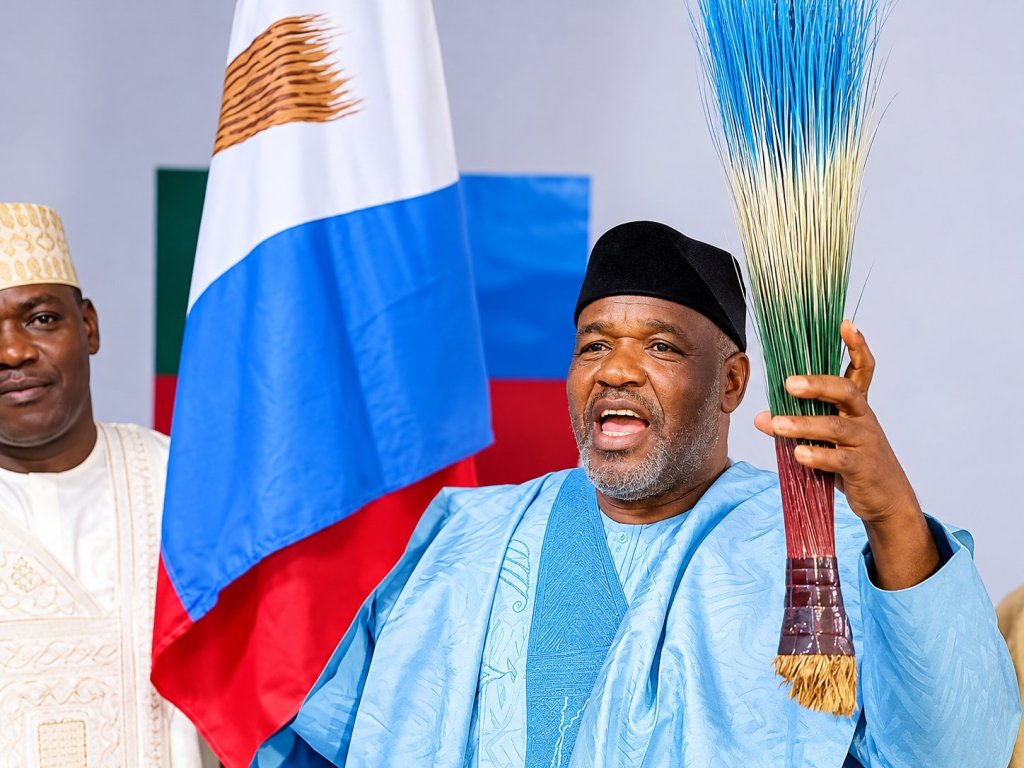
The defection of former Nigeria Democratic Congress (NDC) governorship candidate in Bauchi State, Kashim Ibrahim Muhammad, to the All Progressives Congress (APC) has raised fresh questions about the opposition party’s 2027 electoral strategy and the future of its governorship ticket.
Kashim announced his decision to join the APC on Monday, November 16, 2026, after withdrawing from the NDC governorship race, saying Bauchi State would have a better opportunity to pursue development through a political platform with stronger influence at the federal level.
His decision comes weeks after he resigned from the NDC on October 16, a development that initially fuelled speculation about his next political destination.
However, the latest move introduces a new dimension to the political contest in Bauchi, particularly as the Independent National Electoral Commission (INEC) had already published its final list of candidates for the 2027 governorship election.
INEC’s candidate list adds another dimension
INEC’s published list identifies Kashim Ibrahim Muhammad as the NDC governorship candidate, with Tata Alhaji as his running mate.
The APC’s candidate on the same list is Abubakar Mohammed Abdullahi, with Mustapha Farouk as his running mate.
Kashim’s defection therefore raises questions about his political role within the APC and the implications of his departure for the NDC’s existing governorship ticket.
The development also comes against the background of the NDC’s earlier position following his resignation.
The party’s Bauchi State Chairman, Abdullahi Misau, had said the party would seek legal guidance on the implications of the candidate’s departure, maintaining that the governorship ticket could remain in the race because the running mate was still with the party.
Misau also expressed disappointment over Kashim’s resignation but assured members that the party would continue its political activities in the state.
The latest development makes the positions of the NDC, APC and electoral authorities important in determining how the political transition will affect the 2027 contest.
Also Read: SIFAX Director Joins ECAN as Africa Seeks Investment in Maritime Sector
Why Kashim chose the APC
Explaining his decision, Kashim said his defection was driven by what he considered Bauchi’s strategic interests rather than personal political considerations.
He argued that the APC’s control of the federal government and its political influence across Northern Nigeria offered the state a stronger opportunity to pursue its developmental objectives.
In his words:
“The APC is currently the governing party at the Federal level and has an overwhelming presence across Northern Nigeria. It is also the party with the political structure, national reach and institutional capacity to provide a viable platform for the political and developmental aspirations we seek for Bauchi.
“I believe that Bauchi must be strategically positioned within this political reality.
“We cannot afford to gamble with the future of our state by placing our developmental aspirations on a platform that lacks comparable national reach and institutional influence.
“Our decision must be guided by the interests of Bauchi, not sentiment, political nostalgia or the convenience of individuals.”
His argument reflects a political calculation that proximity to the party controlling the federal government could improve Bauchi’s access to national opportunities, investments and policy influence.
However, the extent to which party affiliation translates into tangible development remains a question that will ultimately be measured by governance outcomes rather than political alignment alone.
Development promises beyond party politics
Kashim also sought to frame his decision around governance, arguing that the ability of a political party to deliver for residents should matter more than its electoral identity.
He maintained that the strength of a political platform should be assessed by its organisational capacity and ability to advance the interests of the state.
He said:
“The question is not simply which party can put forward a candidate. The question is which party has the organisational strength, national reach, political influence and institutional capacity to advance Bauchi’s interests.
I am convinced that the APC offers the stronger platform.”
The former governorship candidate identified youth employment, women’s empowerment, improved agricultural productivity, quality education and stronger healthcare delivery among the development priorities he wants to pursue.
These issues remain central to the welfare and economic prospects of residents, particularly young people and rural communities whose livelihoods depend significantly on agriculture and access to public services.
His defection, however, does not by itself establish how these priorities will feature in the APC’s existing governorship campaign.
What his defection means for the 2027 race
Beyond the immediate political realignment, Kashim’s decision presents questions about the relationship between individual political ambitions, party structures and electoral commitments.
His appeal to supporters, political associates and other stakeholders to join him in the APC could also test the extent of his political influence in Bauchi.
For the NDC, the immediate challenge is maintaining its political structure and clarifying the future of its governorship ticket following the departure of its previously listed candidate.
For the APC, the development brings another political figure into its fold, although the party already has a governorship candidate on INEC’s published list.
Kashim insisted that his decision was not motivated by the desire to promote one political party over another but by what he believes would give Bauchi a better chance of development.
He said:
“Our ultimate objective is not the triumph of one political party over another. It is the triumph of good governance over poor governance, development over stagnation, opportunity over deprivation and hope over despair.
“I have chosen strategic engagement over political isolation. I have chosen a broader national platform over limited political reach. Above all, I have chosen what I sincerely believe offers Bauchi State a better opportunity for development and prosperity.”
As preparations for the 2027 elections continue, attention will now turn to how the two parties manage the political and electoral consequences of the defection, as well as whether Kashim’s promised development agenda will translate into a defined role within his new political platform.
Discover more from Ameh News
Subscribe to get the latest posts sent to your email.