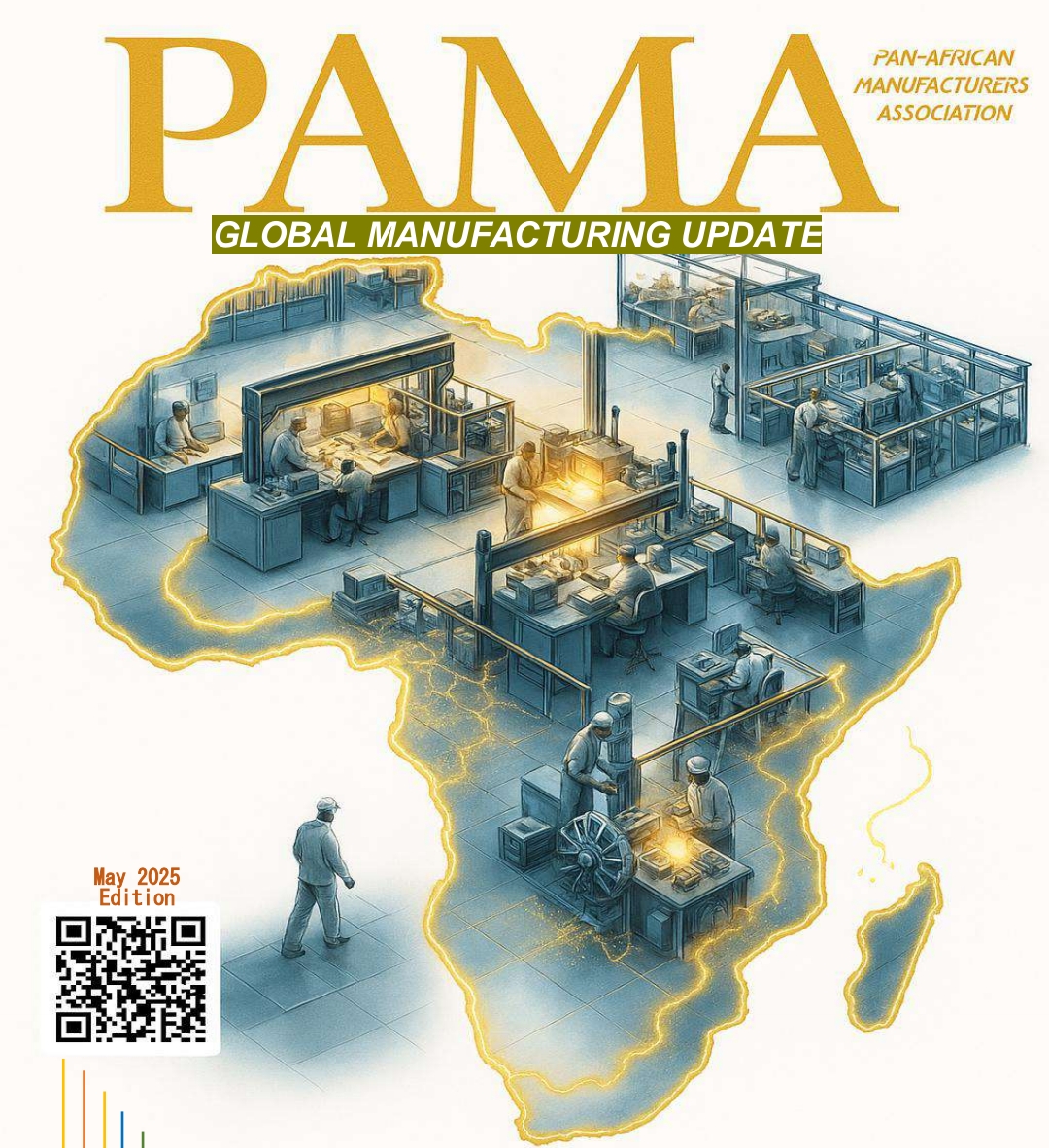
 Africa’s manufacturing sector is on the brink of a new era, as strategic partnerships, infrastructure investment, and value-chain integration take center stage in the continent’s industrial agenda. This was the central message in the May 2025 edition of the PAMA News Bulletin, which spotlighted renewed momentum toward building a globally competitive African manufacturing base.
PAMA’s Visit to Dangote Industries Underscores Industrial Collaboration
In a symbolic yet strategic move, the Pan-African Manufacturers Association (PAMA) paid a courtesy visit to Dangote Industries Limited—one of Africa’s most iconic industrial conglomerates. The meeting was described as more than a diplomatic engagement; it was a rallying call for deeper regional collaboration among Africa’s industrial champions.
“Africa’s future depends on what we produce, how we trade, and how we collaborate,” said Alhaji Aliko Dangote during the visit. His statement reflects a growing consensus that industrial integration—not just production—is key to the continent’s economic transformation.
PAMA reiterated its commitment to fostering industrial synergies that anchor Africa’s participation in global value chains and enhance intra-African trade under frameworks like the African Continental Free Trade Area (AfCFTA).
Africa’s Position in Global Value Chains: Reform Is Long Overdue
The bulletin raised critical concerns over Africa’s limited and largely extractive role in global value chains (GVCs). Despite the continent’s vast resource base, it continues to export mainly raw materials with little local processing.
PAMA called for a shift toward higher-value activities—manufacturing components, assembling finished goods, and developing end-to-end production systems. It noted that policies like AfCFTA and the African Union’s Commodities Strategy present real opportunities to support this transition.
The bulletin emphasized the need for harmonized standards, increased investment in research and development, and the creation of regional industrial clusters to improve Africa’s competitiveness in global markets.
Infrastructure Innovation: WAEMU Markets Attract Investors
Infrastructure emerged as a critical theme, with a spotlight on the West African Economic and Monetary Union (WAEMU) region. A new partnership between Africa50 and the Bourse Régionale des Valeurs Mobilières (BRVM) to issue project bonds is unlocking capital for energy, transport, and logistics development.

These bonds aim to attract investment from pension funds, insurance companies, and private capital, shifting infrastructure financing from public sector dependency to broader, market-driven models. For manufacturers, this means lower logistics costs, better utility access, and expanded market reach—particularly in previously underserved regions.
Industrial Champions Driving the “Made in Africa” Movement
PAMA celebrated a growing list of industrial frontrunners proving that African manufacturing can thrive on the global stage. These include:
- Dangote Industries Limited, which is positioning Nigeria as a major exporter of polypropylene and fertilizers.
- Spiro and Innoson Vehicles, leading the charge in electric mobility and vehicle production across West Africa.
- OCP Group (Morocco) and Dangote, promoting agro-industrial development through backward integration.
- Pink Mango Factory (Rwanda) and METL Group (Tanzania), showcasing global competitiveness in textiles and FMCG sectors.
These companies exemplify what is possible when industrial ambition meets the right policy support and financing tools.
Emerging Sectors Point to Africa’s Investable Future
The bulletin included a market intelligence snapshot identifying sectors with high compound annual growth rates (CAGR), strong investor interest, and regional readiness. High-potential industries include electric vehicle (EV) manufacturing in Morocco and South Africa, petrochemicals and fertilizers in Nigeria and Egypt, and agro-processing in East and West Africa.
PAMA urged both public and private sector actors to seize the moment, stating that Africa’s industrial opportunity is “wide open—but not indefinitely.”
The Path Ahead: Building Locally, Competing Globally
As the continent moves toward a more integrated industrial future, PAMA emphasized its commitment to advocacy, policy engagement, and investment promotion. The association is focused on helping Africa shift from being a trading continent to one that adds significant value within its borders.
“Our mission is clear,” the bulletin concludes. “We are building the foundation for a globally competitive, locally integrated, and continentally coordinated African manufacturing ecosystem.”
Stay informed, stay ahead with The Ameh News
Discover more from Ameh News
Subscribe to get the latest posts sent to your email.