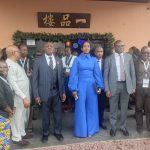
The Director General of PenCom, Ms. Omolola Oloworaran
The National Pension Commission (PenCom) has intensified its push to reposition pension participation in Nigeria as a fundamental right rather than a tax, donation or privilege, calling on civil society organisations to play a stronger role in deepening public awareness and trust in the pension system.
This call was made by the Director General of PenCom, Ms. Omolola Oloworaran, at the 2025 Conference for Civil Society Groups held in Abuja, where she stressed that collaboration with non-governmental actors was central to expanding pension coverage and protecting the dignity of Nigerians in old age.
Represented at the event by the Director of the Contributions and Bonds Redemption Department, Usman Musa, Oloworaran said PenCom’s engagement with civil society formed a core pillar of its reform agenda under Pension Revolution 2.0.
“Together, the National Pension Commission and civil society organisations must help Nigerians understand that pension is not a tax, not a donation and not a privilege, but a right and a tool for dignity in all ways,” she said.
According to the PenCom chief, the Commission’s priorities in the current reform phase remain clear: expanding pension coverage, strengthening public confidence, improving investment outcomes, tightening supervision, and safeguarding retirees’ interests. She described civil society organisations as critical partners in driving inclusion, particularly among vulnerable and underserved groups, while also promoting transparency and accountability across the pension ecosystem.
Reflecting on reforms implemented over the past year, Oloworaran said PenCom had taken decisive steps to improve governance and transparency, stressing that pension administration could no longer operate behind closed doors.
“Pensions cannot be managed from the shadows. To this end, we have strengthened governance rules to eliminate shadow directors,” she stated, adding that integrity, transparency and sound leadership were non-negotiable in managing pension funds she described as the nation’s “lifesavers.”
One of the most far-reaching reforms, she noted, was the restructuring and rebranding of the micro-pension scheme into the Personal Pension Plan (PPP). The redesigned scheme targets Nigeria’s vast informal sector, including artisans, traders, gig workers, creatives, farmers and transport workers—groups often excluded from formal retirement planning despite years of economic contribution.
“From micro-pension to personal pension plan, one of the most defining reforms of the past year is this restructuring,” Oloworaran said.
She explained that the Personal Pension Plan offers a simple, flexible and inclusive framework that allows self-employed individuals and informal sector workers to make voluntary contributions towards retirement. Key innovations under the scheme include accelerated pension payments and the deployment of accredited pension agents to drive onboarding and education.
“These agents are not merely distribution channels,” she said. “They are also an employment strategy.”
According to her, the initiative is expected to generate thousands of jobs by training and certifying young Nigerians as pension professionals, while extending pension services to rural and underserved communities. “This is financial inclusion with impact— inclusion that creates jobs,” she added.
Participation in the Personal Pension Plan has been deliberately simplified, with eligibility open to any Nigerian aged 18 and above using basic identification details such as a National Identification Number (NIN), name and a valid phone number.
Oloworaran also highlighted what she described as a historic milestone for the pension sector: the presidential approval and disbursement of ₦758 billion to settle outstanding pension liabilities.
“This unprecedented intervention sent a clear and powerful message that Nigeria honours its promises to its workers and retirees,” she said.
She disclosed that long-standing pension increases owed to federal government treasury-funded retirees—some dating back to 2007—had now been fully paid, overturning years of scepticism.
“What many believed would never be paid has now been paid,” she noted.
In addition, she announced the restoration of zero waiting time for the payment of approved pension rights from July 2025, ensuring that retirees now receive their benefits promptly upon retirement. She also cited the introduction of Pension Plus 1.0, which has added ₦2.68 billion to monthly pension payments.
“These are not just numbers. They represent meals on the table, medicines purchased and dignity deserved,” Oloworaran said.
Earlier, the Acting Director of PenCom’s Corporate Communications Department, Ibrahim Buwai, said the Commission had recorded significant progress in resolving challenges that once plagued the contributory pension scheme, particularly delays in benefit payments.
“As we hold this conference this year, unlike last year, there are no longer delays in the payment of pensions to retirees of federal government agencies,” Buwai said.
He confirmed that all retirees now receive their benefits in the same month they exit service, describing the elimination of payment delays as a major institutional achievement. He also reaffirmed that pension increases outstanding since 2007 had been fully settled.
Buwai added that participants at the conference were being introduced to the redesigned Personal Pension Plan, describing it as a “totally new product” tailored to the realities of Nigeria’s labour market.
As deliberations continued, PenCom urged civil society organisations to sustain advocacy and grassroots engagement to ensure that ongoing pension reforms translate into real improvements in welfare, inclusion and dignity for Nigerian workers—both within and outside the formal sector.
PenCom calls on civil society to promote pension awareness as a fundamental right, unveiling the Personal Pension Plan and highlighting reforms that improve inclusion, transparency and retirees’ welfare.
PenCom and civil society groups push pension awareness as a right, unveil the Personal Pension Plan, and highlight landmark reforms, improved payments and expanded coverage in Nigeria.
Discover more from Ameh News
Subscribe to get the latest posts sent to your email.