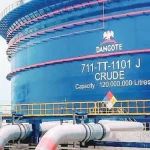
 As momentum gathers ahead of the anticipated public listing of the Dangote Refinery, stakeholders across Nigeria’s financial and economic landscape are intensifying calls for a more inclusive share allocation model—one that significantly prioritises retail investors.
In a notable escalation of their advocacy, stakeholders are now urging the leadership of the Securities and Exchange Commission (SEC), the Nigerian Exchange Group, and the Dangote Refinery shares allocation team to reserve at least 65 per cent of the total shares for retail investors in the proposed Initial Public Offering (IPO).
According to proponents of this approach, such a structure is critical to safeguarding the long-term stability of the asset and protecting the Nigerian market from potential volatility. They argue that over-concentration of shares in the hands of institutional and foreign investors could expose the market to sudden sell-offs, particularly in response to unforeseen economic or political developments.
This perspective reflects a growing concern that large institutional players may “dump” shares at will under uncertain conditions, thereby destabilising prices and eroding local investor confidence. By contrast, a broad retail investor base is seen as more resilient and aligned with long-term national economic interests.
Providing further insight, economist Celestine Ukpong described the push as a reflection of a deeper transformation in Nigeria’s capital market philosophy. He emphasised that the traditional IPO structure, which often favours institutional dominance, is increasingly being questioned in light of rising demand for inclusive economic participation.
“Allocating a substantial portion of shares to retail investors is not just a financial strategy—it is a socio-economic imperative,” Ukpong stated. “It ensures that wealth generated from critical national assets is more equitably distributed among Nigerians.”
From a strategic communications standpoint, Dr Ejike Nduilo, founder of Henryjvaleens, noted that such a move could significantly enhance public trust and national ownership sentiment.
“When citizens have a direct stake in a project of this magnitude, it changes the narrative entirely,” Nduilo explained. “It builds confidence, fosters patriotism, and strengthens the legitimacy of the investment ecosystem.”
Meanwhile, financial expert Peter Adebayo underscored the importance of balancing accessibility with regulatory discipline. While he acknowledged the benefits of increased retail participation, he stressed the need for strong investor protection frameworks.
“Expanding retail access must go hand-in-hand with robust oversight,” Adebayo said. “Investor education, transparency, and effective regulation will be critical to ensuring that this model succeeds without exposing retail investors to undue risks.”
The Dangote Refinery, widely regarded as a game-changer for Nigeria’s energy security and foreign exchange earnings, is expected to attract massive investor interest upon listing. However, the evolving debate around its share allocation signals a broader shift in market expectations—one that prioritises inclusivity, stability, and national participation over traditional concentration of ownership.
As the IPO draws closer, all eyes remain on regulators and key stakeholders to determine whether this proposed 65 per cent retail allocation will be adopted. If implemented, it could redefine how high-value assets are distributed in Nigeria and set a new precedent for future listings.
Stakeholders call for 65% retail investor allocation in Dangote Refinery’s IPO to prevent market volatility and promote inclusive ownership in Nigeria’s capital market.
Discover more from Ameh News
Subscribe to get the latest posts sent to your email.