By The Ameh News Desk
 Nigeria’s aviation sector is heading toward a potential nationwide shutdown as the Airline Operators of Nigeria (AON) warns that domestic airlines may suspend operations from April 20, 2026, over the spiralling cost of Jet A1 fuel.
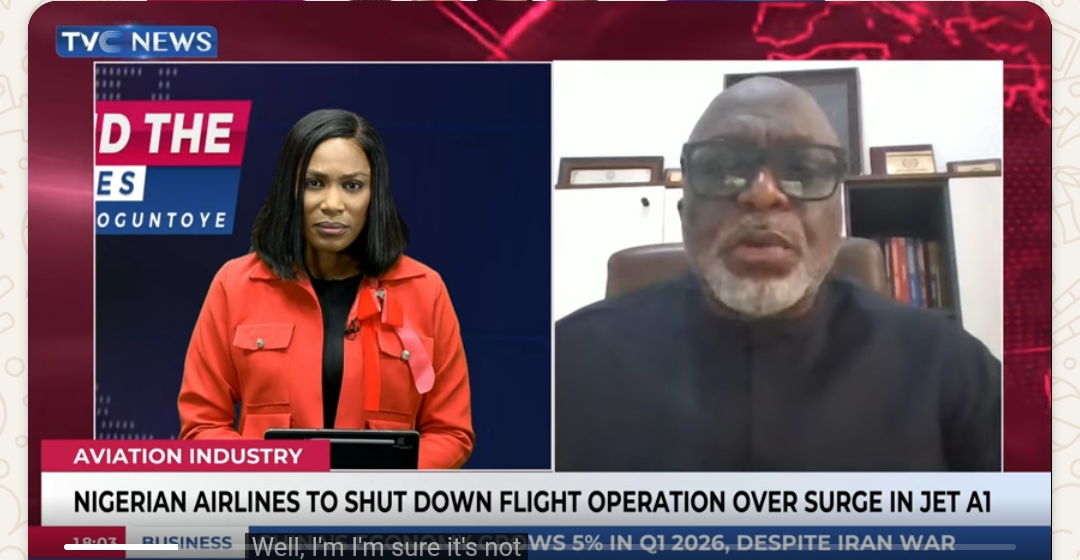
The gravity of the crisis came into sharp national focus during a live broadcast of Beyond the Headlines on TVC News, where anchor Precious Amayo, standing in for Nifemi Oguntoye, engaged industry stakeholders in a probing and revealing conversation that exposed deep cracks in Nigeria’s aviation fuel supply chain.
A Crisis Unfolds on Live Television
Opening the programme, Amayo set the tone with urgency, outlining how the dramatic surge in aviation fuel prices could cripple domestic air travel and disrupt economic activities nationwide.
With pointed questions and steady moderation, she guided viewers through the unfolding crisis—challenging industry claims, seeking clarity on alleged supply shortages, and interrogating the role of marketers in the price surge.
Her central question—“Who is behind this surge, and what does it mean for Nigerians?”—captured the national concern as millions of travellers brace for possible disruptions.
Airlines Sound the Alarm
Responding to the concerns, Dr Obiora Okonkwo, Chairman of United Nigeria Airlines and spokesperson for AON, confirmed that operators are nearing a breaking point.
According to him, Jet A1 prices have skyrocketed from about ₦900 per litre in February to between ₦2,700 and ₦3,300 per litre—an increase of over 300 per cent.
He stressed that such a spike is inconsistent with global crude oil trends, which have risen by only about 30 per cent within the same period.
“This is not sustainable for any airline business,” Okonkwo said during the interview.
Government Yet to Convene Emergency Talks
Amayo also pressed for clarity on government intervention, referencing an earlier statement by the Minister of Aviation and Aerospace Development, Festus Keyamo, who had called for an emergency stakeholders’ meeting.
Okonkwo confirmed that the meeting had yet to take place due to the Minister’s absence from the country, even as industry players continue internal deliberations.
Dangote Refinery and the Price Disconnect
A key focus of the discussion was the role of the Dangote Refinery, which currently supplies over 95 per cent of Nigeria’s aviation fuel.
While operators acknowledged the refinery as a “lifesaver,” Amayo pushed for clarity on why pump prices remain excessively high despite relatively stable depot pricing.
Okonkwo explained that Dangote’s depot prices are transparent and issued weekly, but the final cost to airlines—after distribution—has been inflated beyond reasonable margins.
Allegations of Racketeering and Collusion
In one of the most critical moments of the interview, Amayo confronted the issue of alleged collusion between major marketers and unregulated suppliers.
She highlighted the contradiction between claims of scarcity by established marketers and the simultaneous availability of fuel at inflated prices from unofficial sources.
Okonkwo did not dismiss the possibility.
“That’s what it looks like, and we are the ones paying the price,” he said, reinforcing industry suspicions of racketeering within the supply chain.
He further noted that there has been no official indication from the refinery of supply shortages, raising questions about the authenticity of the scarcity narrative.
Impact on Passengers and the Economy
Amayo steered the conversation toward the implications for ordinary Nigerians, asking whether passengers should brace for higher fares or seek alternative travel options.
In response, operators warned that ticket prices for a one-hour domestic flight could rise to as much as ₦500,000 if current fuel costs persist.
Such a development, they said, would not only price out most travellers but also trigger wider economic consequences, affecting jobs, banking obligations, and government revenues tied to aviation.
Industry Resilience Under Strain
Reflecting on past challenges, including the COVID-19 pandemic, Amayo noted the sector’s resilience and questioned how it compares to the current crisis.
Okonkwo revealed that Nigeria’s aviation industry was among the fastest to recover globally post-pandemic, despite receiving minimal government support.
However, he emphasised that the current fuel crisis, combined with high interest rates, multiple taxes, and foreign exchange pressures, poses an even greater threat.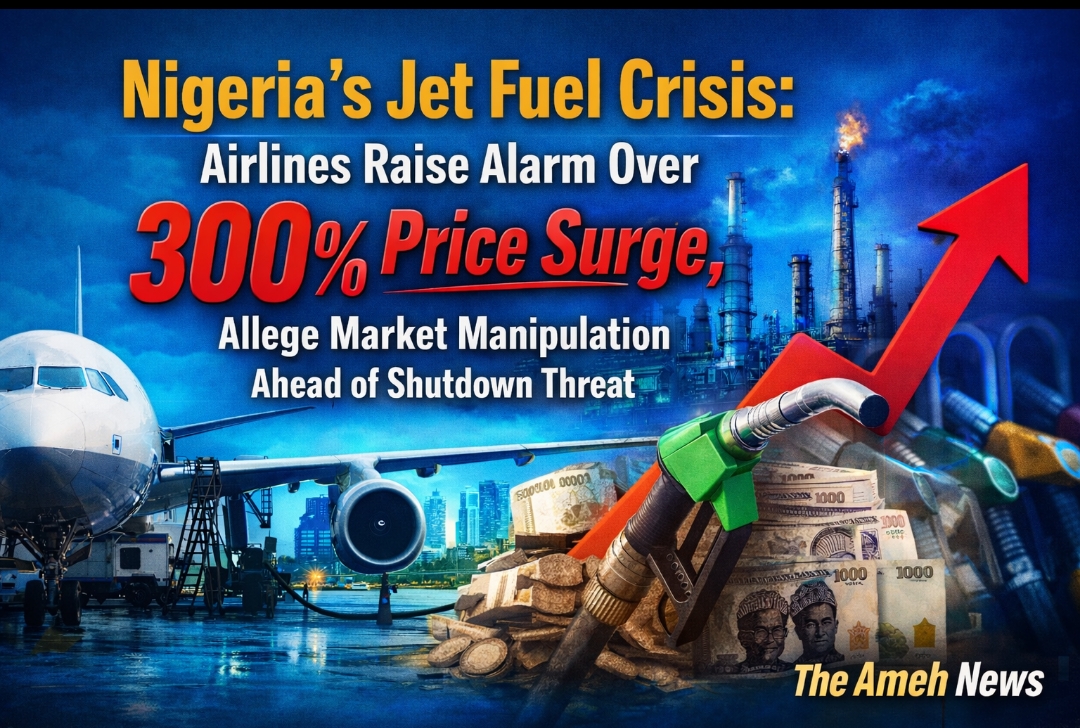
Safety Concerns: Bird Strikes on the Rise
Beyond fuel costs, the interview also exposed growing safety concerns, particularly the increasing frequency of bird strikes at Nigerian airports.
Amayo referenced a recent incident involving United Nigeria Airlines, prompting Okonkwo to disclose that such occurrences have become alarmingly common, with multiple incidents recorded within days.
He warned that the trend poses serious operational and safety risks, further compounding the industry’s challenges.
Call for Immediate Regulatory Action
Closing the conversation, Amayo reiterated the urgency of the situation, while AON called on regulators to investigate the fuel market, identify culprits, and restore transparency.
Operators insist that their warning is not a threat but a necessary step to prevent total collapse.
As the April 20 deadline approaches, the aviation sector—and indeed the nation—awaits decisive action to prevent a shutdown that could ground flights, disrupt businesses, and deepen economic uncertainty.
On TVC News, Precious Amayo exposes Nigeria’s aviation fuel crisis as airlines warn of an April 20 shutdown, citing 300% Jet A1 price surge and alleged market racketeering.
Discover more from Ameh News
Subscribe to get the latest posts sent to your email.