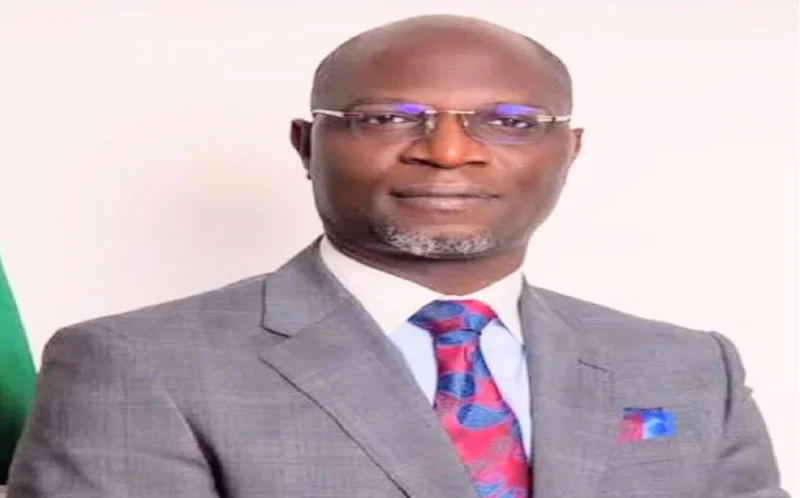
Remarks by Emomotimi Agama, PhD, Director-General, Securities and Exchange Commission of Nigeria
 Nigeria’s capital market has entered a new phase of reform as the Securities and Exchange Commission (SEC) signals that the recently implemented T+1 settlement cycle is only a stepping stone toward a faster, more efficient, and globally competitive financial ecosystem.
At the T+1 Settlement Cycle Transition Ceremony, held on Monday, 1 June 2026 at NGX Group House, Marina, Lagos, the Director-General of the SEC, Dr. Emomotimi Agama, delivered a forward-looking address themed “T+1 and Beyond: Advancing Market Efficiency and Global Competitiveness.”
He emphasized that the transition to T+1 settlement is not the end of Nigeria’s market modernization journey but the beginning of a broader structural transformation aimed at improving efficiency, deepening liquidity, and positioning the country’s capital market for long-term global relevance.
Global Shift Toward Faster Settlement Systems
Dr. Agama noted that Nigeria’s reforms are taking place within a rapidly evolving global financial environment where leading markets are continuously shortening settlement cycles in response to rising electronic trading volumes and the need for greater capital efficiency.
He cited the United States, Canada, and India among jurisdictions that have accelerated settlement timelines. India, which adopted T+1 in phases, has already gone further by introducing an optional T+0 settlement pilot—an early move toward same-day settlement. China, he added, has long operated T+0 mechanisms in parts of its market structure, reinforcing the global shift toward faster and more automated post-trade systems.
According to him, the direction of global capital markets is clear: faster, more automated, and more resilient infrastructure is becoming the new standard.
Nigeria’s Broader Capital Market Reform Agenda
Beyond settlement reforms, the SEC outlined an extensive modernization programme designed to strengthen the entire capital market ecosystem.
Key components include:
Deepening of the commodities and derivatives market
Expansion of the non-interest capital market, now valued at over ₦1.6 trillion
Recapitalisation of capital market intermediaries to ensure stronger balance sheets and operational resilience
Implementation of the Second Nigerian Capital Market Master Plan (2025–2035)
Dr. Agama explained that these reforms are mutually reinforcing and designed to work as a single ecosystem. Stronger intermediaries enable faster settlement systems, faster settlement improves liquidity, deeper liquidity attracts more investors, and increased investor participation drives more listings and market expansion.
Ultimately, he said, this cycle creates a broader and more efficient capital market capable of mobilising long-term financing for infrastructure development, industrialisation, innovation, and Nigeria’s expanding population needs.
Reform as a Collective Achievement
The SEC Director-General stressed that Nigeria’s capital market transformation is not the achievement of any single institution but the result of collective effort across the financial ecosystem.
He commended regulators, exchanges, depositories, broker-dealers, custodians, registrars, issuers, and investors for their shared commitment to reform and for maintaining confidence throughout the transition process.
According to him, sustained collaboration has been central to the progress already recorded and remains essential for the next phase of reforms.
Looking Beyond T+1
While celebrating the successful transition to T+1, Dr. Agama described it as a foundational milestone rather than a final destination. He reaffirmed Nigeria’s ambition to continue aligning with global best practices and to pursue innovations that could eventually lead toward T+0 settlement.
He concluded that Nigeria’s capital market reform journey is already moving beyond T+1, with a long-term vision anchored on efficiency, resilience, and global competitiveness extending through 2035 and beyond.
At the T+1 transition ceremony in Lagos, SEC DG Emomotimi Agama outlined Nigeria’s capital market reform agenda, including a move beyond T+1 toward T+0 settlement, deeper liquidity, stronger intermediaries, and the 2035 Capital Market Master Plan.
Discover more from Ameh News
Subscribe to get the latest posts sent to your email.