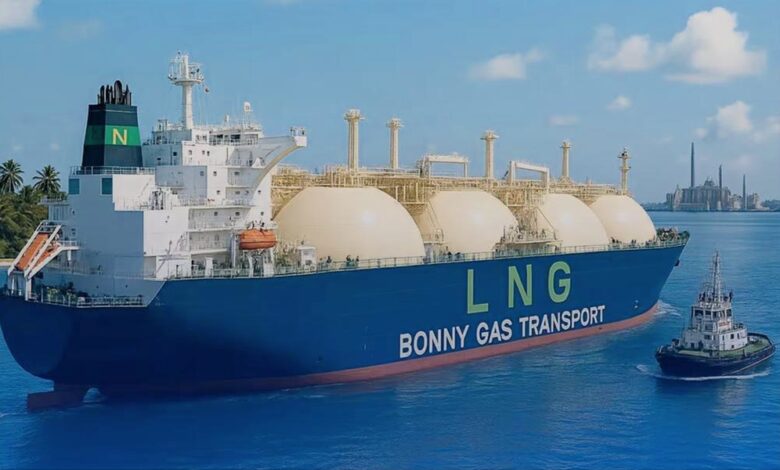
 Bonny Gas Transport Limited (BGT), the shipping subsidiary of Nigeria LNG Limited (NLNG), has awarded contracts for the construction of three new Liquefied Natural Gas (LNG) carriers as part of a strategic fleet renewal programme aimed at enhancing operational efficiency, environmental sustainability, and long-term competitiveness in the global energy shipping market.
The contracts were awarded to Hudong-Zhonghua Shipbuilding (Group) Co. Limited and China Shipbuilding Trading Co. Limited, two of China’s leading shipbuilding companies with extensive experience in constructing advanced LNG vessels.
BGT disclosed in a statement that the vessels will each have a cargo capacity of 174,000 cubic metres and will feature cutting-edge X-DF dual-fuel propulsion technology, a next-generation engine system designed to improve fuel efficiency, lower operating costs, and significantly reduce greenhouse gas emissions.
The vessels are expected to be delivered in 2029 and will subsequently be chartered to NLNG. Operational management of the ships will be handled by NLNG Shipping and Marine Services Limited (NSML), the company’s maritime logistics and vessel management subsidiary renowned for its expertise in LNG shipping operations.
Strategic Fleet Modernisation
The vessel acquisition represents a major milestone in BGT’s long-term fleet renewal and replacement strategy, which seeks to modernise its shipping assets while aligning with evolving international environmental regulations and industry best practices.
Industry analysts view the investment as a demonstration of NLNG’s commitment to maintaining a modern and competitive fleet capable of supporting growing global demand for cleaner energy sources.
The adoption of X-DF propulsion technology is particularly significant as the maritime industry faces increasing pressure to reduce carbon emissions and comply with stricter environmental standards established by the International Maritime Organization (IMO) and the European Union.
Compared to conventional LNG carriers, X-DF-powered vessels consume less fuel and produce lower emissions, positioning them among the most environmentally friendly LNG transport vessels currently available.
Supporting Global Energy Transition
As countries across Europe, Asia, and other regions continue to diversify their energy mix and pursue cleaner energy alternatives, LNG has emerged as an important transition fuel due to its lower carbon footprint compared to coal and other traditional fossil fuels.
The new vessels are expected to strengthen NLNG’s ability to reliably transport LNG cargoes to international markets while supporting global energy security and decarbonisation objectives.
According to the company, the vessels have been designed to meet both current and anticipated international emissions requirements, including evolving European Union environmental regulations.
The investment is also expected to support NLNG’s efforts to maintain its Oil and Gas Methane Partnership (OGMP) 2.0 Level 5 rating, the highest reporting standard under the United Nations-backed methane emissions reporting framework. The rating reflects transparency and accuracy in methane emissions monitoring and management across operations.
Strengthening Nigeria’s LNG Export Capacity
The latest vessel order underscores NLNG’s strategic role in Nigeria’s energy sector and reinforces the company’s commitment to strengthening the country’s position as a major supplier of liquefied natural gas to global markets.
For decades, NLNG has been a critical contributor to Nigeria’s foreign exchange earnings, helping to monetise the country’s vast natural gas reserves while supporting economic development and industrial growth.
Maritime experts note that investment in modern LNG carriers is increasingly becoming essential for energy companies seeking to remain competitive amid rising environmental expectations and technological advancements within the global shipping industry.
The vessels are expected to deliver improved voyage efficiency, enhanced cargo reliability, and reduced environmental impact, ensuring that NLNG remains well-positioned to meet future market demands.
Enhancing Operational Excellence
With NSML overseeing the management of the vessels upon delivery, NLNG is expected to leverage its established maritime expertise to maximise operational performance and maintain the highest standards of safety, efficiency, and environmental stewardship.
The acquisition further demonstrates the company’s broader commitment to innovation, sustainability, and operational excellence as it continues to navigate an evolving global energy landscape.
As delivery approaches in 2029, the three new LNG carriers are expected to become key assets in NLNG’s shipping portfolio, supporting the company’s vision of delivering cleaner energy solutions to customers worldwide while advancing Nigeria’s ambitions in the global gas market.
Bonny Gas Transport Limited, a subsidiary of NLNG, has ordered three new 174,000-cubic-metre LNG carriers equipped with advanced X-DF propulsion technology as part of a major fleet modernisation and sustainability drive.
NLNG subsidiary Bonny Gas Transport has awarded contracts for three next-generation LNG carriers to Chinese shipbuilders, strengthening fleet efficiency, environmental compliance, and Nigeria’s global LNG export capacity.
NLNG, Bonny Gas Transport, BGT LNG vessels, LNG carriers Nigeria, NSML, LNG shipping, fleet modernisation, X-DF propulsion technology, LNG exports, maritime industry, Nigeria gas sector, clean energy transportation.
Discover more from Ameh News
Subscribe to get the latest posts sent to your email.