
Fani-Kayode In South Africa: The Fire That Never Died – From Tourism Minister To High Commissioner, The Same Man, The Fight For Nigeria
By Frank Meke
My encounter with Femi Fani-Kayode, then Nigeria’s Minister of Tourism, was one of the most instructive experiences of my career. It revealed a great deal about the man, his temperament and his approach to public service.
At the time, I was a hard-hitting journalist with little tolerance for what I considered political gimmickry in the tourism sector. I made my position clear to Fani-Kayode in unmistakable terms – bluntly, unapologetically and without diplomatic niceties. I wrote what I saw and what I felt. I argued that tourism was dying while politicians were busy playing politics with the industry.
My criticisms of his leadership of the ministry must have struck a nerve. At one point, he took out half a page in the Champion Newspaper to respond to me.
Half a page! A Minister of the Federal Republic of Nigeria devoting that much newspaper space to responding to a young travel journalist. That episode told me something important: this was a man who read, paid attention to criticism and was prepared to confront those who challenged him.
But that was not the end of the story. It was only the beginning.
Otunba Olusegun Runsewe, then Director-General of the Nigeria Tourism Development Corporation (NTDC), intervened. He reportedly advised Fani-Kayode, who would later become Minister of Aviation, that engaging in a prolonged public battle with a stubborn journalist like me would serve neither his administration nor the tourism industry. He recommended a meeting instead.
Runsewe knew me. He knew Fani-Kayode and understood that allowing two strong-willed men to continue fighting publicly would do little to advance the interests of Nigerian tourism.
Interestingly, Fani-Kayode’s media aide at the time, a friend of mine from the Nigerian Tribune stable, also intervened. He reminded me that Fani-Kayode had tremendous respect for me and for journalists generally, and that he needed our support.
I was also made to understand that Fani-Kayode attended my church, the Mountain of Fire and Miracles Ministries (MFM).
I eventually backed down because, in my view, brothers should not engage one another in the open.
That is a principle I have carried with me over the years. Disagreements can be settled behind closed doors. Arguments can be intense, but there is little wisdom in washing one’s dirty linen in public for adversaries to exploit.
Later, I was invited to a meeting with the Minister at the National Theatre, alongside other tourism journalists, to resolve the disagreements.
Initially, I was reluctant to attend. I feared that I could be arrested or harassed, having become accustomed to the hostility that sometimes greets journalists who demand public accountability from those in power.
I wondered whether attending the meeting could expose me to intimidation or some form of official reprisal.
However, I eventually agreed to attend after receiving assurances that neither I nor any other journalist would be arrested or harassed by the Minister’s security personnel.
At the meeting, after repeatedly calling for me to come forward and be recognised, Fani-Kayode publicly acknowledged my commitment and sacrifices towards the development of Nigerian tourism. He expressed his admiration for my work, shook my hand, embraced me and promised to work with Nigerian tourism journalists to transform the industry.
He did not arrest me. He embraced me.
He did not silence me. He acknowledged my contribution.
Rather than regard me as an enemy, he chose to see me as a partner.
That experience taught me an important lesson: Fani-Kayode is a fighter, but not necessarily a hater. He can confront those who disagree with him, but he is also capable of reconciliation. His battles, as I have come to understand him, are driven by his convictions about Nigeria.
That is the Fani-Kayode I know. And that is the man South Africa is getting to know.
A man with a record in public service
Let us put the historical record in perspective.
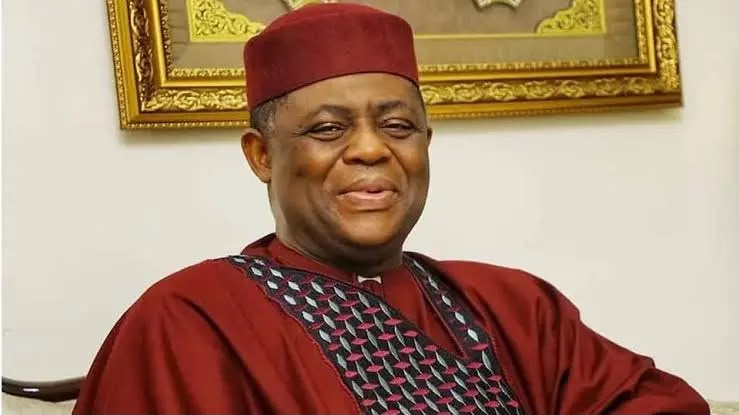
David Oluwafemi Adewunmi Abdulateef Fani-Kayode, born on October 16, 1960, in Lagos to Chief Remilekun Adetokunbo Fani-Kayode and Chief (Mrs.) Adia Adunni Fani-Kayode of Ile-Ife, Osun State, is a lawyer, politician, essayist, poet, evangelical Christian and diplomat.
He served as Special Assistant on Public Affairs to President Olusegun Obasanjo from July 2003 to June 2006. On June 22, 2006, he was appointed Minister of Culture and Tourism, succeeding Frank Ogbuewu. He served in that capacity until November 7, 2006, when he was redeployed to the Ministry of Aviation, succeeding Babalola Borishade. He remained Aviation Minister until May 29, 2007.
In my assessment, he was one of the most outspoken ministers of the Obasanjo administration. He was not without shortcomings, but he was fearless, articulate and passionate about the responsibilities entrusted to him. He was never one to shy away from controversy or difficult conversations.
His tenure as Aviation Minister was particularly notable for his confrontational approach to foreign airlines operating in Nigeria, especially those accused of treating Nigerian passengers with disdain.
In January 2007, Fani-Kayode warned Virgin Atlantic and British Airways over complaints about their treatment of Nigerian passengers. His ministry accused the airlines of treating Nigerians with the “utmost contempt” during check-in procedures and onboard flights, warning that serious sanctions would follow if further complaints were established.
His position was unequivocal: “Nigerians are not second-class citizens and the Minister would not sit by and allow our people to be treated like animals by anybody or for any reason.”
He also directed foreign airlines to ensure that flights into Lagos arrived no later than 6 p.m., rather than 8 p.m. or 9 p.m., and threatened sanctions, including the grounding of airlines that failed to comply with the directives. He further threatened action against British airlines over alleged violations of the Bilateral Air Services Agreement.
To his supporters, these interventions represented an attempt to restore discipline and protect the dignity of Nigerian travellers in an industry where foreign carriers wielded considerable influence.
During his tenure, he also pushed for the resolution of issues surrounding the NAMA-Thales Air Traffic Management project, directing that negotiations commence to prevent the project from becoming a white elephant. He presented a memorandum to the Federal Executive Council seeking the payment of outstanding pension entitlements to former Nigeria Airways workers. These are some of the episodes that define his record in public office.
That, to me, is Fani-Kayode. When he believes Nigerians are being humiliated, he is not inclined to remain silent. South Africa: A new diplomatic assignment.
His appointment as Nigeria’s High Commissioner to South Africa, at a time when relations between both countries have been strained by recurring xenophobic attacks and concerns over the treatment of Nigerians, is therefore significant.
His recent interventions over issues affecting Nigerians in South Africa reflect the combative style I witnessed during his years as a minister.
Let us examine the developments surrounding his diplomatic assignment.
President Bola Tinubu initially approved Fani-Kayode’s ambassadorial posting on March 6, 2026, assigning him to Germany. On May 7, 2026, however, the President approved his redeployment to South Africa following a request for a change of posting involving a swap with Senator Ita Enang.
Fani-Kayode was among the 65 ambassadorial nominees confirmed by the Senate. In July 2026, he received his Letter of Credence.
On October 25, 2026, he arrived at O.R. Tambo International Airport in Johannesburg, where he was received by officials of the Nigerian High Commission and members of the Nigerian community. On arrival, he pledged to strengthen bilateral relations and improve the protection of Nigerians living in South Africa.
Five days later, on October 30, he presented copies of his Letters of Credence to Clayson Monyela, Deputy Director-General for Public Diplomacy and Acting Chief of State Protocol at South Africa’s Department of International Relations and Cooperation (DIRCO), formally assuming duties as Nigeria’s High Commissioner to South Africa, Lesotho and Eswatini.
On November 13, 2026, he presented his Letter of Credence to South African President Cyril Ramaphosa at the Sefako Makgatho Presidential Guest House in Pretoria, alongside ambassadors from 14 other countries.
The ceremony was particularly significant because it marked the posting of a substantive Nigerian ambassador to South Africa after a four-year gap.
However, an incident surrounding the ceremony immediately attracted attention.
According to Fani-Kayode, the South African Presidency livestreamed the introductions and speeches of all 15 ambassadors, except Nigeria’s. He subsequently raised the matter publicly, expressing concern that Nigeria’s presentation had been excluded.
“Of all the 15 introductions and speeches, only Nigeria’s was cut out,” he said.
What did he do? Did he ignore the incident or quietly return to his residence? No.
He reportedly confronted President Ramaphosa during the subsequent photo session, drawing his attention to the omission. To his credit, Ramaphosa directed him to the relevant officials, who acted promptly. The South African Presidency subsequently released the complete video.
That episode is revealing.
Fani-Kayode would not allow Nigeria to be excluded from the record without raising an objection. Not in a newspaper, not before foreign airlines and certainly not during an official diplomatic ceremony.
How Fani-Kayode may approach his diplomatic mandate
Based on my personal encounter with him, his public record and his interventions since arriving in South Africa, I believe his approach to the diplomatic assignment will be shaped by several defining principles.
He will speak firmly against the mistreatment of Nigerians.
Fani-Kayode is not a diplomat who prefers to whisper when he believes a matter demands a public response. He is more likely to speak openly and firmly, particularly when the safety, dignity and rights of Nigerians are involved.
Discover more from Ameh News
Subscribe to get the latest posts sent to your email.