By The Ameh News
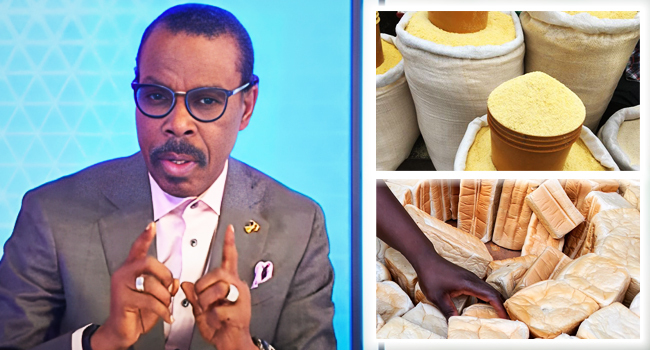 As Nigeria commemorates Democracy Day, renowned economist and Managing Director of Bismarck Rewane, has identified security reforms and cassava industrialisation as two critical pillars that could unlock the country’s next phase of economic growth and prosperity.
In a Democracy Day reflection released by Financial Derivatives Company Limited (FDC), Rewane and his team argued that while Nigeria possesses immense economic potential, persistent insecurity and the underutilisation of its agricultural resources continue to limit sustainable growth.
According to the FDC report, insecurity remains one of the biggest constraints on economic development, disrupting agricultural production, discouraging private sector investment, increasing business costs, and displacing millions of citizens across affected communities.
To tackle the challenge, the Federal Government increased defence and security spending by 10.18 percent to ₦5.41 trillion in the 2026 budget, while sustaining major military operations including Operation Hadin Kai, Operation Fansan Yamma, Operation Delta Safe, and Operation Udo Ka. These operations have recorded successes through the neutralisation of criminal elements, rescue of kidnapped victims, and recovery of arms and ammunition.
However, Rewane’s FDC cautioned that military action alone cannot deliver lasting peace.
Lessons from Colombia
Drawing lessons from Colombia’s successful fight against insurgency and organised crime, the report noted that sustainable security requires a combination of military reforms, intelligence-led operations, international cooperation, and social development initiatives.
“Security is not merely a defence issue; it is an economic imperative,” the report emphasised.
The think tank stressed that Nigeria must strengthen intelligence gathering, deepen community policing, address youth unemployment, reduce poverty, and invest in local economic development if it hopes to achieve long-term stability and attract investment.
According to FDC, the economic costs of insecurity extend far beyond security budgets. Reduced farm output, disrupted supply chains, lower investor confidence, and declining productivity continue to weigh heavily on economic performance.
Turning Cassava into an Economic Goldmine
Beyond security concerns, Rewane’s Democracy Day message highlighted cassava as one of Nigeria’s most underutilised economic assets.
Nigeria remains the world’s largest cassava producer, accounting for nearly 20 percent of global output with annual production exceeding 62 million metric tonnes. Yet, despite this dominance, the country has failed to convert its production advantage into industrial leadership and significant export earnings.
FDC believes the solution lies in expanding the production and processing of value-added cassava products such as high-quality cassava flour, industrial starch, ethanol, glucose syrup, and livestock feed inputs.
Such investments, the report noted, could significantly reduce Nigeria’s dependence on imported wheat, conserve scarce foreign exchange, stimulate manufacturing, and create employment opportunities across the agricultural value chain.
Learning from Thailand and Ghana
The report cited Thailand and Ghana as examples of countries that have successfully transformed cassava production into thriving industrial sectors.
According to Rewane’s team, their success was driven not by production volumes alone but by coordinated value chains, farmer aggregation systems, mechanisation, quality assurance frameworks, and strong links between producers and industrial processors.
For Nigeria to replicate these achievements, FDC recommended addressing low farm yields, reducing post-harvest losses, improving rural infrastructure, expanding access to finance, and encouraging public-private sector partnerships.
AfCFTA Opportunity
The report further noted that the African Continental Free Trade Area presents a unique opportunity for Nigeria to position cassava-based products as competitive exports across Africa.
By investing in processing hubs and strengthening value chains, cassava could evolve from a traditional food-security crop into a major source of export revenue, industrial growth, and rural employment.
Democracy and Economic Prosperity
Reflecting on Nigeria’s democratic journey, Rewane’s FDC maintained that true prosperity depends on creating a secure environment where businesses can thrive and citizens can participate fully in economic activities.
The report concluded that while insecurity continues to challenge growth, Nigeria’s abundant agricultural resources—especially cassava—offer a clear pathway toward economic diversification and sustainable development.
As the nation celebrates Democracy Day, FDC’s message is clear: securing communities and industrialising agriculture may prove just as important as political reforms in shaping Nigeria’s economic future.
Bismarck Rewane-led Financial Derivatives Company says stronger security reforms and cassava industrialisation are critical to unlocking investment, boosting exports, creating jobs, and accelerating Nigeria’s economic growth.
Discover more from Ameh News
Subscribe to get the latest posts sent to your email.