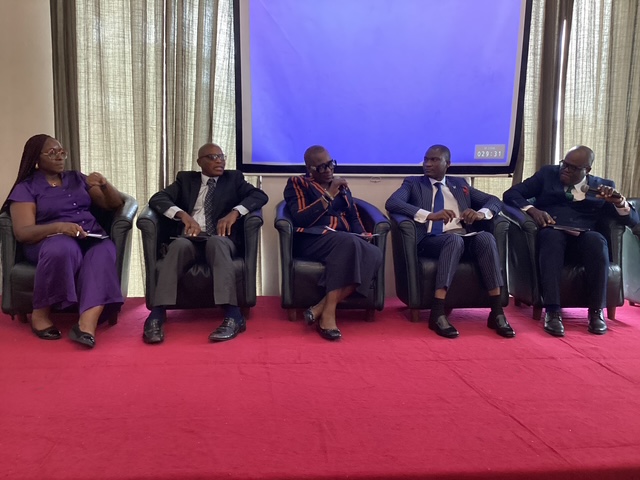
 Leading figures from Nigeria’s insurance, energy and academic communities have called for stronger collaboration between the insurance and oil and gas sectors, arguing that closer partnerships are essential to deepening local content, expanding domestic underwriting capacity and accelerating national economic development.
The consensus emerged during a high-level panel discussion featuring Ademola Abidogun, Managing Director/CEO of Guinea Insurance Plc; Adeobi Nwakuche, Managing Director/CEO of Veritas Kapital Assurance Plc; Prof Olajide Fadun, Dept of Insurance & Actuarial Science, University of Lagos; Nneka Obi, Managing Director/CEO of Deep Shores Energy Limited; and Idu Okeahialam, Group Managing Director/CEO of Royal Exchange Plc.
The panelists unanimously maintained that collaboration—not competition—will determine how successfully Nigeria leverages its vast oil and gas resources to build a stronger domestic insurance industry capable of retaining more risks, creating employment and supporting sustainable economic growth.
Speaking during the discussion, Okeahialam stressed that collaboration between the insurance and oil and gas industries remains one of the most effective mechanisms for strengthening local content and expanding Nigeria’s economic base.
She observed that a significant proportion of insurable assets within the country’s energy sector still presents enormous opportunities for domestic insurers if stakeholders work together more deliberately.
According to Prof Fadun, greater retention of oil and gas risks within Nigeria would stimulate capital development, encourage investment in research and innovation, strengthen technical expertise and ultimately increase the insurance industry’s capacity to support national development.
She added that collaboration aligns with the Federal Government’s local content agenda by ensuring that more value generated within critical sectors remains in the Nigerian economy.
Okeahialam noted that as underwriting capacity grows, the insurance industry will be better positioned to provide specialised services required by the energy sector while promoting financial inclusion and economic resilience.
She also commended the industry’s regulators for implementing policies aimed at encouraging indigenous participation, noting that coordinated efforts among regulators, insurers and operators would deliver long-term benefits for the economy.
Providing an academic and policy perspective, Professor Fadun argued that Nigeria already possesses the legal and regulatory framework necessary to encourage stronger inter-sector collaboration.
He explained that the Nigerian Content Development and Monitoring Board has consistently encouraged sectors of the economy to domesticate local content principles, while the insurance industry also operates under regulations designed to prioritise local underwriting.
According to him, Nigerian laws require that risks should first be offered to local insurance companies before approval can be granted for offshore placement, ensuring domestic insurers have the first opportunity to underwrite major risks.
He also referenced the Cabotage regime in the maritime sector, which promotes the use of Nigerian insurance companies for vessels operating within the country’s coastal waters.
Despite these policies, Fadun questioned why stronger partnerships between the insurance and oil and gas sectors have yet to materialise on the desired scale.
“The frameworks already exist. The real challenge is translating policy into practical collaboration that benefits both industries and the Nigerian economy,” he observed.
Abidogun, Nwakuche and Obi also underscored the importance of strategic partnerships, knowledge sharing and greater engagement between insurers and energy operators.
They noted that increasing local participation in underwriting energy risks would strengthen Nigeria’s insurance market, improve capital retention, expand professional expertise and reduce dependence on foreign insurance markets.
The panelists agreed that stronger collaboration would not only increase premium retention within Nigeria but also support job creation, enhance technical capacity, promote innovation and reinforce investor confidence across both sectors.
They concluded that building sustainable partnerships among insurers, oil and gas operators, regulators, financial institutions and policymakers would play a critical role in achieving the Federal Government’s economic diversification and local content objectives while positioning Nigeria’s insurance industry for greater regional and global competitiveness.
Nigeria insurance industry, oil and gas insurance, local content, Royal Exchange Plc, Guinea Insurance, Veritas Kapital Assurance, Deep Shores Energy, University of Lagos, insurance collaboration, energy sector insurance, NAICOM, Nigerian Content Development.
Top executives from the insurance, energy and academia sectors have called for deeper collaboration between Nigeria’s oil and gas and insurance industries, saying stronger partnerships will enhance local content, expand underwriting capacity, create jobs and accelerate economic development.
Discover more from Ameh News
Subscribe to get the latest posts sent to your email.