By The Ameh News Editorial Team
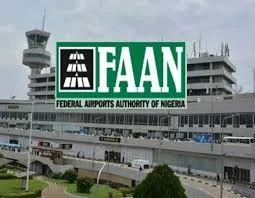 Whenever a video of an Aviation Security (AVSEC) officer confronting a passenger, airline employee or airport worker goes viral, the Federal Airports Authority of Nigeria (FAAN) is usually quick to respond. The agency issues a statement, announces an immediate investigation and reassures the public that anyone found culpable will face appropriate disciplinary action.
The FAAN’s Transparency Challenge From Unpublished AVSEC Investigation Reports Raise Fresh Concerns Over Airport Security Accountability
However, once the public attention subsides, the investigations themselves often disappear from public view.
While FAAN’s prompt reaction demonstrates a willingness to address misconduct, the absence of publicly released investigation outcomes has become a recurring concern among aviation stakeholders, passengers and governance advocates. The result is a growing perception that accountability within Nigeria’s airport security system lacks transparency, even where internal disciplinary measures may have been taken.
As Nigeria seeks to strengthen its position as West Africa’s leading aviation hub, industry experts say closing this communication gap is becoming just as important as investing in airport infrastructure and modern security equipment.
Recurring Security Incidents Raise Fresh Questions
Over the past several years, Nigerian airports have witnessed a series of high-profile incidents involving Aviation Security personnel.
Several of these incidents gained national attention after videos circulated widely on social media, including the Delta Airport confrontation in July 2026, reported disputes at Osubi Airport and other airports, as well as allegations ranging from heavy-handed enforcement and verbal abuse to unprofessional conduct and attempted extortion.
Each controversy has followed a familiar sequence.
FAAN publicly condemns the incident, announces an investigation through its Directorate of Public Affairs and assures Nigerians that appropriate action will be taken after the facts are established.
The agency’s swift response often helps calm public anxiety in the immediate aftermath.
Yet, beyond the initial announcements, there is rarely any public communication explaining what investigators eventually discovered or what disciplinary actions, if any, were implemented.
Where Do the Investigation Reports Go?
This recurring silence has become one of the aviation sector’s least discussed governance issues.
Passengers who witnessed or experienced the incidents are often left wondering whether investigations were completed, whether the officers involved were sanctioned, or whether operational procedures were reviewed to prevent similar occurrences.
Among the questions frequently left unanswered are:
Were the allegations substantiated?
Were officers suspended, dismissed or retrained?
Did FAAN identify weaknesses in supervision or operational procedures?
Were new security protocols introduced?
What lessons were learned from the investigation?
Without publicly available answers, every new incident reinforces the perception that accountability ends with the announcement of an investigation.
Industry observers argue that even if disciplinary measures are taken internally, failing to communicate the outcomes undermines public confidence and fuels speculation.
Passenger Trust Depends on Transparency
For millions of Nigerians who rely on air travel, airport security is expected to inspire confidence rather than anxiety.
Passengers understand that AVSEC officers perform critical responsibilities, including protecting airports against terrorism, unlawful interference, smuggling and other security threats.
However, they also expect those entrusted with enforcing security regulations to operate professionally, respectfully and within clearly defined rules.
When incidents involving misconduct become public but investigation findings remain confidential, travellers naturally begin to question whether the system is capable of holding its own personnel accountable.
Experts note that transparency is not merely about naming and shaming officers.
It is about demonstrating that institutions learn from mistakes, correct systemic weaknesses and maintain consistent professional standards.
The Hidden Cost to Nigeria’s Aviation Brand
The consequences extend beyond passenger satisfaction.
Nigeria has invested heavily in improving airport infrastructure, strengthening regulatory oversight and positioning itself as a regional aviation hub capable of attracting international airlines, investors and tourism.
Yet reputation is shaped not only by infrastructure but also by governance.
International investors and airline operators increasingly assess whether airport authorities respond transparently to operational failures, security breaches and public complaints.
Repeated controversies without visible resolution risk projecting an image of weak institutional accountability, even when internal disciplinary systems exist.
Industry analysts warn that reputational damage can influence investment decisions, passenger confidence and Nigeria’s competitiveness within Africa’s aviation market.
More Than Individual Misconduct
Aviation professionals caution against reducing every incident to the behaviour of individual officers.
Many confrontations may reflect broader institutional challenges.
These include inconsistent customer-service training, inadequate conflict-management skills, operational stress caused by staff shortages, weak supervisory mechanisms and limited public awareness of complaint resolution procedures.
Without addressing these underlying issues, disciplinary actions alone may not prevent future incidents.
Publishing investigation findings could also help identify recurring operational weaknesses requiring policy reforms across the aviation security system.
International Best Practices Favour Public Accountability
Globally, many aviation authorities publish summaries of completed investigations involving airport personnel, particularly where incidents have attracted widespread public attention.
While sensitive security information and personal data are protected, authorities often disclose whether allegations were substantiated, what disciplinary actions were taken and what operational improvements have been introduced.
Such disclosures reassure the travelling public that accountability mechanisms are functioning without compromising national security.
Experts argue that Nigeria can adopt a similar approach by releasing post-investigation summaries that balance transparency with operational confidentiality.
An Opportunity for Institutional Reform
Strengthening transparency around AVSEC investigations presents FAAN with an opportunity to reinforce public confidence rather than simply manage public relations during crises.
Stakeholders recommend that the authority institutionalise a policy requiring the publication of investigation outcomes within a reasonable period after inquiries are concluded.
Such reports could outline:
The nature of the complaint.
Key investigation findings.
Whether allegations were confirmed or dismissed.
Disciplinary or corrective actions taken.
Operational reforms introduced to prevent recurrence.
This approach would demonstrate that every investigation produces measurable institutional learning and accountability.
Beyond Security: A Governance Issue
Th challenge reflects a broader governance concern across many public institutions, where investigations are frequently announced but final reports rarely reach citizens.
For FAAN, embracing greater openness could strengthen institutional credibility, improve stakeholder confidence and reinforce Nigeria’s commitment to international standards of aviation governance.
Transparency, industry experts say, should not end with announcing an investigation—it should extend to communicating its outcome.
The Bigger Picture
As Nigeria pursues its ambition of becoming Africa’s preferred aviation hub, passenger confidence will remain as important as runway expansion, terminal modernisation and safety regulation.
Every unresolved security controversy carries implications beyond the individuals involved. It shapes public perception, influences investor confidence and affects the international reputation of Nigeria’s aviation industry.
Making investigation outcomes publicly available would not only reassure passengers but also demonstrate that FAAN’s commitment to transparency extends beyond initial press statements to measurable institutional accountability.
Until that happens, each new security incident risks reinforcing the perception that investigations begin in public—but end behind closed doors.
The Ameh News Analysis
Nigeria’s aviation sector has recorded important gains in infrastructure development, regulatory oversight and operational safety. However, sustaining those achievements requires an equally strong commitment to transparency and accountability. Routine media briefings and the publication of investigation outcomes into airport security incidents would boost transparency, rebuild passenger trust and strengthen FAAN’s credibility both locally and internationally. FAAN can strengthen passenger trust, improve institutional credibility and enhance Nigeria’s standing as a safe, professionally managed and globally competitive aviation destination.
Repeated airport security incidents followed by investigations with no publicly disclosed outcomes are raising concerns about transparency, passenger confidence and Nigeria’s aviation reputation. The Ameh News examines the accountability gap.
FAAN, AVSEC, Nigeria aviation, airport security, aviation investigations, passenger rights, aviation accountability, airport governance, Nigerian airports, aviation transparency.
Discover more from Ameh News
Subscribe to get the latest posts sent to your email.