
League Demands Stakeholder Consultation, Accountability Over TSC, CSC and Other Aviation Charges
 By Benjamin A. Ameh | The Ameh News
The League of Airport and Aviation Correspondents (LAAC) has called for a fundamental rethink of government revenue policies in Nigeria’s aviation sector, warning that excessive fiscal pressure could undermine the very industry from which government seeks to generate more revenue.
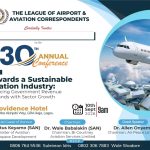
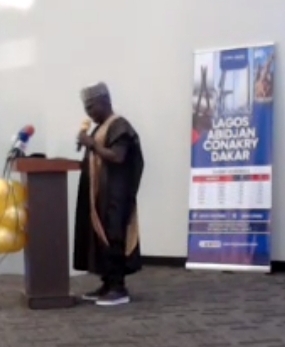
Speaking at the opening of the 30th Annual LAAC Conference, the Chairman of the League, Suleiman Idris, said the critical question confronting the industry was no longer whether government should generate revenue from aviation, but how much the sector could reasonably bear without compromising its capacity to grow.
The conference, held under the theme “Towards a Sustainable Aviation Industry: Balancing Government Revenue Demands with Sector Growth,” brought together senior government officials, aviation regulators, airport and air navigation managers, airlines, ground handlers, labour leaders, investors, financial institutions, development partners and aviation journalists.
Among the dignitaries at the conference were the Minister of Aviation and Aerospace Development, **Festus Keyamo, SAN; the Director-General of the Nigerian Civil Aviation Authority, Chris Najomo; the Managing Director of the Federal Airports Authority of Nigeria, Olubunmi Kuku; and the Managing Director of the Nigerian Airspace Management Agency, Farouk Ahmed Umar.
Also present were the Chairman of the occasion, **Wale Babalakin, SAN; keynote speaker Allen Onyema; airline chief executives, ground-handling companies, labour unions, investors and other industry stakeholders.
Revenue Versus Growth: The Difficult Aviation Equation
Idris said government had legitimate revenue requirements, while government-owned and regulated aviation institutions equally needed sustainable income to discharge their statutory responsibilities.
However, he warned that revenue generation could not be pursued without considering the ability of aviation businesses to survive, invest and expand.
“How much revenue can the sector reasonably bear without undermining its capacity to grow?”
According to him, that question lies at the heart of the 30th LAAC Conference.
He said discussions around the five per cent Ticket Sales Charge (TSC) and Cargo Sales Charge (CSC), policy consistency and infrastructure modernisation should go beyond arguments over who receives what percentage of industry revenue.
The more important issue, he said, was determining what the revenues are ultimately expected to achieve.
LAAC Questions Where Aviation Revenues Are Going
Idris challenged stakeholders to examine how aviation-generated revenues are allocated and utilised.
He asked how much should be directed towards regulation, safety and security, airport infrastructure and air navigation modernisation.
He also demanded greater accountability and transparency in the utilisation of funds generated from the sector.
For LAAC, the debate should therefore move from simply determining “who gets what” to establishing whether aviation charges are delivering measurable improvements in safety, infrastructure, passenger experience and operational efficiency.
‘Industry Must Have a Seat at the Table’
One of the strongest messages from the LAAC chairman was the League’s demand for structured consultation before major fiscal and regulatory decisions affecting aviation are implemented.
He called for stronger engagement among the Federal Government, aviation agencies, airlines, airport operators, labour, investors and other stakeholders.
According to Idris, consultation should not mean merely informing stakeholders about decisions that have already been taken.
Rather, industry stakeholders should be involved before policies are finalised, allowing their operational and financial realities to influence government decisions.
This, he argued, would produce policies that are more practical, sustainable and capable of supporting long-term industry development.
LAAC Commends Aviation Agencies
Despite its concerns over fiscal policies, the League acknowledged the contributions of Nigeria’s aviation agencies to the development of the sector.
Idris commended the agencies for their efforts in maintaining the balance between effective regulation, consumer protection, operational sustainability, airport development, passenger experience and airspace safety.
He also acknowledged ongoing efforts to modernise Nigeria’s air navigation infrastructure and improve operational efficiency.
The LAAC chairman further commended President Bola Tinubu and Minister Keyamo for initiatives aimed at repositioning the aviation industry.
He cited investments in airport infrastructure, regulatory reforms, connectivity and other initiatives as evidence of the Federal Government’s recognition of aviation as an important catalyst for economic development.
However, he stressed that significant work remained to be done.
Aviation Journalism Must Go Beyond Press Releases
In a significant reflection on the role of the media, Idris said aviation correspondents must accept responsibilities beyond reproducing government statements and corporate press releases.
According to him, the importance of aviation to Nigeria’s economy makes routine reporting inadequate.
He said aviation journalists must ask difficult questions, provide context, scrutinise policies, expose gaps and acknowledge genuine progress.
The LAAC, he stressed, would continue to report the sector fairly.
Where government policies succeed, the media should acknowledge them. Where operators demonstrate resilience and innovation, such achievements should be highlighted.
But where policies threaten the sustainability of aviation businesses or the broader industry, he said, journalists must raise the alarm.
That position places the aviation press not merely as observers of the industry, but as an important accountability mechanism within the sector.
30 Years of Aviation Journalism
The 30th edition of the LAAC conference also provided an opportunity to reflect on three decades of aviation journalism and professional engagement.
Idris paid tribute to the pioneers who established the foundation for professional aviation reporting in Nigeria and recognised the contributions of successive LAAC leaderships, members, sponsors, advertisers and partners.
He noted that the journey had not always been easy, but LAAC had continued to evolve alongside Nigeria’s aviation industry.
The 30th anniversary, therefore, represents more than a ceremonial milestone. It is also an opportunity for the aviation press to reassess its role as the industry confronts new economic, regulatory and operational challenges.
LAAC’s Challenge to Government, Operators and Investors
Idris urged participants to approach the conference with an open mind and allow every stakeholder group to put its position on the table.
Government and its agencies, he said, should explain their revenue requirements.
Airlines should explain their financial realities.
Regulators should clarify their statutory responsibilities.
Investors should identify what would make Nigeria’s aviation sector more attractive.
Passengers, meanwhile, should have their expectations heard.
And the media should continue providing the platform through which these competing perspectives can be examined.
The ultimate objective, he said, should be to produce practical ideas capable of building a more competitive, resilient and sustainable Nigerian aviation industry.
The Ameh News Analysis: The Revenue Question Could Define Aviation’s Next Decade
The significance of the 30th LAAC Conference lies in the fact that Nigeria’s aviation industry is confronting a fundamental policy dilemma.
Government needs revenue. Regulators need funding. Airport and air navigation infrastructure require investment. Safety and security cannot be compromised.
But airlines and other operators also require sufficient financial space to remain viable, renew fleets, maintain infrastructure, employ workers and expand connectivity.
If aviation charges become too heavy, operators may simply pass the cost to passengers, reduce capacity or postpone investment. If government agencies are starved of revenue, infrastructure and regulatory capacity could suffer.
The real policy challenge is therefore to create a system in which revenue collection strengthens the aviation ecosystem rather than weakening its productive capacity.
This makes the TSC, CSC and other aviation charges more than accounting issues. They are ultimately questions about competitiveness, connectivity, passenger affordability, airline survival and Nigeria’s economic growth.
The central question emerging from LAAC 30 is consequently straightforward:
How can Nigeria generate more from aviation without taking so much out of the industry that there is less aviation left to grow?
That is the debate the conference has placed firmly before government and the entire aviation community.
What’s Next
The outcome of the conference will be measured not by the number of speeches delivered, but by whether its recommendations can influence government policy, improve stakeholder consultation, strengthen accountability and produce a more commercially sustainable aviation environment.
For LAAC, its 30-year journey has created not only a platform for reporting aviation but also a responsibility to interrogate the policies shaping the industry’s future.
And as Nigeria seeks to transform aviation into a stronger economic engine, the balance between government revenue and industry survival may prove to be one of the most consequential policy debates of the decade.
Discover more from Ameh News
Subscribe to get the latest posts sent to your email.