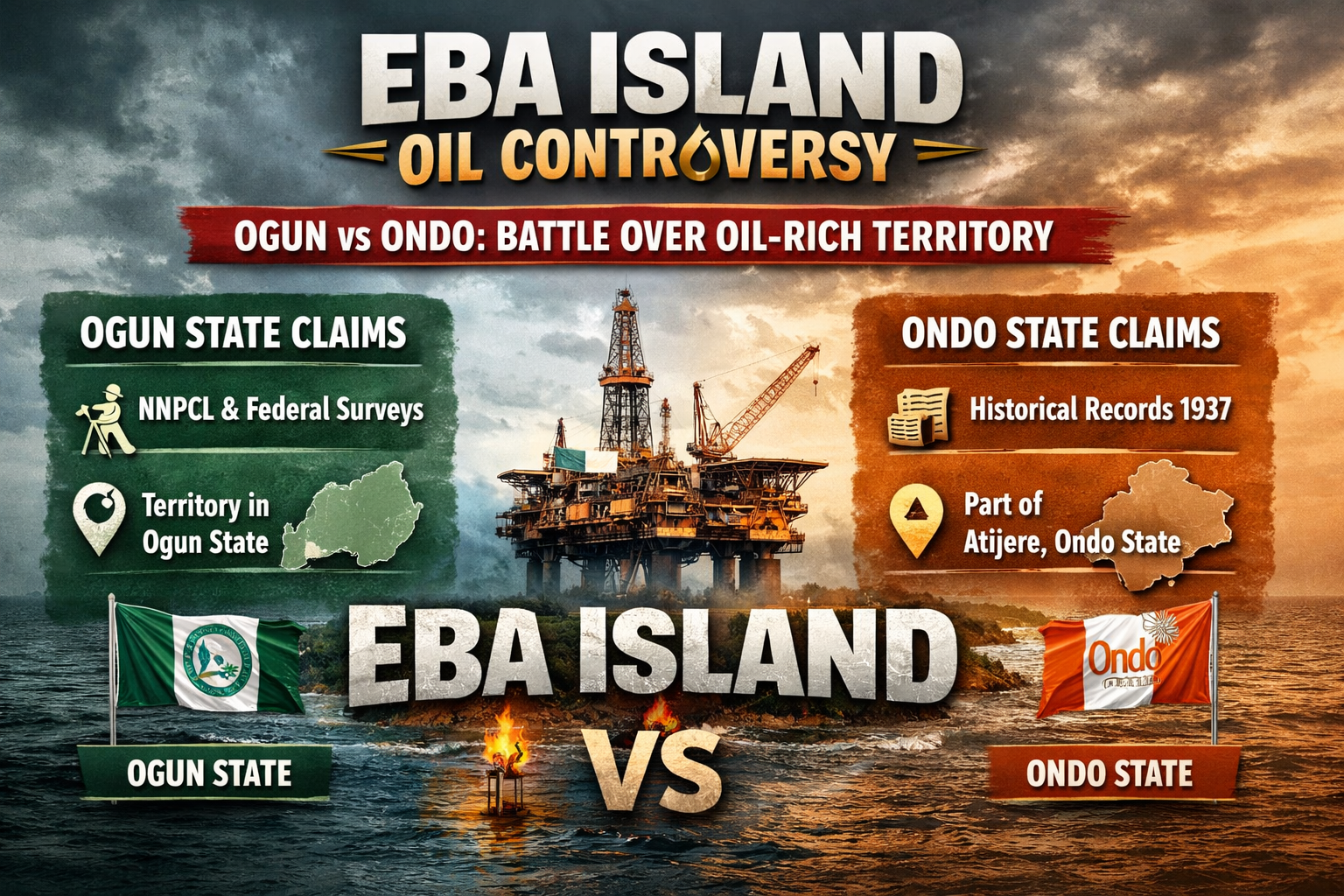
 The long-standing debate over Eba Island has resurfaced with renewed intensity following President Bola Ahmed Tinubu’s approval of commercial oil drilling on the island, igniting a heated dispute between Ogun and Ondo States over territorial ownership.
Ondo State asserts that Eba Island belongs to its Atijere territory, referencing historical and colonial-era documents. Allen Sowore, a spokesperson for the Ondo State government, said, “Eba Island formed part of Ilaje/Mahin Country in the defunct Lagos Colony… and was designated a forestry reserve under the Atijere Native Authority.”
According to Ondo officials, these records dating back to 1937 demonstrate historical ties that predate the creation of modern state boundaries, establishing a strong claim to the island.
Ogun State, however, insists that the oil well and Eba Island are located within its jurisdiction. Kayode Akinmade of the Ogun State government emphasized that federal surveys and confirmations from the Nigerian National Petroleum Company Limited (NNPCL) support Ogun’s claim. “The oil well is located within Ogun State territory, as confirmed by NNPCL and federal institutions,” he said, rejecting Ondo’s historical assertions.
The disagreement has sparked concerns about rising communal tensions in the region. Both states have called for restraint, with Ogun accusing Ondo of issuing misleading claims about the territory’s legal status. Experts caution that if unresolved, the dispute could escalate, given the economic significance of oil exploration on the island.
Historically, Eba Island has been part of the Ilaje/Mahin area under the defunct Lagos Colony, serving as a forestry reserve under colonial administration. The colonial-era designation, Ondo officials argue, provides a legal foundation for their claim. Meanwhile, Ogun State points to contemporary surveys and federal records that place the oil-rich area within its borders.
The dispute highlights the challenges Nigeria faces in reconciling historical boundaries with modern constitutional demarcations, especially when natural resources are involved. Analysts note that resolving such conflicts requires careful mediation between state authorities and federal institutions to prevent escalation and ensure equitable resource management.
As Nigeria seeks to maximize its oil and gas resources, the Eba Island controversy underscores the delicate balance between historical precedent, constitutional law, and economic development. For the local communities, the resolution of the dispute will determine not just administrative control but access to potential revenue and development opportunities.
Ogun and Ondo States are at odds over Eba Island following approval of oil drilling. Historical claims clash with federal surveys, highlighting Nigeria’s complex boundary and resource disputes.
Discover more from Ameh News
Subscribe to get the latest posts sent to your email.