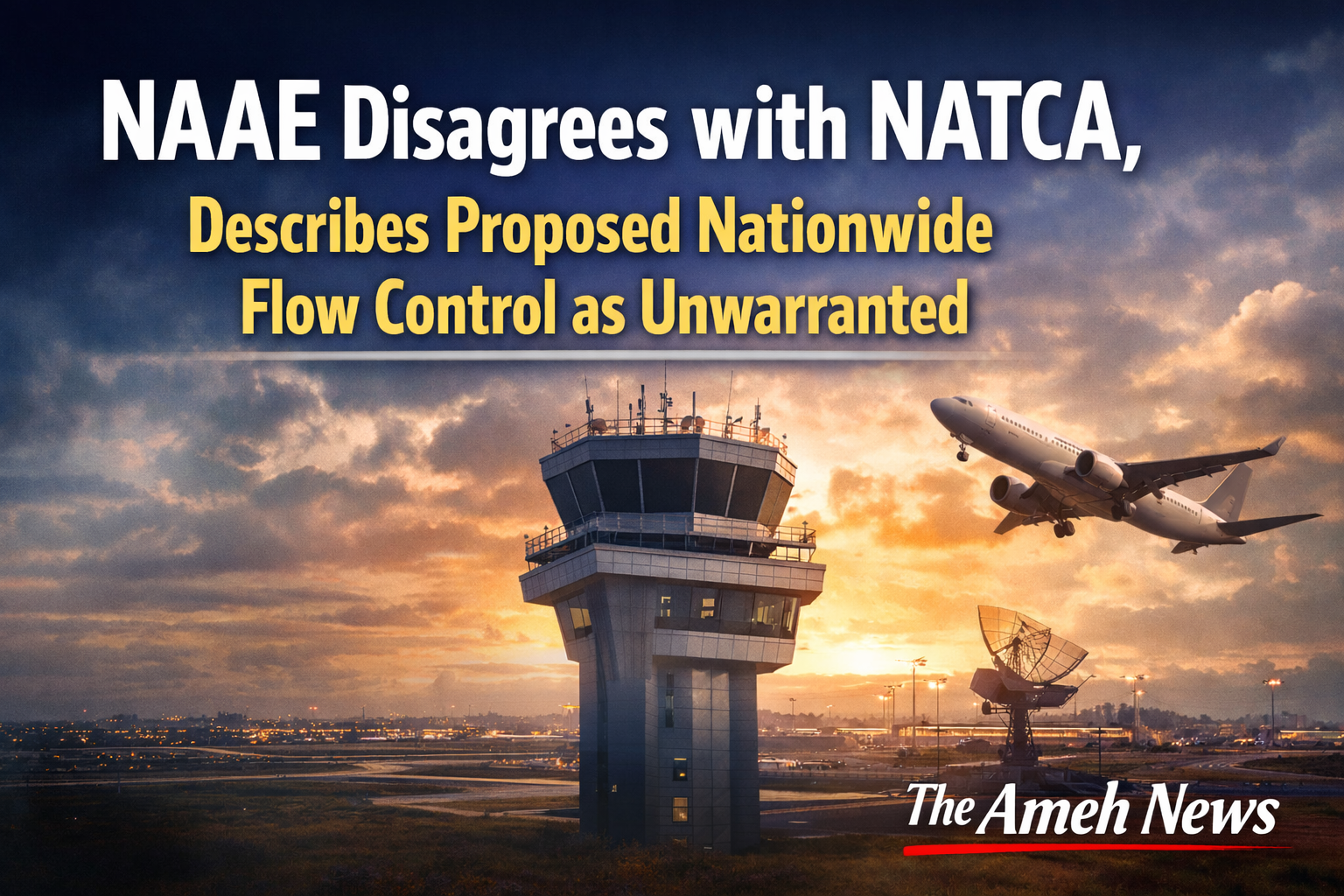
 The National Association of Air Traffic Engineers (NAAE) says the nationwide flow control of air traffic proposed by the Nigerian Air Traffic Controllers’ Association (NATCA) regarding controller fatigue, ageing systems, and manpower shortages within Nigeria’s airspace management system is uncalled for.
In a statement endorsed by Engr. Seizing D. Miri and Engr. Muhammadu Shuaibu Shuaibu, President and General Secretary of NAAE respectively, said that NAAE acknowledged the indispensable role of Air Traffic Controllers in ensuring the safety and efficiency of air navigation services, it is necessary to present a balanced, factual perspective to avoid misrepresentation of the prevailing operational realities within the Nigerian Airspace Management Agency (NAMA).
“In our opinion, the Issues raised by NATCA are uncalled for as they do not fully reflect the substantial progress and ongoing efforts by NAMA management in infrastructure development, manpower planning, and welfare enhancement”.
The engineers noted that contrary to the claim of widespread obsolete infrastructure, NAMA has, in recent years, implemented significant upgrades to critical Communication, Navigation, and Surveillance (CNS)/Air Traffic Management (ATM) systems
NAAE noted that while flow control is a recognised operational tool in global air traffic management, its NAAE noted that while flow control remains a recognised operational tool in global air traffic management, its application must be carefully evaluated within the proper operational context to ensure safety, efficiency, and system stability.
The proposed nationwide application must be evaluated within the proper operational context adding that safety in aviation is a shared responsibility encompassing engineering reliability, regulatory compliance, and disciplined operational conduct.
According to NAAE, all in a move to keep the radar system functional, adding that President Bola Ahmed Tinubu earlier approved the overhaul of the TRACON system which NAMA has commenced the process of deploying ADS-B to support the ageing national surveillance infrastructure, while efforts are ongoing through Presidential intervention to replace the ageing TRACON system..
The statement further stated that there was continuous improvement of navigational aids, communications networks, and supporting infrastructure to enhance reliability, redundancy, and operational continuity.
According to the engineers, the Minister of Aviation and Aerospace Development, Barrister Festus Keyamo, officially flagged off the construction of a new corporate Headquarters and Air Traffic Management (ATM) Centre for NAMA stressing that when completed, the facility will serve as the epicentre of Area Control and air traffic management for the nation.
They said it was an initiative that represents a deliberate and strategic effort to strengthen Nigeria’s air traffic management architecture, modernise operational infrastructure, and position the country for future growth in aviation traffic.
According to the statement, “NAAE acknowledges NAMA’s deliberate actions to address workforce challenges through: – Recruitment of new Air Traffic Controllers and technical personnel to close manpower gaps with the Re-engagement of approximately 95% of retired controllers on a contract basis, thereby retaining valuable experience, strengthening mentorship structures, and ensuring continuity of operations.”
It argued that this blended workforce model directly counters the narrative of widespread manpower fatigue and demonstrates a structured approach to human resource sustainability.
NAAE said it recognises the importance of staff welfare which is a critical element in operational performance adding that NAMA has implemented a recent upward review of remuneration packages as part of ongoing welfare enhancements while a comprehensive review of the Conditions of Service (CoS) is currently underway to address outstanding issues relating to career progression, allowances, and welfare provisions.
NAAE strongly advocates for continuous collaboration among all aviation stakeholders, including NATCA, NAMA management, and other professional bodies. Concerns relating to welfare, Infrastructure, and operations are best addressed through constructive dialogue rather than public narratives that may inadvertently undermine confidence in the aviation sector.
Discover more from Ameh News
Subscribe to get the latest posts sent to your email.