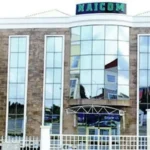
 The race to meet the National Insurance Commission (NAICOM)’s July 31, 2026 recapitalisation deadline has entered a decisive phase, with Nigeria’s insurance industry experiencing one of its busiest periods of capital raising in recent history.
A review by The Ameh News indicates that while a handful of insurers have made significant progress towards meeting the new capital requirements, several companies remain under intense pressure as they struggle to complete fundraising, regulatory verification and documentation before the deadline.
The development comes as NAICOM has repeatedly maintained that the July 31 deadline remains firm, signalling that only companies that successfully complete both capital raising and regulatory verification will be recognised as compliant.
What happened?
Over the past few months, insurers have launched multiple rights issues, private placements and fresh capital injections in response to NAICOM’s recapitalisation programme aimed at strengthening the financial capacity of insurance companies.
Industry estimates suggest that more than ₦100 billion to ₦150 billion has already been announced through various capital raising exercises, creating one of the largest fundraising waves ever witnessed in Nigeria’s insurance sector.
However, raising capital alone may not be sufficient.
Industry analysts note that NAICOM’s verification process—covering actual receipt of funds, statutory deposits, documentation and regulatory compliance—will ultimately determine which insurers qualify as fully recapitalised.
Who is ahead?
Industry monitoring by The Ameh News shows that Heirs Insurance Group is among the companies reported to have completed its capital raising and moved into NAICOM’s verification stage, pending final regulatory confirmation.
The company’s progress reflects a vision championed by Chairman of Heirs Holdings, who called for a stronger and better-capitalised insurance industry during the National Insurance Conference in Abuja in September 2023. Chairman of Heirs Holdings, advocated minimum capital levels of ₦50 billion for composite insurers, ₦30 billion for general insurers and ₦20 billion for life insurers, arguing that Nigeria needs financially strong insurers to support economic growth and protect national wealth.
Other insurers making notable progress include Guinea Insurance Plc, Linkage Assurance Plc, Sovereign Trust Insurance Plc (STI), SUNU Assurances Nigeria and Lasaco Assurance Plc, all of which have launched rights issues or secured shareholder approval to raise fresh capital.
However, industry experts note that announcing a capital raise is only part of the process. Final compliance depends on successful fundraising, settlement of proceeds and NAICOM’s verification before the July 31 deadline.
“You cannot build wealth protection systems for a trillion-dollar economy with weak institutions.”
— Tony O. Elumelu, National Insurance Conference, Abuja, September 2023
Which insurers face higher risks?
Pressure appears greatest among several mid-sized insurers.
Industry observers identify International Energy Insurance (IEI), Regency Alliance, Veritas Kapital and some other operators as facing tighter timelines.
For these firms, delayed fundraising, weak investor participation or incomplete documentation could make meeting the statutory deadline increasingly difficult.
Smaller reinsurers are also confronting similar challenges as they work towards the significantly higher minimum capital requirement for reinsurance operators.
Why does this matter?
The recapitalisation programme represents one of the most important regulatory reforms in Nigeria’s insurance industry in decades.
Higher capital requirements are expected to produce:
financially stronger insurers;
improved claims-paying ability;
increased public confidence;
greater underwriting capacity for major risks;
stronger support for infrastructure and economic development.
Analysts believe the exercise could also reshape competition by reducing the number of weaker operators.
What could happen next?
Industry stakeholders expect mergers, acquisitions and strategic partnerships to accelerate immediately after the deadline.
Companies unable to meet the new requirements may be forced to seek investors, combine operations or exit certain insurance businesses.
At the same time, investors are becoming increasingly selective as multiple rights issues compete for limited market liquidity.
Experts react
Reacting to questions from The Ameh News, economist Celestine Ukpong said the recapitalisation exercise represents a defining moment for Nigeria’s insurance sector.
According to him, stronger capitalisation will improve financial stability and enable insurers to underwrite larger and more complex risks needed to support national economic growth.
He, however, warned that the concentration of rights issues within a short period could stretch investor appetite, making execution more difficult for weaker companies.
Dr. Ejike Nduilo, Public Relations strategist and Founder of Henryjanleens, said the current exercise is equally a test of corporate governance and market confidence.
He noted that companies communicating transparently with shareholders and investors stand a better chance of successfully completing their capital raising programmes.
According to him, beyond raising funds, insurers must convince investors that the new capital will translate into sustainable profitability and improved customer service.
Financial analyst and Fellow of the Institute of Chartered Accountants of Nigeria (ICAN), Peter Adebayo, observed that investors should pay closer attention to companies that have already entered NAICOM’s verification process rather than those making announcements alone.
He explained that successful verification provides stronger assurance that recapitalisation has progressed beyond board approvals and public declarations.
Adebayo added that firms facing possible under-subscription should quickly explore contingency funding options, including private placements, strategic investors or business combinations.
Industry Outlook
Industry estimates indicate that nearly 20 insurers have already submitted applications to NAICOM for verification.
Nevertheless, experts believe the coming weeks will determine the industry’s final structure as companies race to complete documentation, regulatory approvals and settlement processes before July 31.
With NAICOM maintaining that there will be no extension without legislative action, analysts expect the final days before the deadline to witness heightened fundraising activity, increased investor scrutiny and possibly the beginning of a new wave of consolidation across Nigeria’s insurance landscape.
NAICOM recapitalisation, Nigeria insurance recapitalisation 2026, insurance rights issue, Guinea Insurance, Sovereign Trust Insurance, Linkage Assurance, Heirs Insurance, Lasaco Assurance, SUNU Assurances, IEI Plc, Nigerian insurers, insurance industry Nigeria, capital raising, insurance mergers, The Ameh News. With the July 31, 2026 recapitalisation deadline fast approaching, Nigeria’s insurance industry is witnessing an unprecedented wave of rights issues and capital raising. While some insurers are nearing compliance, several others remain at risk of missing the deadline, raising the prospect of mergers, acquisitions and market consolidation. Limited Public Disclosure by Some Legacy Insurers. While several insurers have publicly announced rights issues, private placements and other capital-raising initiatives, the recapitalisation status of some long-established insurance companies remains less transparent. Their progress is not easily accessible through public disclosures or market filings, making independent assessment difficult. Industry analysts say this does not necessarily indicate non-compliance, as some insurers may be relying on private capital injections, strategic investors or internal restructuring that are not immediately visible to the market. They, however, note that greater transparency would boost investor confidence and provide stakeholders with a clearer picture of the industry’s readiness ahead of NAICOM’s July 31, 2026 deadline.
Discover more from Ameh News
Subscribe to get the latest posts sent to your email.