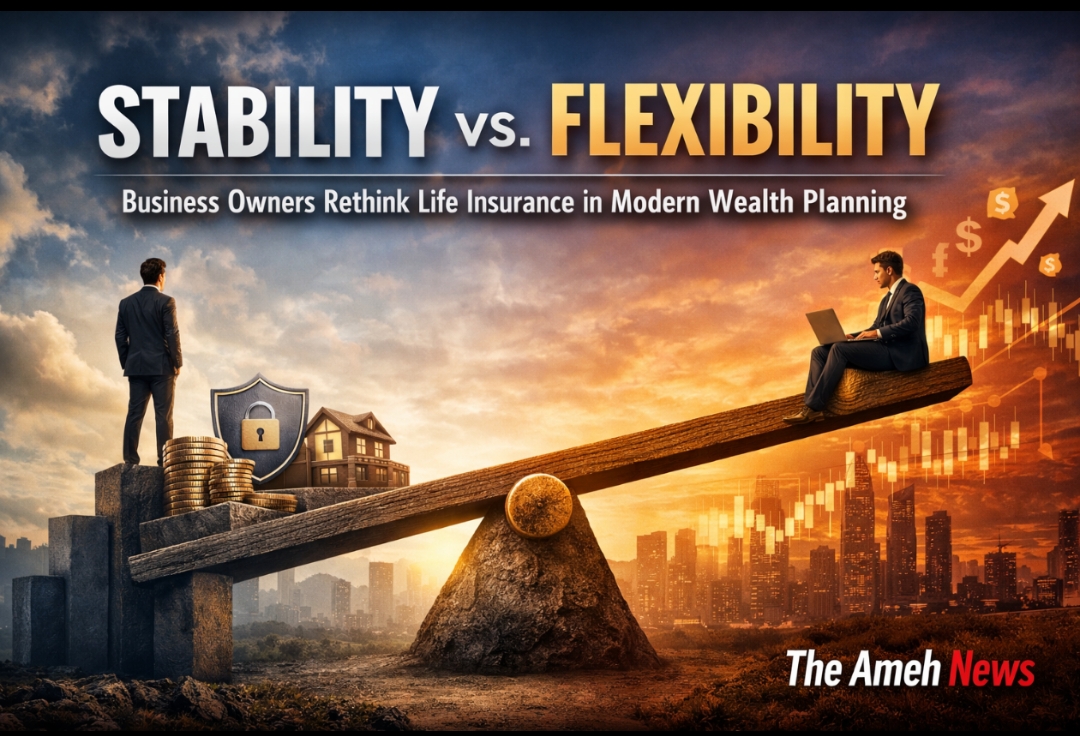
 Business Owners Reassess Life Insurance Strategies as Wealth Planning Becomes More Complex
For decades, life insurance in business planning was viewed largely through a narrow lens: protection for families, succession planning for companies, and a predictable financial safety net. However, as business structures evolve and financial planning becomes more sophisticated, many entrepreneurs are now reevaluating how permanent life insurance fits into their long-term wealth strategies.
At the centre of this reassessment are two dominant products—whole life insurance and indexed universal life insurance (IUL)—each offering a different philosophy on how wealth should be preserved, grown, and accessed over time.
A Traditional Anchor: Whole Life Insurance
Whole life insurance remains the most established option for business owners seeking predictability and stability. The product is structured around fixed premiums, guaranteed cash value growth, and a predetermined death benefit.
Financial planners often describe it as a “set-and-forget” instrument, particularly useful in structured business arrangements such as buy-sell agreements or key-person insurance policies. In these cases, clarity and stability are critical. Business partners need certainty that funds will be available at a defined value when required, without exposure to market fluctuations.
Because of its conservative design, whole life insurance continues to appeal to business owners who prioritise risk control and long-term consistency over growth potential.
A Modern Alternative: Indexed Universal Life (IUL)
In contrast, indexed universal life insurance has emerged as a more flexible and dynamic alternative. Unlike whole life policies, IUL allows policyholders to adjust premiums within limits, potentially pause contributions during cash flow constraints, and link cash value growth to stock market indices—typically with downside protection.
This structure has made IUL particularly attractive to entrepreneurs whose income is irregular or whose capital needs shift with business cycles. For some, it serves not only as life insurance but also as a tax-advantaged financial tool that can supplement retirement planning or provide liquidity during expansion phases.
However, this flexibility comes with added complexity. Policy performance is influenced by variables such as participation rates, caps on returns, and cost structures that may change over time. As a result, IUL policies often require active monitoring and periodic review with financial professionals.
Different Philosophies, Different Outcomes
Industry analysts note that the decision between whole life and IUL is less about which product is superior and more about how a business owner approaches financial risk.
Whole life insurance is generally aligned with conservative planning—where predictability, guaranteed outcomes, and structural simplicity are valued.
IUL, on the other hand, aligns with a more dynamic approach—where adaptability, tax efficiency, and potential market-linked growth are prioritised.
In practical terms, whole life is often used as the “foundation layer” of business protection strategies, while IUL is used as a supplementary vehicle for long-term accumulation and flexible capital planning.
The Emerging Reality for Business Owners
As inflation pressures, market volatility, and evolving tax structures continue to shape financial decision-making, advisors report growing interest in hybrid insurance strategies that combine both stability and flexibility.
Yet experts caution that neither product should be viewed as a one-size-fits-all solution. Instead, the choice depends heavily on business size, income stability, risk tolerance, and long-term objectives.
Ultimately, the modern business owner is no longer choosing simply between two insurance products. They are choosing between two financial philosophies—one rooted in certainty, and the other in adaptability.
And in today’s unpredictable economic environment, that decision has never carried more weight.
Business owners are increasingly reassessing whole life and indexed universal life insurance as tools for wealth planning, balancing stability, flexibility, and long-term financial strategy amid changing economic conditions.
and growth potential in modern financial strategies.
Discover more from Ameh News
Subscribe to get the latest posts sent to your email.